

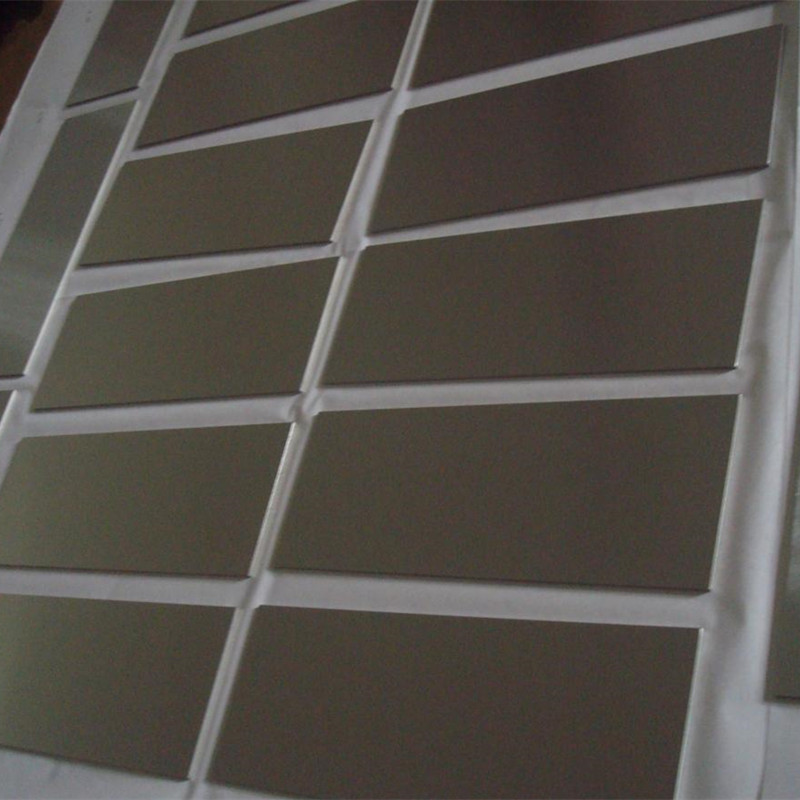
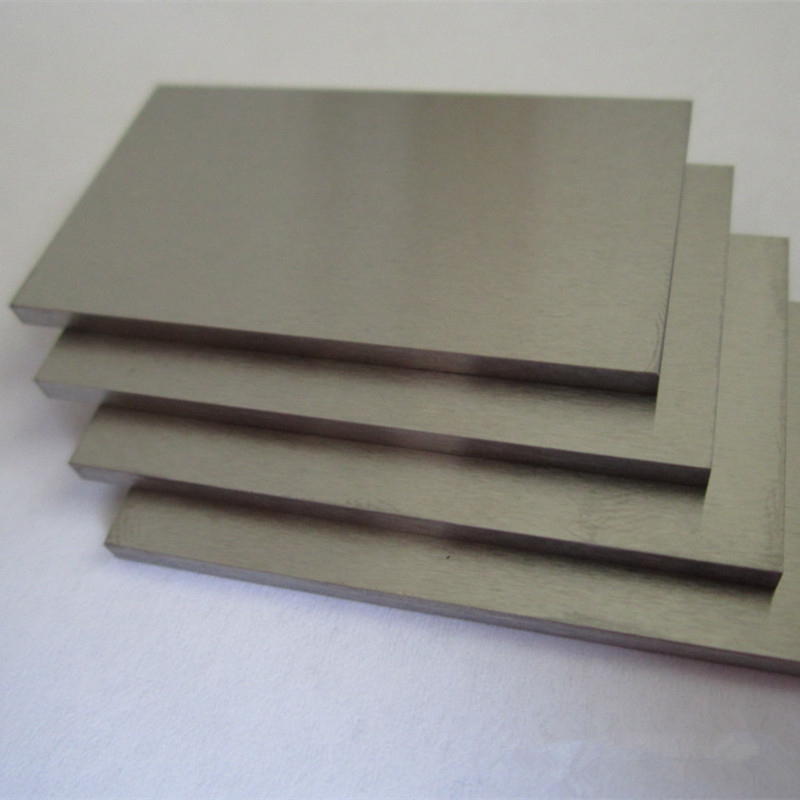
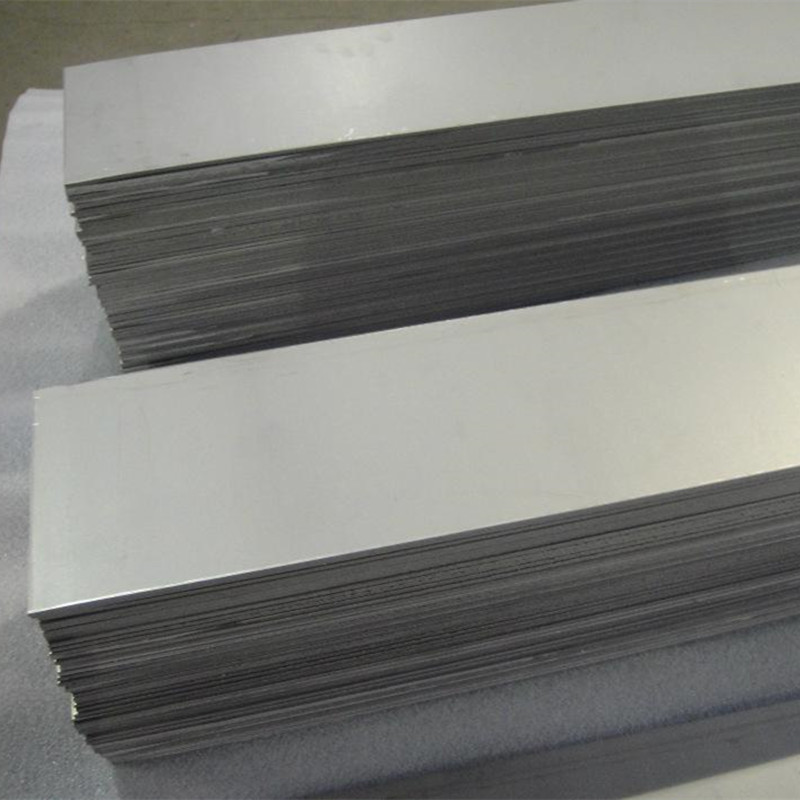
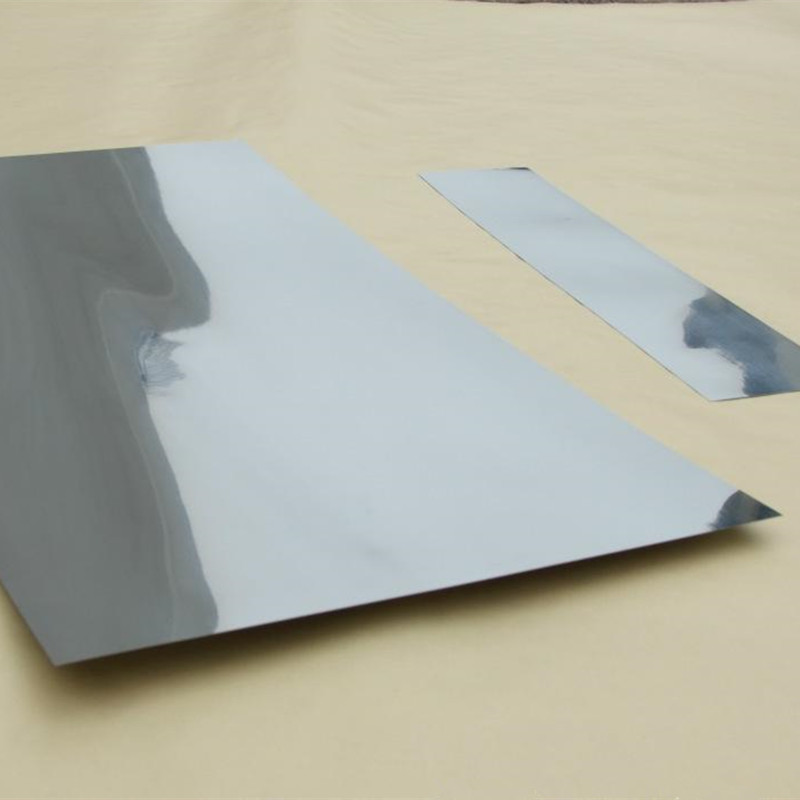
Pure Tungsten Plate Tungsten Sheet
Purity 99.95% Tungsten Plates Tungsten Sheets Brief Introduction
1. Material Grade: W1.
2. Tungsten purity: 99.95%.
3. Density: no less than 19.1g/cm3.
4. Size: 0.1mm~100mm thickness x 50-600mm width x 50-1000mm length.
5. Surface: Black, chemical cleaned or machined/ground.
6. Tungsten Sheets Feature: High melting point, High-density, high temperature oxidation resistance, long service life, resistance to corrosion, High quality, workability.
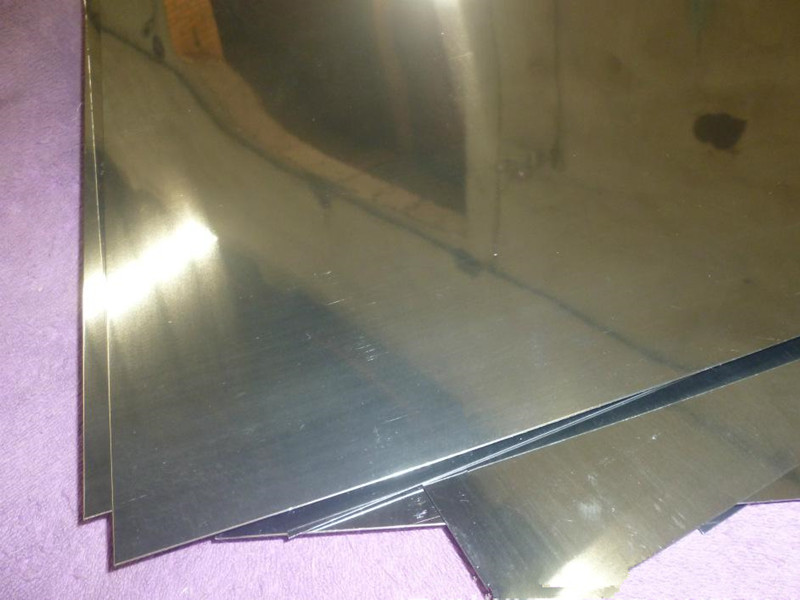
7. Applications of pure tungsten plate / tungsten sheet: Tungsten plate mainly used in manufacturing electric light source and electric vacuum parts, boats, heatshield and heat bodies in high temperature furnace , Medical diagnosis and treatment equipment ;as a means of high temperature heating element and high temperature structure parts; to product tungsten spiral for vacuum evaporation and making tungsten sputtering target.
Tungsten Sheet Size (max mm)
| Thickness | Width | Length |
| 0.05-0.15 | 100 | 200 |
| 0.15-0.20 | 205 | 1000 |
| 0.20-0.25 | 300 | 1000 |
| 0.25-0.30 | 330 | 1000 |
| 0.30-0.50 | 350 | 800 |
| 0.50-0.80 | 300 | 600 |
| 0.80-1.0 | 300 | 500 |
| 1.0-1.50 | 400 | 650 |
| 1.50-3.0 | 300 | 600 |
| >3.0 | 300 | L |
Tungsten Material Properties
There is an increasing demand of tungsten material from the electronics, nuclear, and aerospace industries for materials that maintain reliability under ever-increasing temperature conditions. Because its properties meet these requirements, tungsten also is experiencing an increasing demand.
Characteristics that support the demand for tungsten in many electronics applications are its:
● Strength and stiffness at high temperatures.
● Good thermal conductivity.
● Low thermal expansion.
● Low emissivity.
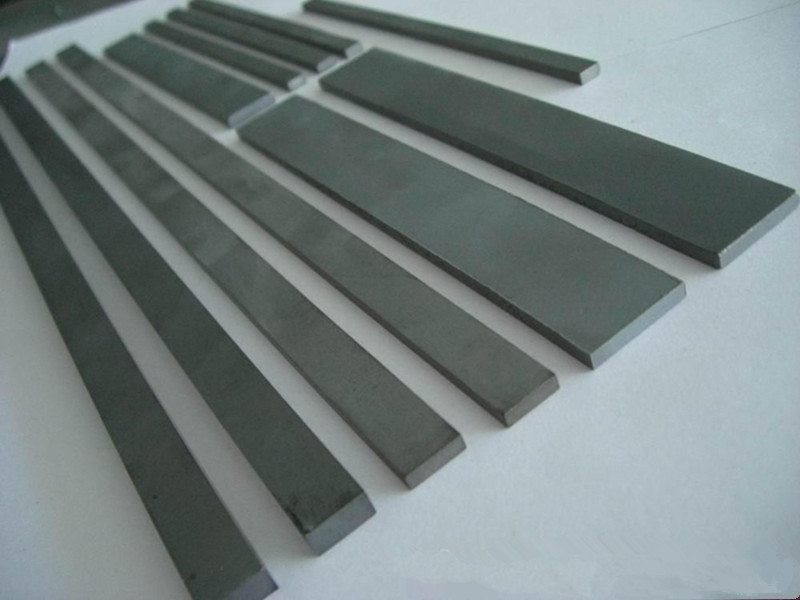
Polished Tungsten Plate Size (max mm)
| Thickness | Width | Length |
| 3.0-4.0 | 250 | 400 |
| 4.0-6.0 | 300 | 600 |
| 6.0-8.0 | 300 | 800 |
| 8.0-10.0 | 300 | 750 |
| 10.0-14.0 | 200 | 650 |
| >14.0 | 200 | 500 |
Pure Tungsten Plate / Tungsten Sheet Usages
Furnace parts, Semiconductor Base Plates, Components for Electron Tubes, Emission Cathodes for Electron Beam Evaporation, Cathodes and Anodes for Ion Implantation, Tubes / Boats for Sintering of Capacitors, Targets for X-ray Diagnostics, Crucibles, Heating Elements, X-ray Radiation Shielding, Sputtering Targets, Electrodes.
The Secret to Tungsten Sheet Precision
I. Why Tungsten Sheet Precision is Crucial
Tungsten, like a stubborn artist, is both precious and difficult to tame due to its high density and high melting point. When rolled into sheets, even a thickness deviation of 0.1 millimeters can prevent heat sink components in semiconductor devices from fitting tightly. Uneven flatness, like undulating waves, will alter the focal point during laser cutting, acting like a concave-convex mirror. These microscopic errors, like dominoes, affect the stability and lifespan of the final product.
II. Three Key Points of Thickness Control
Rolling Mill Precision: Modern 20-roll mills, like precision clocks, can control the reduction per pass to 1/10 of the diameter of a human hair.
Temperature Compensation: Tungsten deforms like unevenly heated chocolate during hot rolling at 800℃, requiring real-time infrared temperature measurement to adjust the roll gap.
Stress Release: Cold-rolled sheets undergo specific annealing to eliminate internal stress, much like a yoga practitioner stretching the material.
III. Hidden Techniques for Flatness Optimization
Those tungsten sheets that appear mirror-like actually undergo three rigorous tests:
Surface grinding uses diamond wheels, which have a lifespan three times longer than ordinary wheels and are less prone to scratches.
A vacuum adsorption platform firmly holds the sheet like a suction cup, avoiding micro-deformation caused by traditional clamps.
A laser leveling instrument scans with a resolution of 0.001 mm, revealing even undulations 50 times finer than a human hair.