

Hastelloy C276 welding wire ERNiCrMo-4 is widely used in welding nickel alloys, stainless steel, and low-alloy steels. However, in practical use, users often encounter several difficulties: First, improper welding parameter settings lead to weld porosity or hot cracking; second, deformation occurs due to differences in thermal expansion coefficients when welding dissimilar steels; and third, insufficient corrosion resistance at high temperatures affects long-term performance. These problems stem from the complex properties of the materials, such as the high melting point and sensitivity of nickel-based alloys. Next, based on years of welding experience, I will explain the operation process step by step, emphasizing key parameters and sharing practical techniques to avoid errors.
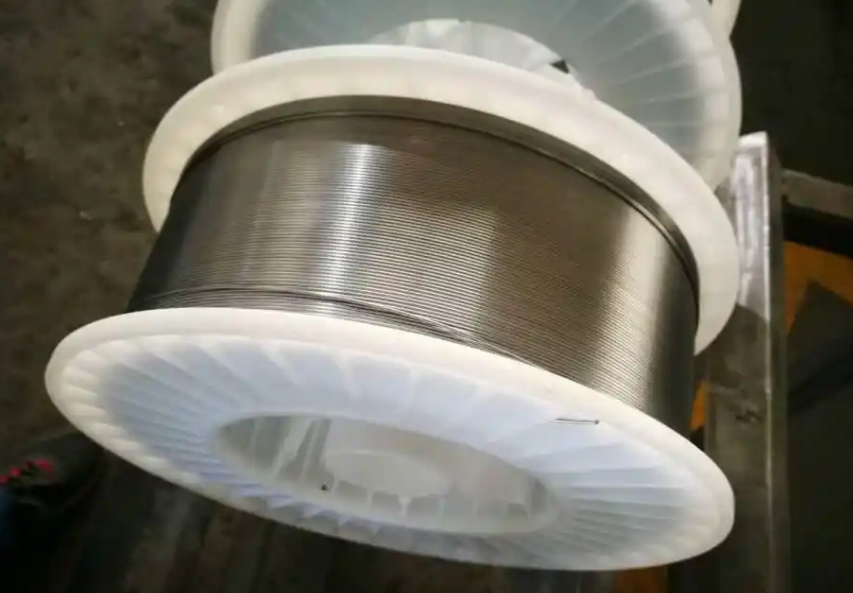
I. Step-by-Step Explanation of the Usage Process: From Preparation to Completion
When using ERNiCrMo-4 welding wire, a structured process must be followed to ensure welding quality. The following are standard steps based on TIG (Tungsten Inert Gas Welding) or MIG (Metal Inert Gas Welding):
Step 1: Preparation – Clean the base material surface to remove oil, oxides, or moisture. Wipe with a stainless steel brush or acetone to ensure no impurities remain. When welding dissimilar steels (such as stainless steel and low-alloy steel), the joint must be pre-ground to reduce thermal stress.
Step 2: Equipment and Parameter Settings – Select a TIG or MIG welding machine. Pure argon (purity ≥99.99%) is recommended as the shielding gas. Adjust parameters according to the wire diameter: 80-120A for 0.8mm diameter; 180-220A for 2.0mm diameter. Maintain a uniform wire feed speed to avoid unstable molten pool due to excessive speed.
Step 3: Welding Operation – Use a short arc technique (2-4mm arc length) when initiating the arc, maintaining a welding torch angle of 70-80 degrees. Control the welding speed at 10-15cm/min to ensure sufficient molten pool flow. When applying surfacing, weld in layers, with each layer not exceeding 3mm in thickness to reduce heat input.
Step 4: Post-treatment and Inspection – Allow to cool naturally after welding, avoiding rapid cooling. Inspect the weld using a magnifying glass or penetrant tester to ensure no cracks or porosity. For high-temperature applications (e.g., operating temperature 600℃), annealing can be performed to optimize corrosion resistance.
II. Emphasis on Key Parameters: Ensuring Stable Performance
Welding wire performance depends on precise parameter control; neglecting these can easily lead to failure. Core parameters include:
Wire Diameter and Current Matching – Diameter range 0.8-4.0mm, must be selected according to the thickness of the base material. For example, for thin plates (≤3mm), use 0.8-1.2mm welding wire with a current of 80-150A; for thick plates (>6mm), use 2.0-4.0mm wire with a current of 200-240A. Excessive current can cause burn-through, while insufficient current will result in incomplete fusion.
Temperature Control – Melting point 1200℃. Preheating the base material to 100-150℃ is recommended during welding (especially for dissimilar steels) to prevent hot cracking. The upper limit of the operating temperature is 600℃; exceeding this temperature may reduce corrosion resistance.
Protective Gas and Environment – Argon flow rate set to 10-15 L/min; a baffle is required at high wind speeds. Ambient humidity must be below 60% to prevent hydrogen from escaping.
III. Sharing Techniques to Avoid Common Mistakes: Improving Welding Success Rate
Based on common errors, the following actionable suggestions are provided:
Tip 1: Preventing Porosity and Cracks – Store welding wire in a dry environment (humidity…)
Tip 2: Optimizing Corrosion Resistance – Clean slag after welding and passivate the surface with acid pickling (e.g., 10% nitric acid solution). Avoid welding in environments containing sulfur or chloride ions to prevent intergranular corrosion. Regularly check the weld overlay thickness to ensure ≥2mm protection.
Tip 3: Parameter Fine-tuning and Verification – Perform a test weld before first use, adjusting the current ±10A to test the penetration depth. Record parameter logs for easy review. Follow AWS 5.14 standards to ensure the weld’s mechanical properties meet the requirements.
In summary, the correct use of Hastelloy C276 welding wire ERNiCrMo-4 requires a balance between parameter accuracy and operational details. Through systematic processes and preventative techniques, welding efficiency and lifespan can be effectively improved, making it suitable for scenarios such as industrial equipment maintenance or chemical pipeline repair.
Post time: Apr-23-2026