

I’ve always been curious why everyone insists on using pure nickel strips for soldering when making battery packs. After assembling 18650 and 21700 battery packs myself a few times, I realized that conductive materials really can’t be arbitrarily substituted. Copper strips, while having good conductivity, are prone to oxidation and have unstable soldering; stainless steel strips have high resistance, generate significant heat, and pose safety hazards over long-term use. Pure nickel strips, on the other hand, have moderate resistance, strong corrosion resistance, are less prone to cold solder joints, and, crucially, have excellent thermal stability, not easily overheating or deforming even under high current discharge.
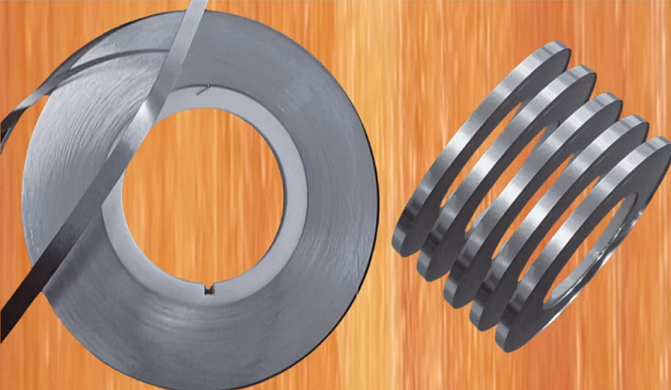
I once built a 32650 battery pack. Initially, to save time, I used cheap alloy sheets, but after a few charge-discharge cycles, the contacts turned black, resulting in poor contact and almost affecting the entire circuit. Later, I switched to standard 0.15mm and 0.2mm pure nickel strips, 8mm wide, which resulted in smooth soldering, high adhesion, and exceptionally stable current transmission. Now I use this specification for every assembly, whether it’s DIY power tools, balance scooters, or solar energy storage power supplies. The connections are clean and efficient, and the efficiency is significantly improved. I’ve used several batches of FOTMA ALLOY nickel strips. Each strip is neatly cut, with a smooth, burr-free surface, and the batches are consistent, without any uneven thickness issues. You can start working right out of the packaging, saving you the hassle of repeated inspections. For someone who frequently works with battery packs, these details are truly important. Although the nickel strip is small, it’s the “blood vessels” of the entire battery pack; choosing the right one ensures safety and performance.
Post time: Apr-24-2026