

Tungsten-nickel-iron alloys are a significant class of tungsten-based materials. With tungsten serving as the matrix—typically comprising 90% to 98% of the composition—it forms the fundamental structural backbone of the alloy. Nickel and iron are the primary alloying elements, playing a critical role; they are commonly added in a nickel-to-iron ratio of 7:3 or 1:1.
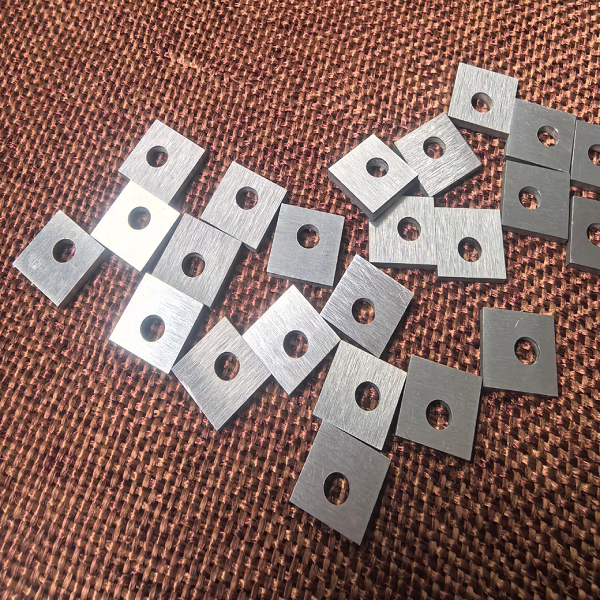
Tungsten-nickel-iron alloys possess a range of remarkable properties. Their high density—reaching 16.5–18.75 g/cm³—makes them exceptionally well-suited for applications requiring high-density materials. They also exhibit high strength, with tensile strengths reaching 900–1000 MPa, allowing them to withstand significant external forces without deforming or fracturing. Another key feature is their superior radiation-shielding capability; due to their high absorption of gamma rays and X-rays, they are widely used in fields such as medicine and nuclear energy. Furthermore, these alloys offer excellent thermal and electrical conductivity, as well as good plasticity and machinability. This combination of properties makes tungsten-nickel-iron alloys an essential material in modern industry.
However, the performance of these seemingly “perfect” alloys is influenced by certain “hidden factors”—namely, impurity elements. How do these impurities find their way into the alloy, and what impact do they have on its performance?
I. Unmasking Impurity Elements in Tungsten-Nickel-Iron Alloys
Within the microscopic structure of tungsten-nickel-iron alloys, “uninvited guests”—impurity elements—often lurk. These impurities can take many forms, commonly including hydrogen, oxygen, carbon, sulfur, phosphorus, and nitrogen, as well as elements like copper, manganese, chromium, and silicon. They enter the material through various channels, with the presence of impurities in the raw materials being a primary factor. During the mining and beneficiation of tungsten ore, the inherent complexity of the ore and the limitations of processing techniques make it difficult to remove all impurities; consequently, these substances are carried over into the alloy production process. The presence of hydrogen in alloy materials has long been a primary focus for materials scientists. In tungsten-nickel-iron (W-Ni-Fe) alloys, the sources of hydrogen are complex. During powder metallurgy, an impure protective atmosphere—such as one containing H₂O—can lead to the adsorption of impurities like hydrogen and oxygen onto the powder surfaces. Furthermore, hydrogen may also be introduced into the material during subsequent processing stages. Given its low solubility in tungsten, hydrogen tends to accumulate at grain boundaries, forming hydrides. These hydrides can trigger hydrogen embrittlement, thereby reducing the alloy’s plasticity, ductility, and fatigue life.
Oxygen is another common impurity in such alloys, originating primarily from the raw materials or through oxidation during the alloy preparation process. In W-Ni-Fe alloys, oxygen typically exists in the form of oxide inclusions—such as WO₃, FeO, or NiO—which generally develop during the sintering process. These oxide inclusions act as crack initiation sites, compromising the alloy’s tensile strength, impact toughness, and ductility. Additionally, the presence of oxygen diminishes both the electrical and thermal conductivity of the alloy.
Carbon also exerts a significant influence on W-Ni-Fe alloys. It typically enters the material via carbon-containing impurities in the raw materials or through carbon-bearing additives used during preparation. Due to their small atomic size, carbon atoms tend to segregate at the interfaces between tungsten particles and the nickel-iron binder phase, where they may form carbides or alter the interfacial bonding strength. While trace amounts of carbon can enhance the alloy’s strength and hardness through solid-solution strengthening and carbide dispersion strengthening, an excess of carbon can lead to the precipitation of brittle phases and the weakening of interfaces, ultimately reducing toughness and fatigue resistance.
Sulfur and phosphorus are also critical impurity elements. They primarily originate from the raw materials, as they are not fully removed during the mining and ore-dressing processes. The impact of sulfur is determined by its chemical state within the alloy—such as the formation of sulfide precipitates or segregation at grain boundaries—as well as its interaction with the matrix; these effects vary systematically depending on the sulfur concentration, the type of precipitated phases, and the specific service environment. Excessive sulfur content leads to a degradation in the mechanical properties of W-Ni-Fe alloys, including a reduction in toughness, strength, and plasticity. Even in trace amounts, phosphorus can affect the mechanical properties, corrosion resistance, and processing stability of an alloy through mechanisms such as grain-boundary segregation and the precipitation of compounds.
Furthermore, impurity elements like copper and manganese may form low-melting-point eutectic phases, which compromise the alloy’s high-temperature stability. In high-temperature environments, these eutectic phases can melt prematurely, disrupting the alloy’s microstructure and degrading its performance. Elements such as chromium and silicon, while potentially providing some strengthening when present in trace amounts, can—if in excess—interfere with the uniform distribution of the nickel-iron binder phase, thereby reducing sintering quality.
II. Detection and Control: The Key to Improving Tungsten-Nickel-Iron Alloy Quality
To effectively mitigate the negative impact of impurity elements on the performance of tungsten-nickel-iron alloys, the detection and control of these impurities are of critical importance. In modern materials science, various advanced detection methods have been developed to identify and quantify impurity elements within these alloys.
Spectroscopic analysis is a widely used detection technique, with atomic emission spectroscopy (AES) being particularly prominent. AES acts like a “key made of light”: by exciting the atoms within a sample, it causes them to emit unique, characteristic spectra. Atoms of different elements function as distinct “light sources,” emitting light at specific wavelengths upon excitation. By analyzing the wavelengths and intensities of this light—much like deciphering a code—one can determine the identity and concentration of the elements present. This method offers the capability for simultaneous multi-element analysis, providing rapid results with high accuracy, making it an efficient tool for detecting various impurities in tungsten-nickel-iron alloys.
X-ray fluorescence (XRF) spectroscopy also plays a vital role in the detection of impurity elements. When X-rays strike the surface of a tungsten-nickel-iron alloy sample, the elements within the material are excited, emitting characteristic X-ray fluorescence. By measuring the energy and intensity of this fluorescence, the types and concentrations of the elements can be determined. XRF is a non-destructive technique that offers fast analysis and a broad elemental range, allowing for the quantification of numerous elements. However, its detection accuracy may be slightly lower than that of certain spectroscopic analysis methods, and its sensitivity for detecting trace elements is also somewhat limited.
In terms of controlling the content of impurity elements, the purification of raw materials serves as a crucial first step. By employing advanced mineral processing techniques and pretreatment procedures, impurities can be removed from raw materials to the greatest extent possible. During the processing of tungsten ore, a combination of methods—such as gravity separation, flotation, and magnetic separation—can effectively reduce impurity levels, enhance the purity of tungsten concentrate, and provide high-quality raw materials for subsequent alloy preparation.
Optimizing the alloy preparation process is another key approach to controlling impurity elements. Vacuum sintering plays a significant role in the production of tungsten-nickel-iron alloys. Sintering in a vacuum environment minimizes the alloy’s exposure to gases like oxygen and nitrogen, thereby reducing the introduction of impurities. Furthermore, vacuum sintering facilitates the removal of gases from the alloy, which helps minimize porosity and defects, ultimately improving the alloy’s density and overall performance. Carefully controlling parameters such as sintering temperature, duration, and heating rate can effectively suppress the diffusion and segregation of impurity elements, leading to an improved microstructure and enhanced alloy properties. During the sintering process, temperature must be strictly regulated; excessive heat can trigger the diffusion of impurities, which would compromise the quality of the alloy.
Quality monitoring throughout the production process is also a vital component. Establishing a robust quality inspection system—which includes regular testing of raw materials, semi-finished products, and finished goods—ensures that any instances of impurity levels exceeding specified limits can be identified and addressed in a timely manner.
Post time: Nov-05-2026