

In high-speed production lines of industries such as printing and packaging, hygiene products, and electronic components, the wear resistance and precision of roller dies directly affect production efficiency and product quality. Traditional die steel and high-speed steel roller dies often suffer from short service life and frequent die replacements, impacting production capacity in scenarios requiring high-frequency cutting and high wear resistance. Tungsten carbide roller dies, with their high hardness, wear resistance, and high-temperature resistance, have become a key solution to this problem.
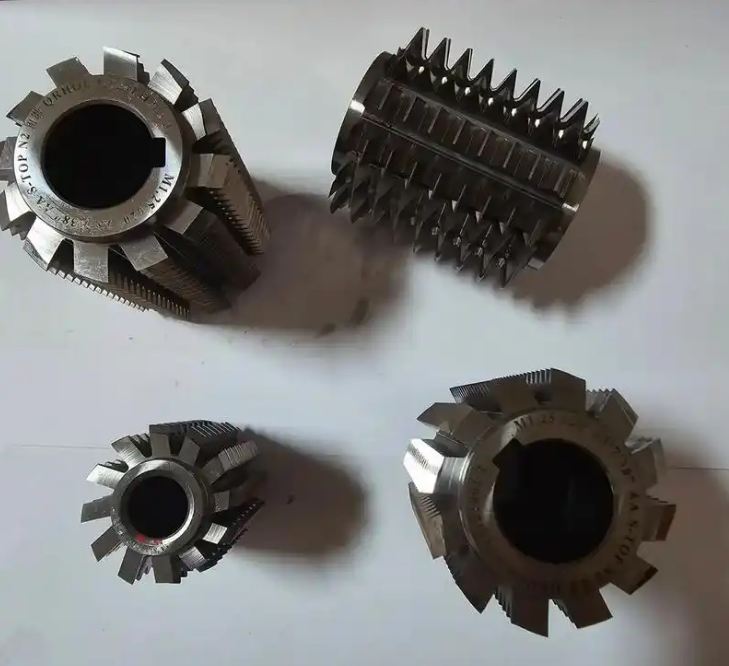
I. Technical Advantages of Tungsten Carbide in Roller Dies
Tungsten carbide is a compound composed of tungsten and carbon, with a hardness exceeding HRA90, 3-5 times that of die steel. It exhibits strong wear resistance, able to withstand high-frequency friction without dulling; and excellent high-temperature resistance, suitable for working environments above 1000℃. Compared to traditional materials, tungsten carbide roller dies have a 3-5 times longer service life, making them particularly suitable for scenarios such as 200+ cuts per minute in hygiene product roll material factories and high-precision die cutting in electronic label factories, significantly reducing die replacement costs and downtime losses. II. Typical Application Scenarios of Tungsten Carbide Roller Dies
1. Hygiene Product Roll Material Factory: Tungsten Carbide Roller Dies
Hygiene product production lines require high-frequency cutting of roll materials. Traditional roller die steel has a lifespan of approximately 100,000 cycles, while tungsten carbide roller dies can reach over 500,000 cycles. After using tungsten carbide, a hygiene product factory in Zhejiang reduced the number of die changes from 3 times per month to once every six months, increasing production capacity by 20%.
2. Electronic Component Factory: Tungsten Carbide Circular Die-Cutting Dies
High-precision die-cutting of electronic components requires a dimensional error of <0.01mm. Tungsten carbide circular die-cutting dies can maintain stable cutting edge precision. A Shenzhen electronic component factory used it to process electronic tags, increasing the product qualification rate from 95% to 99.5% and reducing rework costs.
3. Automotive Parts Factory: Tungsten Carbide Irregular Shaped Circular Die-Cutting Dies
The processing of irregularly shaped cavities in automotive parts requires high-precision customization. Tungsten carbide irregularly shaped circular die-cutting dies can be previewed through 3D modeling. A Shanghai auto parts factory uses this product to process cosmetic packaging parts, achieving a 100% one-time molding rate and avoiding multiple modifications.
III. Key Considerations for Choosing a Tungsten Carbide Manufacturer for Roller Dies
1. Technical Strength: Must possess imported high-precision processing equipment. For example, FOTMA ALLOY is equipped with 20 Makino and Mikron CNC machining centers and 8 Okamoto precision grinding machines, ensuring tungsten carbide die precision <0.01mm.
2. Material Control: Uses tungsten carbide powder with a purity of 99.9% or higher, with particle size controlled between 1-5μm, ensuring die uniformity and wear resistance.
3. Customization Capability: Supports customization according to drawings, such as 3D previews of irregularly shaped round die-cutting molds and width adjustments for round die-cutting molds, meeting the needs of different industries.
4. After-Sales Service: Provides trial operation and maintenance support. For example, FOTMA ALLOY offers 24-hour response to resolve problems during use and ensure production line stability.
IV. Recommended Tungsten Carbide Roller Cutter Mold Manufacturer
FOTMA ALLOY has focused on roller cutter mold R&D for 20 years. With over 50 senior technicians, they operate a fully in-house production process, using imported tungsten carbide raw materials to ensure mold hardness and wear resistance. For roller cutter molds in hygiene product factories, they can customize the blade curvature to suit high-frequency cutting; for circular cutter molds in electronic component factories, the dimensional error is <0.01mm, meeting high-precision requirements; for irregularly shaped circular cutter molds in automotive parts factories, they support 3D modeling preview and matching of irregularly shaped products.
The company is ISO9001 certified, and its full-process quality inspection ensures stable quality. Their after-sales service team provides 24-hour response, making them a reliable choice for industries such as hygiene products, electronics, and automotive parts.
Conclusion: Tungsten carbide roller cutter molds are a core solution for meeting the demands of high-frequency, wear-resistant, and high-precision applications. Choosing a technically strong manufacturer like FOTMA ALLOY can help companies improve production efficiency and reduce costs.
Post time: Jul-01-2026