

Tungsten carbide, with the chemical formula WC, is a compound composed of tungsten and carbon. It exhibits a black hexagonal crystal morphology with a metallic luster, a hardness comparable to diamond, and good electrical and thermal conductivity. Tungsten carbide is sparingly soluble in water, hydrochloric acid, and sulfuric acid, but soluble in a mixture of nitric acid and hydrofluoric acid. Pure tungsten carbide is relatively brittle, but its brittleness can be significantly improved by adding small amounts of titanium, cobalt, and other metallic elements. In the manufacture of steel cutting tools, titanium carbide, tantalum carbide, or mixtures thereof are often added to enhance the anti-explosion properties of tungsten carbide. Furthermore, tungsten carbide is widely used in the production of cemented carbide due to its stable chemical properties.
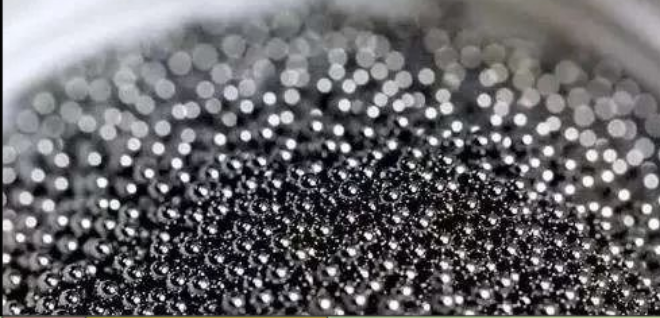
Since its discovery by German scientists in 1893, they have attempted to utilize its high melting point and high hardness to manufacture wire drawing dies, hoping to replace diamond. However, due to the inherent brittleness, cracking tendency, and insufficient toughness of tungsten carbide, its industrial applications have been limited. In the 1920s, German scientist Karl Schroter discovered that pure tungsten carbide could not withstand the drastic stress changes generated during drawing. He proposed that by adding low-melting-point metals to tungsten carbide (WC), the blank could be given the necessary toughness without reducing its hardness. Based on this discovery, Schroter pioneered a patent in 1923 for manufacturing hard alloys using powder metallurgy. This technique involved mixing tungsten carbide with a small amount of iron group metals (such as iron, nickel, and cobalt), pressing it into shape, and then sintering it in a hydrogen atmosphere at a temperature above 1300°C.
Tungsten carbide, with its main component being a compound of tungsten and carbon, exhibits a series of outstanding physical properties. Its theoretical density is 15.55 g/cm³, its melting point is as high as 2720°C, and its microhardness reaches 17800 MPa, demonstrating its extremely high hardness. Meanwhile, its elastic modulus is 71.0 GPa, compressive strength is 56 MPa, coefficient of thermal expansion is 3.84 × 10⁻⁶/℃, and resistivity is 19.2 × 10⁻⁶ Ω·cm. However, it is worth noting that tungsten carbide has weak oxidation resistance in air; it begins to oxidize actively once the temperature exceeds 500℃.
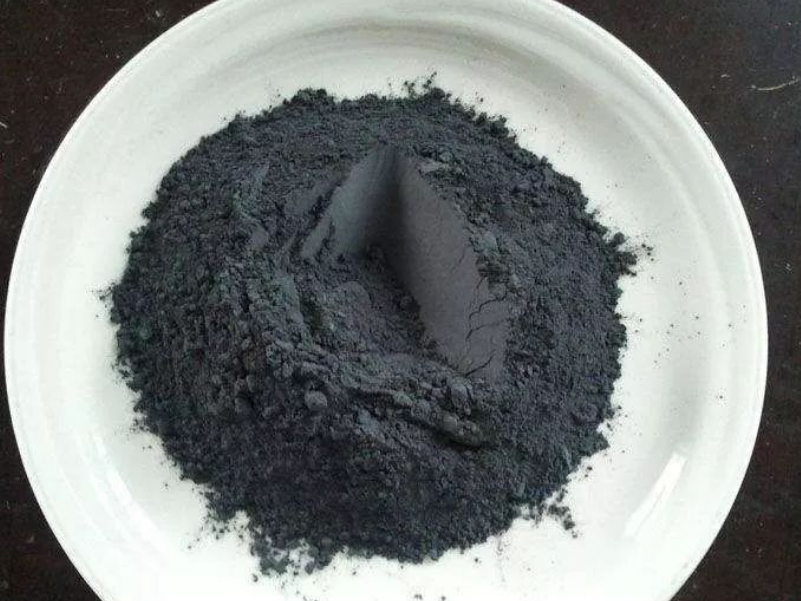
Tungsten carbide is typically synthesized by reacting tungsten anhydride (WO₃) with graphite in a reducing atmosphere at high temperatures of 1400–1600℃ to obtain tungsten carbide (WC) powder. Subsequently, dense ceramic products can be further produced through hot pressing or hot isostatic pressing sintering techniques. These products have wide industrial applications, such as as superhard cutting tool materials and wear-resistant materials. Furthermore, it can form solid solutions with various carbides, further broadening its application range. Currently, WC-TiC-Co cemented carbide tools are widely used, and it is also an important component of NbC-C and TaC-C ternary carbide systems.
Post time: Jun-03-2026