

Nickel 200 is pure commercial (99.6%) nickel with excellent mechanical properties and corrosion resistance, high thermal and electrical conductivity, low gas content, and low vapor pressure. Nickel has good strength and ductility, and exhibits good pressure processing performance in both cold and hot states. It has high chemical stability and is one of the most corrosion-resistant metals among heavy non-ferrous metals, especially resistant to caustic alkalis. In a 50% boiling caustic soda solution, the corrosion rate of nickel does not exceed 25 μm per year.
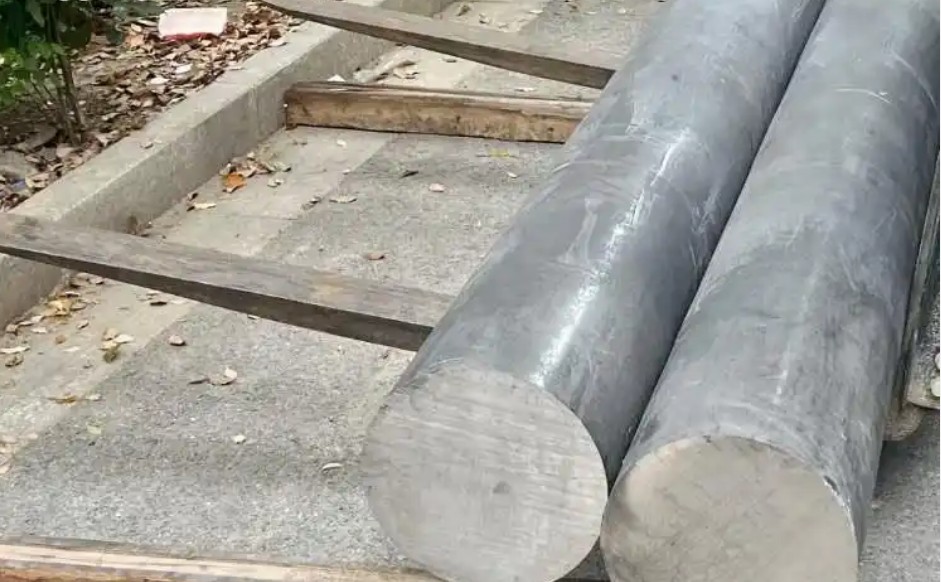
Nickel 200 Chemical Composition: Nickel Balance; Iron ≤0.4%; Carbon ≤0.15%; Manganese ≤0.35%; Silicon ≤0.35%; Copper ≤0.25%; Sulfur ≤0.01%.
Nickel also has good oxidation resistance. In air, a NiO film forms on the nickel surface, preventing further oxidation. Experiments have shown that 99% pure nickel will not rust within 20 years. Nickel has a face-centered cubic crystal structure and is a major austenite-forming element. Pure nickel austenitic alloys containing small amounts of controlling elements exhibit excellent plasticity and can be drawn into nickel wires with a minimum diameter of 0.01 mm.
Physical Properties of Nickel200:
Hardness: Hot-rolled 45~80 HRB, Annealed 45~75 HRB.
Density: 8.89 g/cm³.
Melting Point: 1435~1446℃.
Specific Heat Capacity: 456 J/kg·K.
Thermal Conductivity: 75.5 W/(m·K).
Elastic Modulus: 177~205 GPa.
Due to its excellent plasticity and corrosion resistance, 1.3 mm diameter nickel wire is used to rivet the two covers of mobile phone lithium batteries, withstanding the pressure generated by the internal reaction and the corrosion of the electrolyte without leakage. Corrosion Resistance: It exhibits excellent corrosion resistance. It demonstrates outstanding resistance to common chemical media such as acids, alkalis, and salt solutions. It also shows good resistance to harmful media such as chlorides, sulfuric acid, and nitric acid, and is not easily corroded or oxidized.
Some rivets were not properly sealed, causing electrolyte leakage. Observation revealed cracks on the surface of the rivets after cold heading. Inclusions formed within the alloy melt significantly affect the alloy’s properties, especially the ductility of fine wires. While there is extensive research on inclusions and their effects in alloys both domestically and internationally, research on inclusions in pure nickel wire is relatively limited.
N6 pure nickel alloy is a high-purity nickel alloy material with low density, high melting point, non-magnetic properties, excellent mechanical properties, outstanding corrosion resistance, and good thermal conductivity. These characteristics make N6 pure nickel alloy widely used in many fields, including aerospace, chemical, nuclear industry, electronics, and medical applications.
The production process of N6 pure nickel wire is as follows: melting in a medium-frequency induction furnace – casting ingots – ingot peeling – forging square billets – grinding – rolling – drawing. Samples were taken from rolled φ8mm wire rods to prepare metallographic specimens and observe their surface and internal defects.
Post time: Feb-06-2026