

CMC, short for Copper Molybdenum Copper Composite, is a specialized sandwich-structured material with molybdenum as the core and pure copper cladding on both sides. Unlike ordinary metal materials, it combines the advantages of copper and molybdenum, making products manufactured from it stand out in high-end fields such as electronics, aerospace, and low-altitude economy. Below are the core advantages of these products, explained in practical terms based on real application scenarios.
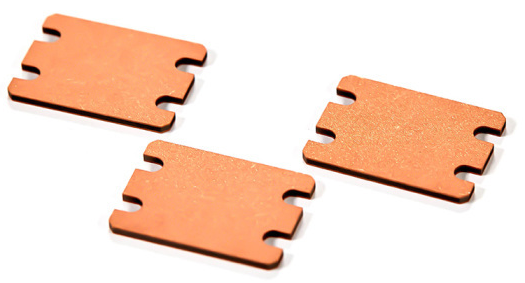
1. Adjustable Thermal Expansion Coefficient for Enhanced Compatibility
One of the most prominent advantages of CMC-based products is their adjustable thermal expansion coefficient (CTE), a feature that ordinary single metals cannot match. By adjusting the thickness ratio of copper and molybdenum layers, manufacturers can tailor the CTE of CMC products to match different materials such as semiconductors, ceramics, and glass substrates. This compatibility prevents thermal stress and deformation caused by mismatched expansion rates during high-temperature operation, significantly improving the stability and service life of electronic components like chip carriers and PCB cores. For example, in microwave chip packaging, CMC-based heat sinks perfectly match the CTE of chip materials, avoiding cracks or detachment due to thermal cycles.
2. High Thermal Conductivity for Efficient Heat Dissipation
Products made from CMC material boast excellent thermal conductivity, a critical advantage in high-power electronic applications. The pure copper cladding on both sides of CMC ensures rapid heat transfer, while the molybdenum core enhances thermal stability, allowing the material to maintain efficient heat dissipation even in extreme temperature environments. With a through-thickness thermal conductivity of over 160 W/(m·K) (depending on the grade), CMC-based thermal sinks and cooling components can quickly dissipate heat generated by high-power devices such as IGBTs and laser diodes. This not only prevents device overheating but also ensures consistent performance, which is essential for equipment like drones and eVTOL flight control systems.
3. High Strength and Thermal Shock Resistance for Durability
CMC material combines the high strength of molybdenum with the ductility of copper, making products made from it highly durable and resistant to thermal shock. The tight bonding between copper and molybdenum layers ensures strong interface adhesion, allowing CMC products to withstand repeated high-temperature shocks up to 850℃ without delamination or damage. This durability makes them ideal for harsh environments, such as aerospace electronic devices and deep-well industrial equipment. Unlike pure copper products that are prone to deformation or pure molybdenum products that are brittle, CMC-based parts balance toughness and strength, reducing maintenance costs and extending service life.
4. Non-Magnetic Property for High-Precision Applications
Another notable advantage of CMC-based products is their non-magnetic nature, which is crucial for high-precision electronic and military applications. Unlike ferromagnetic metals, CMC does not interfere with magnetic fields, making it suitable for manufacturing RF flanges, microwave components, and military electronic device housings. This non-magnetic property ensures that signal transmission remains stable and accurate, without interference from the material itself. For example, in B2 stealth bomber electronic systems, CMC-based circuit boards and frames avoid magnetic interference, ensuring the reliability of communication and navigation equipment.
5. Cost-Effective Processability for Mass Production
Despite its high performance, CMC material offers excellent processability, making products made from it cost-effective for mass production. CMC can be easily stamped, cut, and formed into various shapes, reducing manufacturing complexity and production costs compared to other high-performance composite materials. It can also be produced in large sheet sizes (up to 400mm × 200mm) and thin foils (as thin as 70μm), adapting to different product requirements. This processability allows manufacturers to produce CMC-based parts in large quantities without sacrificing quality, making it a cost-efficient choice for industries ranging from electronics to aerospace.
In summary, products made from CMC material excel in compatibility, heat dissipation, durability, non-magnetism, and processability. These advantages make them irreplaceable in high-end manufacturing fields, providing reliable material support for the development of advanced electronic devices, aerospace equipment, and low-altitude economy products. As technology advances, the application scope of CMC-based products will continue to expand, bringing more innovations to various industries.
Post time: May-05-2026