

Tungsten carbide (WC) is a black, hexagonal crystalline compound composed of tungsten and carbon. Possessing a metallic luster and exceptional physicochemical properties, it is renowned as the “teeth of industry” or the “MSG of modern industry.” Below are its key characteristics and typical applications:
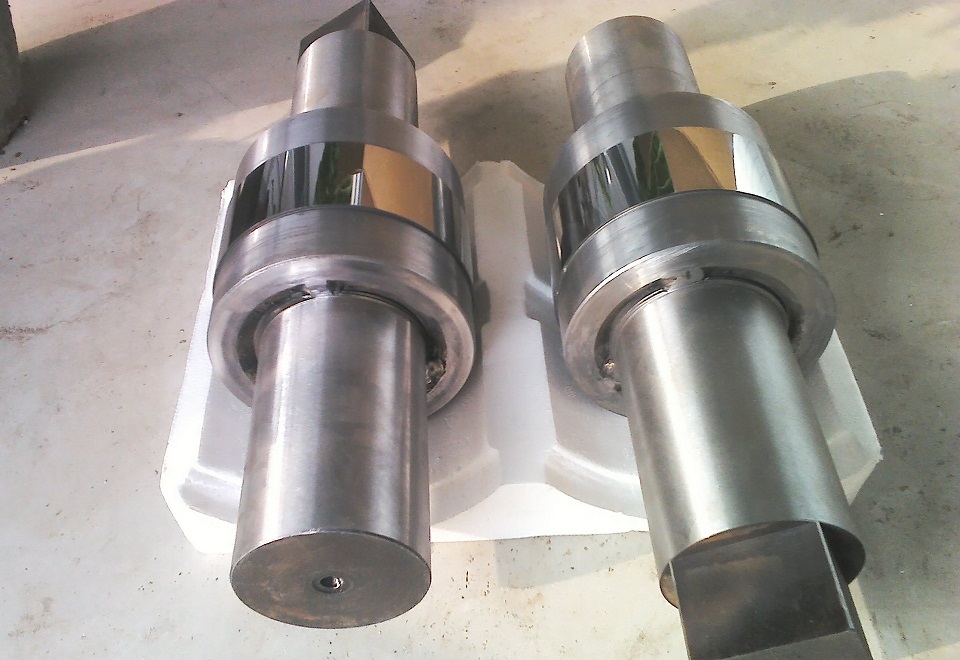
I. Material Characteristics
Physical Properties
Hardness:** Mohs hardness of 8.5–9.7 (approaching that of diamond); Vickers hardness of 2200–2400 HV.
High-Temperature Resistance:** Melting point of 2870°C; boiling point of 6000°C; thermal expansion coefficient of 5.2 × 10⁻⁶/K (20–1000°C).
Density and Conductivity:** Density of 15.63 g/cm³ (at 18°C); a good conductor of electricity and heat; electrical resistivity of approximately 19.2 μΩ·cm.
Chemical Stability
Insoluble in water, hydrochloric acid, and sulfuric acid, but readily soluble in a mixture of nitric and hydrofluoric acids; susceptible to oxidation by air at high temperatures (>500°C).
Addition of metals such as cobalt or titanium reduces brittleness; compounding with titanium carbide or tantalum carbide enhances impact resistance.
Mechanical Properties
* Compressive strength of 2.7 GPa; elastic modulus of 530–700 GPa; excellent wear resistance.
II. Application Fields
Cemented Carbide Manufacturing
Serves as the core raw material (accounting for 88%–96% of composition) for producing cutting tools (supporting turning speeds up to 300 m/min), mining rock-drilling bits (flexural strength ≥ 2500 MPa), etc.
High-End Industrial Components
Aerospace:** High-temperature resistant components such as jet engine nozzles and turbine impellers.
Semiconductors:** Target materials for PVD/CVD processes, used in photolithography etching and thin-film deposition.
Wear Resistance and Protection**
Coating technologies (e.g., HVOF) applied to bearings and mechanical seals, extending service life beyond 2,000 hours.
Military Sector:** Armor-piercing projectiles, armor materials, and missile components. Emerging Fields
Fuel cell catalysts, electrodes for photovoltaic equipment, and medical devices (such as surgical scalpels).
III. Industry Chain and Policy
As the world’s largest holder of tungsten resources (accounting for over 50% of global reserves), China produced 68,000 tons of tungsten carbide in 2024; however, export volumes plummeted in 2025 due to export control policies (such as those affecting Customs Code 2849902000). Key enterprises include Xiamen Tungsten and China Tungsten High-tech.
If you require further information on specific application scenarios (such as the production process for nano-tungsten carbide powder), more detailed details can be provided.
Post time: Jul-20-2026