

Cr20Ni80 corresponding grades: NCr20, 6J20 (China), UNS N06003, 80Ni20Cr (USA), W.Nr. 2.4869, NiCr8020 (Germany), Bregel Alloy C.S. (UK), RNC Superior Amfie, Ni-Cr20 (France), NCHW-1, GNC108, NiCr20 (Japan), X20H80-H, HX20 (Russia), NW6003 (International ISO), Nikrothal 80 (Sweden KANTHAL), Resistohm80 (France Ampron), Nichrome V
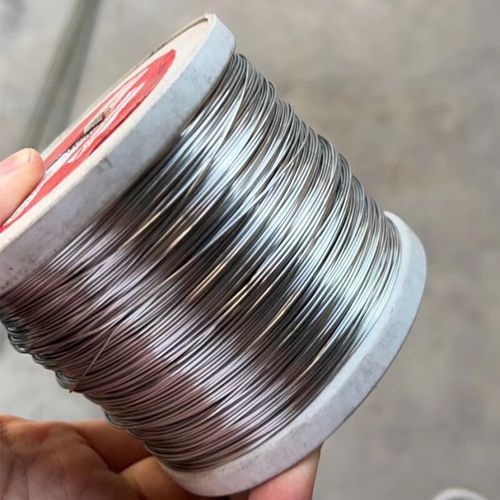
Cr20Ni80 technical standards: GB/T 1234-2012, ASTM B344, DIN 17470, JIS C2532-1999
Cr20Ni80 Supply Forms: Wire, strip, foil, bar, wire rod, heating wire, tube, etc.
Cr20Ni80 Product Origin: Domestic, KANTHAL (Sweden), BGH (Germany), Resistohm (France)
Cr20Ni80 Product Specifications: Complete specifications, both domestic and imported are in stock. Inquiries are welcome; custom processing is supported.
Cr20Ni80 nickel-chromium alloy is a common electrothermal alloy, composed of 20% chromium and 80% nickel. It possesses excellent characteristics such as high resistivity, a stable temperature coefficient of resistance, good mechanical properties, corrosion resistance, and high-temperature resistance, thus finding wide application in the electrothermal field.
This alloy material is mainly used to manufacture electrothermal elements, such as heating wires, heaters, dryers, hot air guns, and electric furnaces. When current passes through it, it generates high resistance, thereby generating heat. This allows it to provide reliable heating effects in many applications.
Cr20Ni80 alloy possesses high resistivity, enabling rapid conversion of electrical energy into heat, thus performing excellently in applications requiring high heating speeds. It also exhibits a stable temperature coefficient of resistance, maintaining a consistent resistance value across different temperatures, unaffected by ambient temperature.
Furthermore, Cr20Ni80 alloy possesses good mechanical properties, adaptable to various processing and manufacturing processes, such as wire drawing, welding, and cold working. It also exhibits good corrosion resistance, maintaining good durability in some corrosive media.
Due to its high-temperature resistance, capable of withstanding temperatures up to 1200℃, Cr20Ni80 alloy has broad application prospects in high-temperature electrothermal applications. It is widely used in household appliances, industrial heating equipment, heat treatment equipment, petrochemicals, and electronic instruments.
In summary, Cr20Ni80 nickel-chromium alloy is an important electrothermal alloy material, possessing excellent characteristics such as high resistivity, a stable temperature coefficient of resistance, good mechanical properties, corrosion resistance, and high-temperature resistance, making it widely used in the electrothermal field.
The chemical composition of Cr20Ni80 alloy is 20% chromium (Cr) and 80% nickel (Ni). The following are some of the main physical properties of this alloy:
1. Density: The density of Cr20Ni80 alloy is approximately 8.4 g/cm³, exhibiting a relatively high density.
2. Melting Point: The melting point of Cr20Ni80 alloy is approximately 1400°C, exhibiting a relatively high melting point.
3. Resistivity: Cr20Ni80 alloy has a relatively high resistivity, typically between 1.09 and 1.18 x 10⁻⁶ Ω·m.
4. Coefficient of Thermal Expansion: The coefficient of thermal expansion of Cr20Ni80 alloy is approximately 18 x 10⁻⁶/°C, exhibiting moderate thermal expansion.
5. Thermal Conductivity: Cr20Ni80 alloy has relatively high thermal conductivity, typically between 14 and 19 W/(m·K).
6. Tensile Strength and Yield Strength: The tensile strength of Cr20Ni80 alloy is typically between 600-700 MPa, and the yield strength is between 200-300 MPa.
7. Hardness: The hardness of Cr20Ni80 alloy is typically between 180-220 HB.
8. Corrosion Resistance: Cr20Ni80 alloy exhibits good corrosion resistance, showing good resistance to most non-oxidizing acids, neutral salt water, and some oxidizing media.
It should be noted that these physical properties may vary depending on specific manufacturing processes, alloy processing, and conditions. Therefore, in specific applications, it is necessary to refer to relevant technical specifications and specific data provided by the manufacturer.
Post time: Apr-22-2026