

Copper-molybdenum copper-copper composite, abbreviated as CMCC or CPC, is a “sandwich” structure composite material with a core of metallic molybdenum copper and double-sided pure copper cladding. The thickness of each layer in the copper-molybdenum copper-copper composite can be adjusted as needed, with common thickness ratios including 1:1:1, 1:3:1, 1:4:1, and 2:3:2.
The upstream of the copper-molybdenum copper-copper composite material industry chain is the raw material supply layer, mainly including metallic copper and molybdenum copper. Molybdenum copper is a composite material of molybdenum and copper, with a density much lower than tungsten copper, and features high thermal conductivity and an adjustable coefficient of thermal expansion, making it particularly suitable for aerospace, electronic packaging, and communications fields. Molybdenum copper can be prepared through copper infiltration, mixture sintering, and injection molding. Chinese molybdenum copper producers include Luoyang Molybdenum and Jinchuan Group.
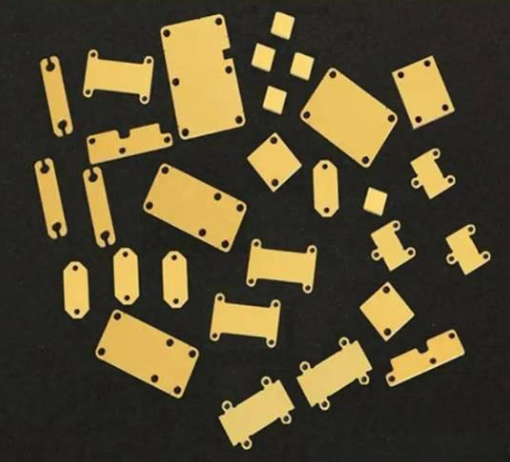
According to the “2024-2029 China Copper-Molybdenum Copper-Copper Composite Material (CPC) Industry Market In-Depth Research and Development Prospect Forecast Report” released by the New Thinking Industry Research Center, although the coefficient of thermal expansion of copper-molybdenum copper-copper composite materials is higher than that of copper-copper-copper composite materials (CMC), they possess higher thermal conductivity, strength, and excellent reliability and heat dissipation. They are widely used in electronic packaging, thermal management, military, wireless communication, optical communication, and aerospace fields.
In recent years, with the development of the electronics industry, the trend towards high power and miniaturization of semiconductor devices and integrated circuits has become increasingly apparent. Against this backdrop, the density of electronic packaging and the heat generation per unit area have increased accordingly. To ensure the operational stability of integrated circuits and semiconductor devices, the development of high thermal conductivity and high reliability electronic packaging heat sink materials has become paramount. Copper-molybdenum copper-copper composite materials are one of the heat sink composite materials used in microelectronic packaging, with a broad market demand.
Relevant standards for the copper-molybdenum copper-copper composite material industry include YS/T 1546-2022 “Molybdenum-Copper Alloy Plate” and YS/T 1595-2023 “Molybdenum-Copper Layered Composite Materials for Electronic Packaging,” etc. The publication and implementation of these standards provide important references for the standardized, regulated, and high-quality development of the copper-molybdenum copper-copper composite material industry.
As one of the major copper-molybdenum copper-copper composite material manufacturers in my country, FOTMA ALLOY’s copper-molybdenum copper-copper composite materials have excellent heat dissipation capabilities and can match the thermal expansion coefficients of silicon semiconductors and ceramic substrates, offering broad application prospects in the electronic packaging field. Copper-molybdenum copper-copper composite materials use metallic copper and molybdenum copper as raw materials. my country has relatively abundant molybdenum and copper ore resources, which lays a solid raw material foundation for the development of the copper-molybdenum copper-copper composite material industry.
Post time: Apr-07-2026