

Resistance welding is a process that uses electric current to generate heat in the materials being welded, causing them to heat locally and reach their melting point, thus completing the weld. In resistance welding, the quality of the electrode directly affects the quality and efficiency of the weld. Tungsten carbide electrodes, as an important electrode material in resistance welding, are widely used in the welding industry due to their unique physical and chemical properties. This article will discuss the advantages of tungsten carbide electrodes and their applications in the welding process, focusing on the technical aspects of resistance welding.
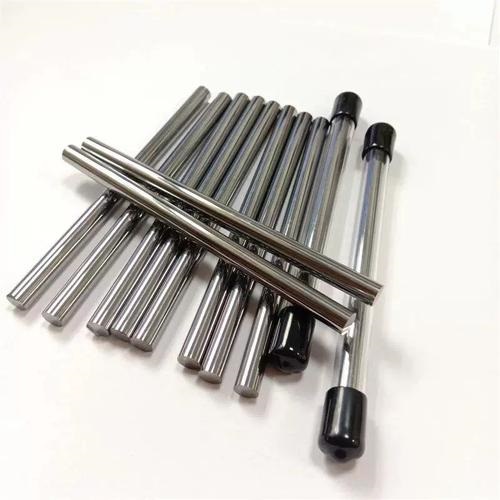
I. Characteristics of Tungsten Carbide Electrodes
Tungsten carbide (WC) is a compound formed from tungsten and carbon elements. It possesses extremely high hardness and wear resistance, making it one of the hardest materials in the world. Compared to tungsten carbide electrodes, tungsten carbide electrodes exhibit superior wear resistance, corrosion resistance, and high-temperature stability, giving them numerous advantages in resistance welding.
High Hardness and Wear Resistance: Tungsten carbide has a hardness approaching that of diamond, effectively resisting the high-intensity friction and impact during welding, reducing electrode wear. Therefore, tungsten carbide electrodes can maintain stable contact pressure and current conduction under prolonged high-intensity operation, extending their service life.
High Temperature Resistance: Tungsten carbide has an extremely high melting point (approximately 3000°C), enabling tungsten carbide electrodes to withstand the high-temperature working environment during resistance welding, preventing softening or deformation due to high temperatures.
Corrosion Resistance and Chemical Stability: Resistance welding often involves contact with various chemical substances (such as oxygen, nitrogen, and gases generated during welding). Tungsten carbide has strong corrosion resistance, preventing the electrode from being corroded by oxides or other chemical substances generated during welding, maintaining its stable performance.
Good Electrical Conductivity: Tungsten carbide electrodes exhibit good electrical conductivity during welding, effectively conducting current, reducing resistance loss, and improving current utilization and welding efficiency.
II. Applications of Tungsten Carbide Electrodes in Resistance Welding
Resistance welding is a highly efficient and automated welding method widely used in industries such as automotive, home appliances, and electronics. Tungsten carbide electrodes play a crucial role in resistance welding and are commonly used in the following main welding processes:
Spot welding: Spot welding is the most common form of resistance welding, primarily used for the rapid joining of thin sheet metals. The superior wear resistance and high-temperature resistance of tungsten carbide electrodes allow them to maintain a long service life during high-frequency spot welding processes, reducing poor contact caused by electrode wear and ensuring weld quality.
Projection welding: Projection welding is a resistance welding process used to join thick-walled metals or dissimilar metals. In this process, tungsten carbide electrodes can withstand large current loads while maintaining high welding precision and stability. Due to the high hardness of tungsten carbide, it effectively prevents damage to the electrode surface caused by the high temperatures during welding.
Stud welding: Stud welding is commonly used to fix metal studs to other metal substrates. The high wear resistance and toughness of tungsten carbide electrodes make them ideal for stud welding processes that withstand high pressure and high frequency.
Roll welding: In roll welding, tungsten carbide electrodes maintain a low wear rate during prolonged continuous operation, ensuring efficient heat conduction between the electrode and the workpiece surface and stable weld quality. This makes them suitable for continuous welding applications involving metal strips and pipes.
III. Advantages of Tungsten Carbide Electrodes
Extended Electrode Lifespan: Due to their superior wear resistance and high-temperature resistance, tungsten carbide electrodes maintain a low wear rate for extended periods, significantly extending their lifespan and reducing replacement frequency. This not only lowers maintenance costs during welding but also improves production efficiency.
Improved Weld Quality and Consistency: Tungsten carbide electrodes provide more stable contact pressure and current conduction, avoiding poor contact problems caused by electrode wear and deformation. During welding, the consistency and stability of weld quality are significantly improved, especially under high-intensity and high-frequency working conditions, ensuring the quality of every weld joint.
High Adaptability: Tungsten carbide electrodes can adapt to various complex welding conditions, especially suitable for welding in harsh environments such as high temperature, high pressure, and strong corrosion. Its excellent electrical conductivity allows for more efficient current transfer to the welding area during resistance welding, thereby improving welding speed and efficiency.
Energy saving and environmental protection: The high electrical conductivity and high-temperature resistance of tungsten carbide electrodes help reduce energy loss and improve welding efficiency. This not only helps reduce production costs but also reduces energy consumption, resulting in a smaller environmental impact, meeting the energy-saving and environmental protection needs of modern manufacturing.
IV. Conclusion
Tungsten carbide electrodes, as a new type of high-performance electrode material, have demonstrated significant advantages in resistance welding processes. Their unique physical and chemical properties enable them to maintain excellent welding performance under extreme working conditions, especially in welding high-strength metals, dissimilar metals, and high-frequency, high-current welding applications. With the increasing demands for welding quality in industry, tungsten carbide electrodes will undoubtedly play an increasingly important role in more high-precision, high-strength welding fields, becoming one of the key materials driving the development of resistance welding technology.
Post time: Jun-09-2026