

1【Importance of Carbide Sealing Rings】
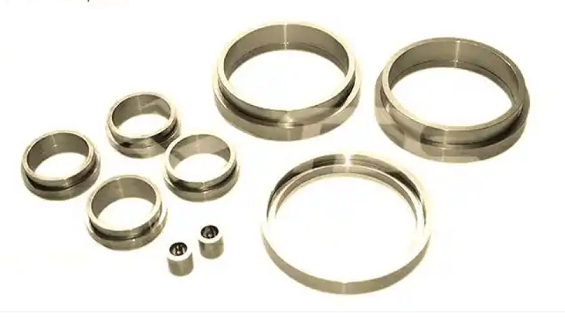
Carbide sealing rings, as core components of mechanical seals, play a crucial role in numerous fields. Their superior wear resistance, corrosion resistance, and high-temperature stability make them key factors in ensuring the efficient and stable operation of mechanical equipment. Through meticulous research and development and production by FOTMA ALLOY, the performance of carbide sealing rings has been further improved, providing a more reliable guarantee for the application of mechanical seals.
◆ Wear Resistance and High-Temperature Stability
Carbide sealing rings, due to their excellent wear resistance, corrosion resistance, and high-temperature stability, have become key components for ensuring the efficient and stable operation of mechanical equipment.
◆ Improvements by Zhuzhou Tongda Alloy
FOTMA ALLOY’s continuous research and development has supported the improvement of carbide sealing ring performance, providing a stronger guarantee for mechanical seal applications.
2【Basic Knowledge of Sealing Rings】
◆ Composition of Sealing Rings
As the core component of mechanical seals, sealing rings consist of a rotating ring and a stationary ring, and their design determines the sealing effect.
◆ Material Selection Considerations
Material selection requires comprehensive consideration of various properties, especially wear resistance, corrosion resistance, and thermal conductivity. When selecting a sealing ring material, its wear resistance, corrosion resistance, heat resistance, thermal conductivity, self-lubricating properties, and machinability must be considered. Simultaneously, materials with a low coefficient of linear expansion should be chosen to minimize thermal deformation of the friction pair materials.
3【Manufacturing Technology of Carbide Sealing Rings】
◆ Heat Sleeving and Inlay Technology
Currently, carbide sealing rings are mostly manufactured using heat sleeve or inlay technology, combining them with metal bases such as stainless steel. Due to its high melting point, high elastic modulus, high strength, high hardness, excellent wear resistance, good thermal conductivity, and high corrosion resistance, carbide has become a widely used hard material for friction pairs, especially suitable for high-load applications.
◆ Precautions and Suggestions
However, it should be noted that the difference in the coefficients of thermal expansion between the metal base and the carbide can cause problems. Improper selection of the interference fit in the heat sleeve process may cause the sealing ring to detach or deform during use. To avoid such situations, it is recommended to use a high-nickel alloy material with a coefficient of thermal expansion similar to that of cemented carbide as the metal base to ensure the stability and durability of the embedded cemented carbide sealing ring.
4【Application Scenarios of Cemented Carbide Sealing Rings】
◆ High-Temperature Environment Applications
Integral cemented carbide sealing rings perform excellently in high-temperature environments and are suitable for high-temperature oil pumps, corrosive media such as molten sodium hydroxide containing crystals and urea, as well as mechanical seal applications in high-speed, high-pressure, large-diameter centrifugal compressors. Their main characteristics include high stability, corrosion resistance, and wear resistance. In high-temperature environments, the flatness of their end faces is not affected by differences in the coefficients of thermal expansion of the materials, ensuring stable operation.
◆ Suitability in High-Speed and High-Pressure Environments
The uniform material of integral cemented carbide sealing rings ensures that even with increased centrifugal force during high-speed operation, the vibration and imbalance of the sealing ring will not be excessive. Simultaneously, their excellent thermal conductivity and minimal thermal deformation further enhance their suitability as dynamic rings in high-speed pumps.
◆ Performance in Particulate Media
The integral cemented carbide sealing ring also exhibits excellent adaptability in media containing particulate matter. Its material uniformity and excellent wear resistance effectively resist the abrasion caused by particulate media, ensuring reliable long-term use in harsh environments. Particulate impurities or dissolved solids in the medium often enter or deposit on the sealing surface after solvent evaporation. This not only leads to severe abrasive wear but also causes localized heating of the sealing surface, potentially leading to thermal cracking. If the medium is a corrosive electrolyte, chemical and electrochemical corrosion will occur on the sealing ring surface. Simultaneously, the increased temperature of the medium further complicates the sealing problem. Therefore, for media containing solid particles, cemented carbide materials are typically chosen for the friction pairs of mechanical seals to ensure their durability.
Post time: Mar-11-2026