

Carbide inserts are indispensable cutting tools in modern industry, and their manufacturing process involves highly precise engineering techniques and machining steps. This article will delve into the manufacturing process of carbide inserts, explaining how each key step transforms raw materials into high-performance cutting tools.
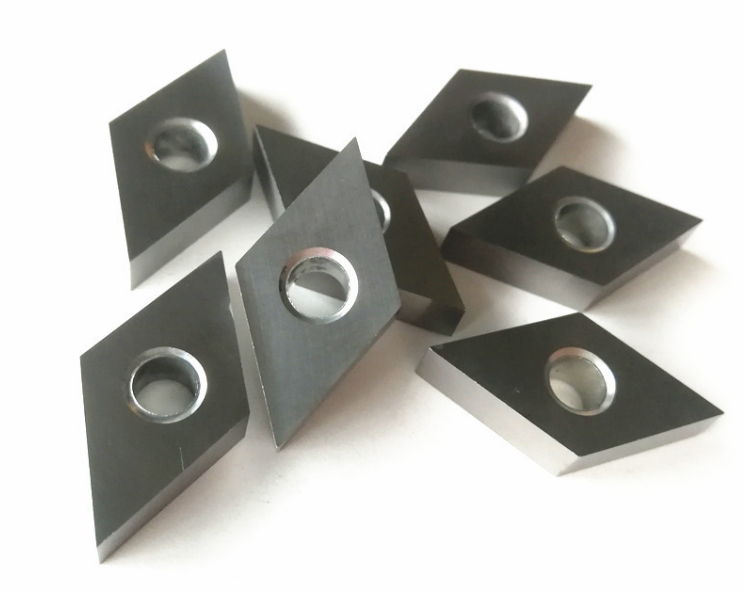
Step 1: Raw Material Preparation. The manufacture of carbide inserts begins with the precise mixing of raw materials. The main components include tungsten carbide (WC) powder and cobalt (Co) powder. The mixing ratio of these two materials is crucial to the performance of the final insert. Tungsten carbide provides high hardness, while cobalt adds toughness. The quality of the raw materials and precise mixing are key to ensuring the performance of the final insert.
Step 2: Mixing and Compression. Once the raw materials are uniformly mixed, the next step is to compress the powder mixture into the desired shape of the insert. This is typically accomplished using powder metallurgy methods. The mixture is compressed into a highly dense blank whose shape approximates the final insert profile.
Step 3: Sintering. Sintering is a crucial step in the manufacturing of carbide inserts. In a high-temperature environment, the billet is sintered, where tungsten carbide particles combine with cobalt powder to form a strong cemented carbide material. This process requires extremely high temperatures and pressures to ensure a strong bond between the particles. After sintering, the billet becomes very hard, but it has not yet reached the final cutting tool shape.
Step 4: Grinding and Machining. The sintered cemented carbide billet needs further machining to obtain the desired cutting tool shape and size. This typically involves grinding and cutting operations using highly precise machines and tools. These operations require a high degree of skill to ensure that the dimensions and shape of the cutting tool meet precise specifications.
Step 5: Coating (Optional). Depending on the application requirements, cemented carbide cutting tools may be coated to enhance their performance. These coatings can improve wear resistance, reduce friction, increase tool life, or improve cutting characteristics. Common coatings include titanium plating, nitride coatings, etc.
Step 6: Quality Control and Testing. Quality control is crucial at every stage of the manufacturing process. The cutting tools need to undergo rigorous inspection and testing to ensure they meet specifications. This includes dimensional measurements, hardness testing, abrasion resistance testing, and other performance evaluations.
Post time: Jun-16-2026