

With the continuous development of electronic technology, chip packaging, as a key link in electronic product manufacturing, places increasingly higher demands on materials. In chip packaging, materials not only need good thermal conductivity but also good mechanical strength, stability, and corrosion resistance to ensure stable chip operation under various environmental conditions. Molybdenum copper (MoCu) material, as an ideal packaging material, plays a crucial role in chip packaging.
1. Thermal Dissipation Performance
In modern electronic products, the power density of chips is increasingly high, thus requiring more effective heat dissipation solutions to maintain stable chip operating temperatures. Molybdenum copper (MoCu) material has excellent thermal conductivity, typically exceeding 180 W/mK, far higher than many traditional heat dissipation materials such as aluminum and copper. This makes MoCu an ideal heat dissipation material, capable of quickly conducting the heat generated by the chip to the heat sink or heat dissipation module and effectively dissipating it into the surrounding environment, ensuring the chip operates within an appropriate temperature range.
2. Packaging Material
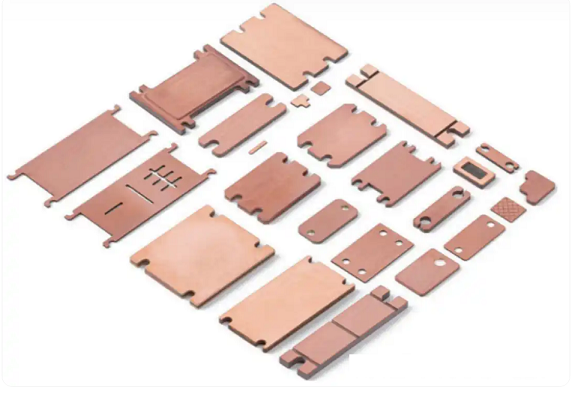
Molybdenum copper (MoCu) material is commonly used as a substrate or heatsink material for chip packaging. Its high strength, high temperature resistance, and good mechanical properties make it an ideal choice for packaging materials. Molybdenum-copper substrates are commonly used in the packaging of high-power devices, such as power amplifiers and laser diodes. Their excellent thermal conductivity and high-temperature resistance effectively reduce the operating temperature of the devices, improving performance and reliability. Furthermore, molybdenum-copper heat sinks are widely used in the packaging of microprocessors, graphics processors, and other high-performance chips, helping to effectively dissipate heat and improve their performance and stability.
3. Thermal Management
After chip packaging, as chip power consumption increases, thermal management becomes increasingly important. Molybdenum-copper materials can be used to manufacture heat dissipation modules for post-packaging thermal management. These modules typically consist of a molybdenum-copper substrate and heat sinks, effectively absorbing and dissipating the heat generated by the chip, improving device performance and stability. Through proper heat dissipation structure design, heat can be effectively conducted and dissipated into the surrounding environment, maintaining a stable chip operating temperature and extending the device’s lifespan.
4. Reliability and Stability
In chip packaging, the reliability and stability of materials are crucial for the long-term stable operation of the device. Molybdenum-copper materials have good corrosion resistance and mechanical stability, maintaining stability under various operating environments. Its excellent thermal conductivity and high-temperature resistance can effectively reduce the operating temperature of the chip, reduce the impact of thermal stress on the chip, and thus improve the reliability and stability of the device.
Conclusion
In summary, molybdenum copper (MCC) material has significant application value in chip packaging. Its excellent thermal conductivity, good mechanical properties, and stability make it an ideal choice for chip packaging materials. With the continuous development of electronic technology and the increasing popularity of electronic products, it is believed that the application of MCC material in the field of chip packaging will become more and more widespread, providing better protection for the performance and reliability of electronic products.
FOTMA ALLOY Electronic Packaging Material Customization
FOTMA ALLOY has already provided a series of packaging materials in bulk, including IGBT copper substrates, tungsten copper, molybdenum copper, CPC, CMC, diamond copper, aluminum silicon carbide, and aluminum silicon, as well as packaging heat sinks and packaging shells. Currently, our products are used by leading domestic and international semiconductor device, chip, and RF device manufacturers. Welcome to inquire about customization!
Post time: Mar-23-2026