

As the world entered the era of electronic information technology in the 21st century, the demand for increasingly lightweight, highly integrated, and high-speed electronic devices has driven the evolution of the electronics industry and the advancement of high-density packaging technologies. Traditional electronic packaging materials are no longer sufficient to meet the performance requirements of high-end components. Consequently, the research and development of new packaging materials—characterized by high thermal conductivity, low density, and a low coefficient of thermal expansion (CTE)—hold significant theoretical and practical value. Since no single material can simultaneously satisfy the stringent thermal conductivity and CTE requirements of ultra-large-scale integrated circuits (ULSICs), the development of composite packaging materials has become an inevitable trend.
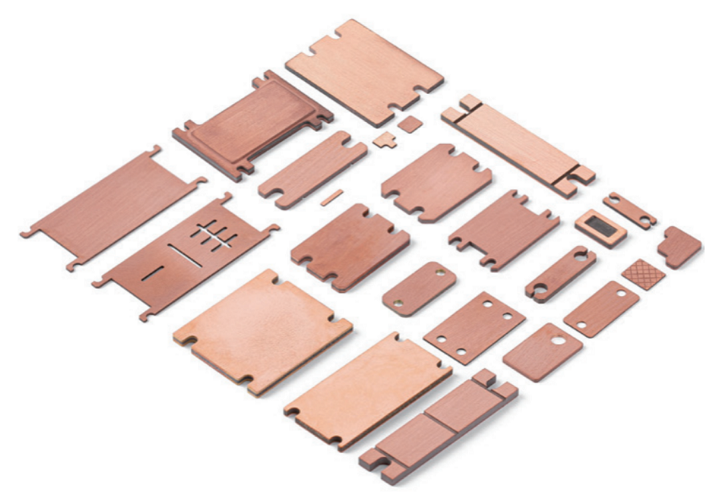
Currently, numerous research institutions worldwide have developed composite materials that offer high thermal conductivity, low CTE, and low density. These materials are now being deployed extensively in the field of electronic packaging. Advanced composites such as aluminum-silicon carbide (AlSiC), aluminum-diamond (Al/Dia), and copper-diamond (Cu/Dia) demonstrate performance far superior to that of earlier generations of packaging materials.
In the context of electronic packaging, the first generation of materials—comprising elemental metals (e.g., copper, aluminum), ceramics, and polymers—was utilized based on their inherent properties. However, each of these materials possesses intrinsic drawbacks that limit their scope of application. For instance, while materials like Cu, Al, Al2O3, and AlN have specific advantages, they also carry inherent disadvantages that prevent them from being ideal solutions for many demanding applications.
The second generation of packaging materials consists of composites formed from two or more metals, such as Kovar, tungsten-copper (W-Cu) alloys, and molybdenum-copper (Mo-Cu) alloys. To further optimize heat dissipation, these materials have been engineered into sophisticated structures, including copper-molybdenum-copper (CMC) and copper-molybdenum-copper-copper (CPC) laminates. Properties of Tungsten-Copper (W-Cu) Materials
Tungsten-copper (W-Cu) is a composite material combining tungsten and copper. It leverages the low thermal expansion of tungsten and the high thermal conductivity of copper; its coefficient of thermal expansion (CTE), thermal conductivity, and electrical conductivity can be tailored by adjusting the material composition. W-Cu materials offer excellent thermal expansion matching with ceramics, semiconductors, and various metals, making them ideal for applications in radio frequency (RF) and microwave systems, high-power semiconductor packaging, and optical communications.
Molybdenum-copper (Mo-Cu) is a composite of molybdenum and copper. Similar to W-Cu, it features an adjustable CTE and thermal conductivity. However, Mo-Cu has a significantly lower density than W-Cu, making it better suited for aerospace and related sectors. These materials are characterized by high purity, a uniform microstructure, and superior performance. As no binders are used in their production, Mo-Cu materials exhibit exceptionally high thermal conductivity. Their CTE is well-matched with the ceramics and semiconductors used in the electronics industry. Furthermore, Mo-Cu is cost-effective due to its suitability for stamping and mass-production processes, and it offers excellent machinability. Compared to pure molybdenum, Mo-Cu provides greater resistance to ablation, as well as improved plasticity and workability; it can be used for high-temperature components in rockets and missiles (where operating temperatures are relatively lower) or as a substitute for pure molybdenum in other defense applications. High-power integrated circuits and microwave integrated devices require materials with high electrical and thermal conductivity to serve as conductive and heat-dissipating elements, while also meeting stringent requirements for vacuum compatibility, heat resistance, and specific CTE values. With its well-balanced properties, Mo-Cu is a preferred material for these applications.
Copper-Molybdenum-Copper (CMC) is a sandwich-structured composite material consisting of a pure molybdenum core clad on both sides with pure copper or dispersion-strengthened copper. This material offers an adjustable CTE, high thermal conductivity, and excellent high-temperature resistance. It is typically manufactured using techniques such as roll bonding, electroplating, or explosive forming. In electronic packaging, CMC is primarily used for heat sinks, lead frames, and as a low-expansion, thermally conductive substrate for multi-layer printed circuit boards (PCBs). Similar to Copper/Molybdenum/Copper (CMC), Copper/Molybdenum-Copper/Copper (CPC) is a sandwich-structured material. It consists of two outer layers of copper (Cu) encasing a core layer of a molybdenum-copper (MoCu) alloy. This structure exhibits varying coefficients of thermal expansion (CTE) across different regions. Compared to tungsten-copper, molybdenum-copper, or CMC materials, CPC offers higher thermal conductivity and a more competitive price point.
Advantages of Copper/Molybdenum-Copper/Copper (CPC) for electronic packaging:
1. Higher thermal conductivity than CMC.
2. Can be stamped into components, helping to reduce costs.
3. Strong interfacial bonding, capable of withstanding repeated thermal shocks at temperatures up to 850°C.
4. Customizable coefficient of thermal expansion (CTE) to match materials such as semiconductors and ceramics.
5. Non-magnetic.
The third generation of packaging materials—a category that includes metal-matrix thermal management composites such as Aluminum Silicon Carbide (AlSiC), Aluminum-Silicon (AlSi), Aluminum-Diamond (Al-Dia), and Copper-Diamond (Cu-Dia)—is designed specifically for electronic components. These materials are formed by combining a metal with a non-metallic material, resulting in a composite that possesses the properties of both the metal and the non-metallic component (such as ceramics, silicon particles, or diamond). Key characteristics include high thermal conductivity, high rigidity, high wear resistance, a low coefficient of thermal expansion, low density, and low cost. These attributes are not only revolutionary for electronic packaging but also highly valuable for various other industrial applications.
Aluminum Silicon Carbide (AlSiC) is an aluminum-matrix composite reinforced with ceramic silicon carbide particles (also known as silicon carbide-infiltrated aluminum). It is produced by infiltrating molten aluminum into a silicon carbide preform under vacuum and pressure. This process alters the microstructure of the alloy, thereby modifying its properties and significantly enhancing the strength and overall performance of the composite material. Aluminum-silicon carbide (Al-SiC) composites offer numerous advantages, including low density (less than 3.1 g/cm³), high strength, a high specific modulus, a low coefficient of thermal expansion, and excellent dimensional stability. These superior properties allow them to outperform and serve as replacements for a variety of traditional materials.
Aluminum-silicon (Al-Si) alloys are another type of metal-matrix composite that leverage the combined characteristics of aluminum and silicon; they are primarily used for aerospace packaging housings. While their thermal conductivity is slightly lower than that of Al-SiC, they are less hard and offer better machinability. Available with silicon content levels of 27%, 42%, 50%, 60%, and 70%, these materials are mainly used in electronic packaging—delivering exceptional performance for components such as microwave power devices, integrated power modules, and T/R (transmit/receive) modules. When used for bases, housings, enclosures, or lids in electronic packaging, high-silicon aluminum alloys provide excellent compatibility and superior heat dissipation. This significantly extends the service life of high-power modules and enhances overall reliability. Key characteristics of this material include low density (2.4–2.7 g/cm³), high thermal conductivity, a low coefficient of thermal expansion, high rigidity, good machinability, excellent surface plating and welding properties, high material density, and resistance to both high temperatures and corrosion.
We provide a comprehensive range of electronic packaging services, spanning R&D, production, precision machining, and electroplating.
Copper-diamond (Cu/Dia) is a composite material consisting of synthetic diamond powder and a copper alloy. By utilizing high-quality synthetic diamond powder—which offers a thermal conductivity of approximately 1000 W/m·K and an extremely low coefficient of thermal expansion—and employing an optimized manufacturing process, a metallurgical bond is formed between the diamond particles and the copper alloy. This results in a composite material with outstanding thermal conductivity and a well-matched coefficient of thermal expansion.
Aluminum-diamond (Al/Dia) is similar to copper-diamond but features a lower density, though its thermal conductivity is slightly lower than that of the copper-based variant.
Copper-diamond and aluminum-diamond composites currently represent the best-performing materials available for heat dissipation. (Single-crystal diamond and CVD diamond possess high thermal conductivity but an excessively low coefficient of thermal expansion; carbon fiber composites exhibit directional characteristics in both thermal expansion and thermal conductivity.)
We offer a comprehensive range of electronic packaging services—from R&D and production to precision machining and electroplating—tailored to our clients’ specific requirements. We welcome your inquiries.
Post time: Oct-28-2026