

High-purity tungsten sheets are processed materials made from metallic tungsten. Due to their high melting point, high density, and excellent chemical stability, they have become an important basic raw material in scientific research, industrial manufacturing, and special materials fields. Their purity typically reaches over 99.99% (4N grade), meeting the stringent requirements of precision experiments for material composition. Furthermore, vacuum packaging technology extends the storage period and prevents oxidation or contamination.
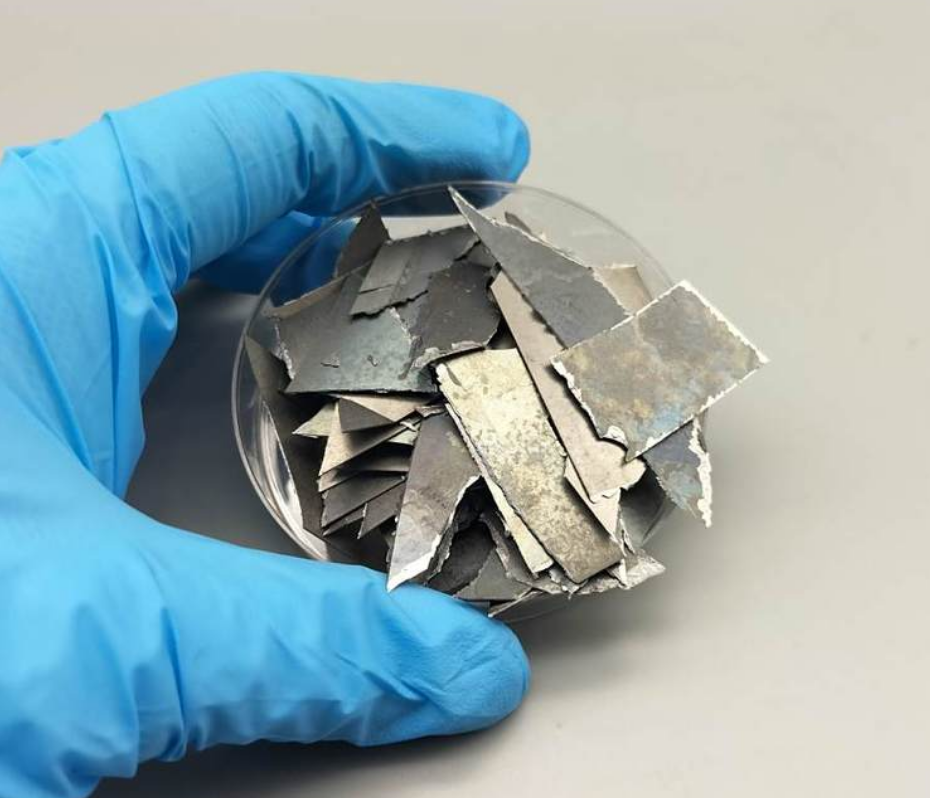
I. Technical Characteristics and Core Advantages: Tungsten has a melting point as high as 3410℃, one of the highest melting points among all metals. This characteristic allows it to maintain structural stability even at high temperatures. High-purity tungsten sheets are manufactured through vacuum melting, rolling, or forging processes, resulting in high surface smoothness and uniform internal grains, effectively reducing the interference of impurities on material properties. Compared to ordinary tungsten materials, 4N grade tungsten sheets have a lower impurity content, significantly improving the reliability of experimental data. For example, in semiconductor target preparation, every order of magnitude increase in purity significantly improves the conductivity and uniformity of the thin film.
II. Typical Application Scenarios: In scientific research, high-purity tungsten sheets are frequently used as sputtering targets for preparing metal thin films or functional coatings. For example, in the manufacturing of solar cells and displays, tungsten targets are used to form conductive or barrier layers through physical vapor deposition (PVD). In industry, its high hardness makes it a hardening material for cutting tools and molds, extending equipment lifespan. In aerospace, the high density of tungsten sheets is used in counterweights or radiation shielding components to balance the center of gravity of aircraft or block radiation. Furthermore, tungsten sheets are widely used in nuclear energy and medical imaging equipment (such as X-ray tubes) due to their high-temperature resistance and radiation resistance.
III. Processing Customization and Usage Specifications: High-purity tungsten sheets can be customized in different thicknesses (0.1-10mm), sizes (up to 1000mm×1000mm), and shapes (round, square, or irregular) according to requirements. The customization process requires specifying parameters such as purity grade and surface roughness. Avoid direct contact with strong acids and alkalis during use. The storage environment should be kept dry (humidity below 40%) and the temperature controlled below 25℃. Vacuum sealing and shockproof packaging should be used during transportation to prevent material deformation or surface scratches caused by vibration.
IV. Material Selection and Quality Assurance: When selecting high-purity tungsten sheets, three core indicators should be considered: first, purity grade (e.g., 4N, 5N), as higher purity results in more stable material performance; second, grain structure, as finer grains offer better processing performance; and third, surface defect rate, as a low defect rate reduces scrap rates in subsequent processing. Reputable suppliers will provide spectral analysis reports, clearly identifying the types and contents of impurity elements to help users verify material quality. Furthermore, vacuum sealing not only isolates the material from air but also further reduces oxidation risk through inert gas protection, extending the material’s shelf life to over two years.
Post time: Jan-28-2026