

Our comprehensive CNC machining capabilities for aluminum alloys provide end-to-end services for your aluminum machining projects, from prototype machining to final batch production of aluminum parts.
A Professional Team for Aluminum Alloy Machining
With the widespread use of lightweight metals, CNC machining of aluminum parts is becoming the choice for many industries. Leveraging our extensive machining capabilities and experience, CNC machining of aluminum alloys has been a specialty of Weker for many years.
We focus on the manufacture of non-standard precision aluminum parts with complex structures, committed to delivering highly accurate and consistent parts to our customers. We continuously invest in new equipment and skilled workers to ensure our team maintains a strong competitive edge, and we are constantly improving our aluminum machining processes to enhance efficiency and quality, continuously meeting our customers’ production needs.
Aluminum Alloy Prototype Machining
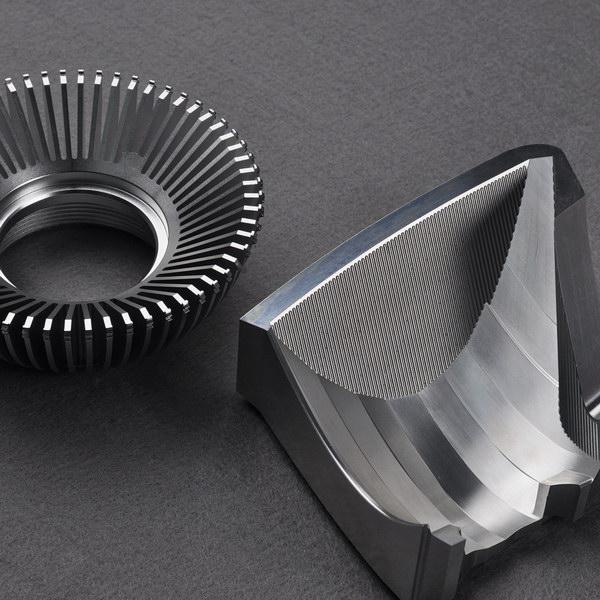
Aluminum alloy prototype machining is an effective way to handle complex design verification and pre-production testing before batch manufacturing of aluminum parts. It allows you to identify and resolve problems faster and move towards production.
We implement an efficient, accurate, and cost-effective production process internally, delivering superior product results for your aluminum alloy prototype machining. Our engineering team will review every project, analyze your design, and meet any special requirements, such as combinations of welding, EDM, or wire cutting processes. This in-depth validation ensures you get the most efficient machining process in terms of budget, time, and materials.
Custom Aluminum Parts Mass Production
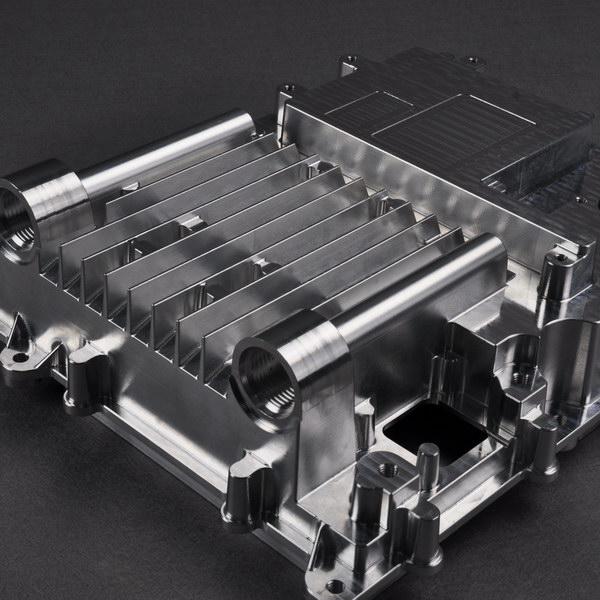
If you need assistance with custom aluminum parts machining projects, our expertise in CNC aluminum machining makes us one of your most capable and affordable supplier resources. Adhering strictly to ISO 9001 quality standards, combined with efficient production processes and flexible customization engineering, we can deliver complex projects with short turnaround times and superior product quality.
We also offer typical surface treatments for custom aluminum parts, such as sandblasting, shot peening, polishing, anodizing, electrophoresis, chromate coating, powder coating, and painting.
Advantages of Machining Aluminum Alloys
* High strength and lightweight
* Excellent machinability
* Superior corrosion resistance
* Higher electrical conductivity
* Surface treatment and anodizing
* Lower production costs
* Recyclability
Aluminum Alloy Milling and 5-Axis Machining
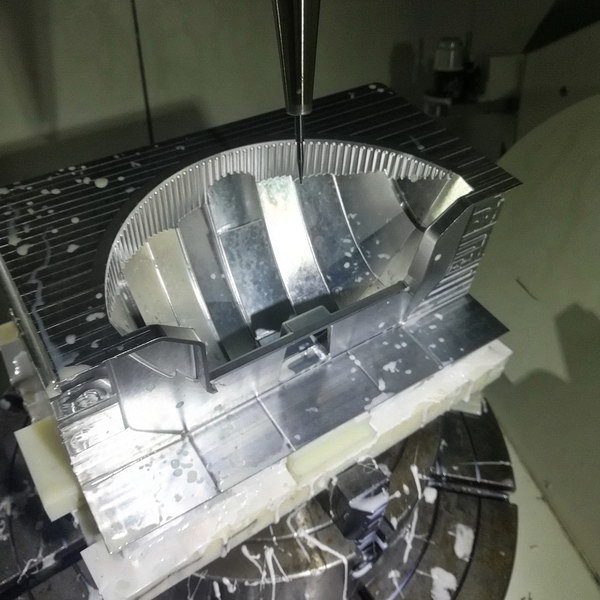
FOTMA ALLOY offers advanced 5-axis CNC milling, greatly increasing the possibility of manufacturing parts of various shapes and sizes. We are capable of handling all types of aluminum alloy milling projects requiring high precision and complex shapes, providing extremely tight tolerance control and excellent surface finishes to meet your most challenging manufacturing needs.
Advantages of 5-Axis Milling of Aluminum Parts
Machine all five faces of a part in a single setup, saving setup time and improving machining efficiency.
Higher precision and excellent surface finish improve the overall machining quality of the part.
Workpieces do not need to be transferred between several processes, reducing errors and fixture costs, and reducing manual operation time.
Multi-angle milling and drilling, by tilting the tool/table to maintain optimal cutting position and constant chip load, improve tool life and extend service life.
Shorter, harder tools can be used, enabling higher spindle speeds and feed rates while reducing the load on the cutting tool.
5 Steps to Improve Dimensional Stability in CNC Aluminum Machining
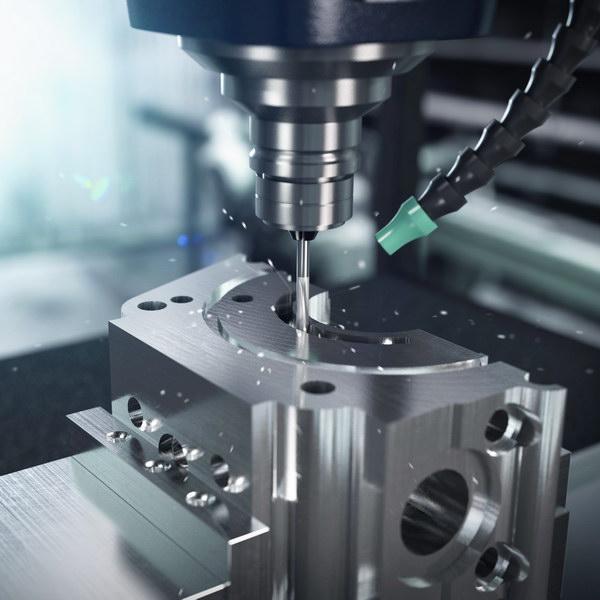
1) Eliminate Internal Stress in the Material
Common methods for eliminating internal stress include natural or artificial aging and vibration treatment. Secondly, pre-machining excess material from the workpiece, followed by natural aging for 1-2 hours before machining can also eliminate deformation caused by internal stress.
2) Improve Workpiece Clamping Methods
For milling thin-walled aluminum parts with poor rigidity, the following clamping methods can improve machining accuracy: using vacuum chucks to clamp the workpiece to obtain a uniformly distributed clamping force; using methods such as filling the workpiece with a medium to improve workpiece rigidity.
3) Improve Tool Cutting Performance
The material, geometry, and tool structure of the tool have a significant impact on cutting performance. Correct tool selection is crucial for improving the dimensional stability of the machining process.
4) Optimize Machining Process: The typical CNC high-speed cutting process includes roughing, semi-finishing, corner clearing, and finishing. For parts requiring high precision, the number of semi-finishing passes should be increased, and a uniform machining allowance should be maintained.
5) Use Appropriate Operating Methods: Select the correct feed rate, spindle speed, and depth of cut; Use symmetrical machining on both sides of the workpiece to avoid concentrated machining which hinders heat dissipation; Use layered, multi-stage machining for all cavities on the workpiece to ensure even stress distribution and reduce deformation; Use a drill-then-milling method for machining deep cavities to avoid poor chip removal, which can cause overheating, tool breakage, and other problems.
Challenges When Starting a CNC Aluminum Part Machining Project:
* The type of aluminum alloy required to meet the product’s functional requirements;
* The machine’s rigidity must be sufficient to withstand the cutting load;
* The correct cutting parameter range for the given material and tool;
* Solve the problems of chip removal and heat dissipation;
* Achieve high precision and consistent machining using specialized fixtures.
Comprehensive Machining Processes for Aluminum Parts
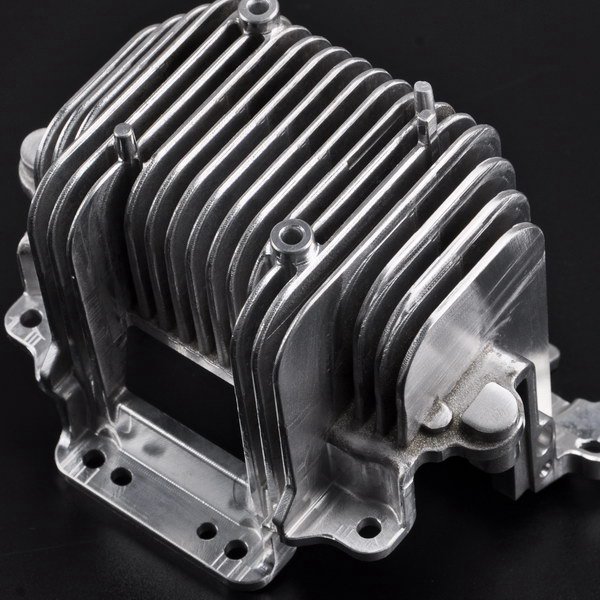
Generally, CNC machining of aluminum alloys is not a standalone production process. When facing short-term production demands of hundreds or more, a more comprehensive solution is needed to achieve a more efficient, accurate, and cost-effective production process.
In aluminum parts manufacturing, we review each project based on the complexity and manufacturability of the parts, assess production costs, and determine the process route that meets your design and specifications.
We expand the manufacturing capabilities of aluminum parts by combining 3-axis, 4-axis, and 5-axis CNC milling, CNC turning, and other manufacturing processes, easily handling any challenge while saving time and costs. These optimized process combinations include traditional techniques such as wire EDM, EDM, die casting, precision casting, aluminum extrusion, and forging.
Aluminum Alloy Material Types
Aluminum alloys possess a wide range of properties, such as flexibility, weldability, high strength, corrosion resistance, and lightweight, as well as excellent anodizing finishes. Due to its low cost and formability, aluminum is widely used in industry. The type of aluminum grade you ultimately choose depends on the intended use of your aluminum parts in the manufacturing project.
Aluminum Alloy 6061: The most widely used heat-treatable aluminum alloy, while retaining most of the excellent properties of aluminum. This grade has broad mechanical properties and corrosion resistance, is easy to anodize, has good machinability and weldability, and can be manufactured through most common processes, especially CNC machining.
Aluminum Alloy 6082: Aluminum 6082 is a medium-strength alloy with excellent corrosion resistance. It has the highest strength among the 6000 series alloys. 6082 is known as a structural alloy, and 6082 sheets are the most commonly used alloy for machining. As a relatively new alloy, the higher-strength aluminum 6082 has replaced 6061 in many applications.
Aluminum Alloy 6063: Commonly known as a building alloy, it has quite high tensile properties, excellent machinability, and high corrosion resistance, and is most commonly used in various interior and exterior building applications and decoration. 6063 is a representative extrusion alloy; its strength is lower than 6061, but it has good extrudability and can be made into profiles with complex cross-sectional shapes.
Aluminum Alloy 7075
This is one of the highest strength aluminum alloys available, offering an excellent strength-to-weight ratio, making it ideal for high-stress parts. It is one of the most expensive alloys available. However, this grade is not easily welded and has poor corrosion resistance. 7075 aluminum is a typical material used in the aerospace industry, featuring complex structures and high precision.
Aluminum Alloy 2024
Aluminum 2024 is used for applications requiring a high strength-to-weight ratio and good fatigue resistance. It is not weldable and has average machinability. 2024 has poor corrosion resistance and is not well-suited for anodizing.
Aluminum Alloy 5052
This is the highest strength alloy in the non-heat-treatable grade, offering good corrosion resistance, weldability, and formability. Its fatigue strength is higher than most other aluminum grades. It has good resistance to marine atmospheric and saltwater corrosion and excellent machinability.
How to Order CNC Machined Aluminum Parts?
*Email us with project details:
Please include the following information if possible: Part Name/3D Drawing/Quantity/Material/Color/Surface Finish. If you have multiple parts, you can also upload a bill of materials (BOM) or document for each part. Please include as much information as possible so we can provide you with an accurate quote.
*How to provide your files:
We accept 2D CAD drawings and 3D CAD models in any format, including STP, IGES, DWG, PDF, and STL. The maximum supported file size is 120MB. For large files or multiple files, please place them in one folder and then compress them into a ZIP or RAR file.
We will continue to innovate in the field of CNC aluminum machining. Whether you need machined aluminum alloy prototypes for automotive manufacturing, aerospace applications, or medical device components, or custom batches of aluminum parts, we can easily assist you. With our expertise in CNC aluminum machining and our ability to integrate external assemblies, we ensure optimal performance for your aluminum machining projects.
Start your project and get a free quote!
Post time: Mar-05-2026