

Nickel-chromium alloy is a high-performance alloy composed primarily of nickel, with a significant proportion of chromium and other trace elements. Its most famous characteristics are its excellent high-temperature strength and outstanding resistance to oxidation and corrosion, making it widely used, especially in the field of electrothermal applications.
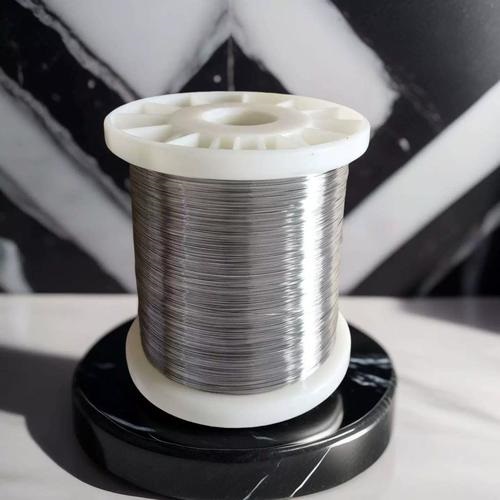
Main Components
1. Nickel: The matrix element, providing good toughness, ductility, and strength at high temperatures. Nickel itself also has good corrosion resistance.
2. Chromium: A key alloying element. The addition of chromium forms an extremely dense and stable chromium oxide protective film on the alloy surface. This film effectively prevents further oxidation and corrosion of the internal metal at high temperatures. This is the core reason for the high-temperature resistance of nickel-chromium alloys.
3. Other Elements: To further improve certain properties, small amounts of other elements are added:
◦ Iron: Reduces cost and adjusts performance.
◦ Aluminum: Enhances oxidation resistance.
◦ Silicon and Manganese: Improve processability and high-temperature strength.
◦ Carbon: Present in small amounts, but must be strictly controlled; excessive amounts will affect performance.
The most common grades OF Nickel-Chromium Alloy are:
Ni80Cr20 (80% nickel, 20% chromium) and Ni60Cr15 (60% nickel, 15% chromium, the remainder mostly iron). Key characteristics and advantages:
1. High resistivity: High resistance allows for efficient conversion of electrical energy into heat when current flows through it.
2. High temperature resistance: Maintains its shape and strength at high temperatures (typically 1100°C – 1400°C), resisting softening and deformation.
3. Strong oxidation resistance: The chromium oxide film formed on the surface makes it very stable in high-temperature air, resulting in a long service life.
4. Low temperature coefficient of resistance: Its resistance changes relatively little with temperature, resulting in stable power output during startup and normal operation of electric heating equipment.
5. Good corrosion resistance: Good resistance to various corrosive media.
6. Long service life: With proper design and use, it has a very long service life.
Main application areas OF Nickel-Chromium Alloy:
Based on the above characteristics, the most important application of nickel-chromium alloys is as electric heating materials.
1. Heating Elements: This is its most classic application. ◦ Household Appliances: Heating wires in electric ovens, toasters, hair dryers, electric heaters, and electric kettles. ◦ Industrial Furnaces: Heating elements in various industrial heating furnaces, heat treatment furnaces, and melting furnaces.
2. Electronics Industry: ◦ Precision Resistors: Used to manufacture high-precision, high-stability wire-wound or thin-film resistors.
3. Aerospace and Energy: ◦ Gas Turbine Blades: High-performance nickel-based superalloys (usually containing cobalt, molybdenum, and other elements) are key materials for manufacturing hot-end components (such as blades and turbine disks) of jet engines and gas turbines. ◦ Nuclear Reactor Components: Some models are used in applications requiring high temperature and radiation resistance.
4. Others: High-temperature springs, structural components for high-temperature environments, etc. Comparison with Iron-Chromium-Aluminum Alloys: In the field of electrothermal applications, nickel-chromium alloys’ main “competitor” is iron-chromium-aluminum alloys.
Characteristics
Ni-Chromium Alloy vs. Iron-Chromium-Aluminum Alloy
Maximum Operating Temperature: Lower (approx. 1100-1200°C) vs. Higher (up to 1400°C)
High Temperature Strength: Good, not easily deformed vs. Poor, easily deformed at high temperatures
Oxidation Resistance: Excellent vs. Excellent
Service Life: Longer vs. Longer
Processing Performance: Good, toughness, easy to draw and bend vs. Poor, brittle, difficult to process
Cost: High (due to high nickel content) vs. Low
Resistivity: Lower vs. Higher
Summary Comparison:
Ni-Chromium alloys have good toughness, high strength, and are easy to process and form, but are expensive and have a relatively lower maximum operating temperature; Iron-Chromium-Aluminum alloys are more heat-resistant, cheaper, and have a longer service life, but are brittle and difficult to process. The choice of material depends on the specific application requirements and cost considerations.
Summary: Ni-Chromium alloys are an indispensable high-performance material and one of the “heat sources” of modern industry. With its unique combination of high resistance, high temperature resistance, and oxidation resistance, it has become an ideal choice for manufacturing electric heating elements, and also plays a crucial role as an advanced structural material in cutting-edge fields such as aerospace.
Post time: Apr-21-2026