

Titanium rods, also known as titanium alloy rods, are metal rods made of titanium and titanium alloys. Titanium is a silvery-white transition metal with high strength, low density, good corrosion resistance, and biocompatibility, making it widely used in aerospace, medical, and chemical industries.
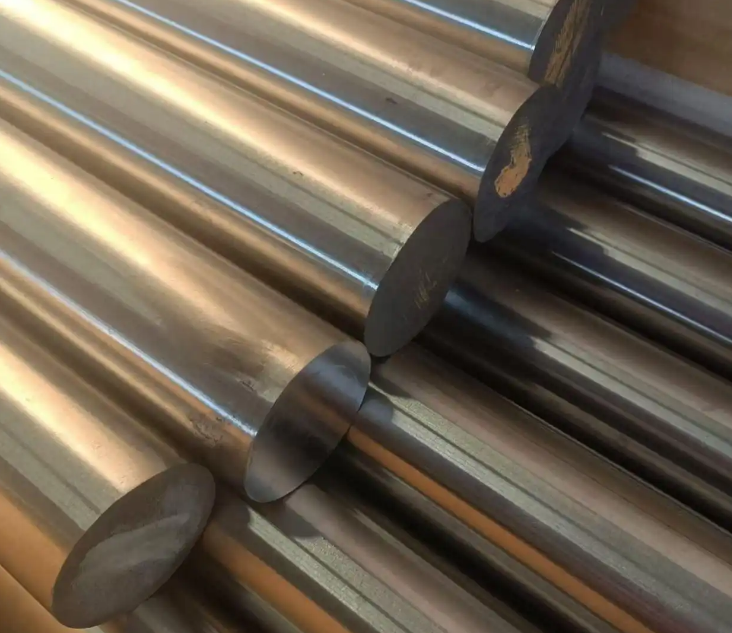
I. Characteristics of Titanium Rods
1. High Strength and Low Density: Titanium has only half the density of steel, yet its strength is similar to some high-strength steels. This allows titanium rods to maintain sufficient structural strength while meeting the need for lightweight materials.
2. Good Corrosion Resistance: Titanium exhibits excellent corrosion resistance in most environments, resisting the erosion of various acids, alkalis, and salt solutions. Therefore, titanium rods have wide applications in chemical, marine engineering, and other fields.
3. Good Biocompatibility: Titanium has good biocompatibility with human tissues, thus finding wide application in the medical field, particularly in dental and orthopedic implants.
II. Titanium Rod Manufacturing Process
The production of titanium rods mainly involves smelting, forging, rolling, and heat treatment. During smelting, the quality and composition of raw materials must be strictly controlled to ensure the performance of the titanium rods. During forging and rolling, parameters such as temperature and pressure are adjusted to achieve the required shape and size. Heat treatment is used to eliminate residual stress and improve the mechanical properties and corrosion resistance of the titanium rods.
III. Application Areas of Titanium Rods
1. Aerospace: Due to its high strength and low density, titanium rods are widely used in the aerospace field. For example, they are required in the manufacture of components such as aircraft engine blades, landing gear, and frames.
2. Medical Field: The application of titanium rods in the medical field is mainly concentrated in dental and orthopedic implants. Artificial joints and dental implants require titanium rods as a base material.
3. Chemical Field: Due to its excellent corrosion resistance, titanium rods are also widely used in the chemical field. For example, they are required in the manufacture of chemical equipment and the construction of pipeline systems.
IV. Market Prospects for Titanium Rods
With continuous technological advancements and improved living standards, the demand for titanium rods in aerospace, medical, and chemical industries is constantly increasing. Simultaneously, with growing environmental awareness, titanium rods, as a green and environmentally friendly material, will become increasingly popular. Therefore, the market prospects for titanium rods are very broad.
However, the relatively high production cost of titanium rods limits their application in some fields. In the future, with continuous improvements in production technology and reductions in raw material costs, the application scope of titanium rods will further expand. At the same time, as people’s requirements for material performance continue to increase, the research and development and production of titanium rods will face new challenges and opportunities.
In conclusion, as a high-performance, multifunctional metallic material, titanium rods have broad application prospects in aerospace, medical, and chemical industries. With continuous technological advancements and improved living standards, the market demand for titanium rods will continue to grow, and its future development prospects are very promising.
Post time: Apr-09-2026