

YG8 tungsten carbide round bars are a type of cemented carbide material primarily composed of tungsten carbide and cobalt. Due to their high hardness, high wear resistance, and good mechanical properties, they are widely used in metallurgy, mold manufacturing, and machining. Their core applications are in the production of drawing dies and wear-resistant components, making them particularly suitable for industrial applications requiring high-intensity friction and impact resistance.
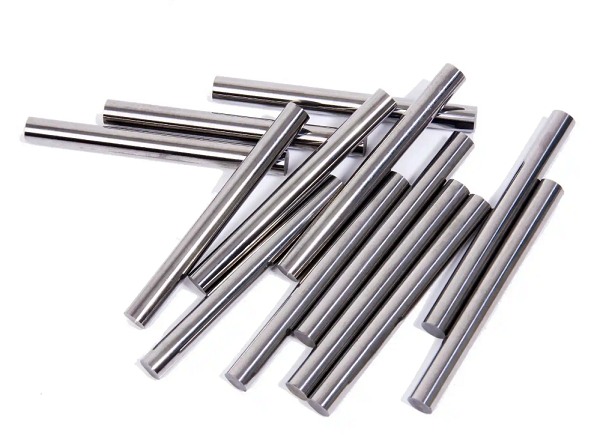
I. Material Composition and Performance Characteristics The main components of YG8 tungsten carbide round bars are tungsten carbide (WC) particles and cobalt (Co) binder. Tungsten carbide provides extremely high hardness and wear resistance, while cobalt, as the binder phase, enhances the material’s toughness while maintaining overall strength. Its hardness is ≥89HRA, bending strength is ≥1800MPa, and density ranges from 14.6-14.9g/cm³, classifying it as a first-grade cemented carbide. This combination allows it to maintain structural stability and resist deformation or cracking even under high pressure, high temperature, and high-speed friction.
II. Processing Methods and Applicable Scenarios
This material supports multiple processing methods, including precision grinding, cutting, and custom manufacturing based on provided drawings. Precision-ground round bars have low surface roughness and can be directly used in high-precision mold manufacturing; cutting processes can meet different length requirements; and custom manufacturing services can adapt to workpiece designs with special shapes. It is applicable to a wide range of machine tools, including traditional lathes and CNC machining centers. Typical applications include metal wire drawing dies, wear-resistant blocks for stamping dies, and cutting tool tips, and it is particularly suitable for processing difficult-to-machine materials such as stainless steel and titanium alloys.
III. Technical Parameters and Selection Criteria
When selecting YG8 tungsten carbide round bars, three core parameters need to be considered: particle size, hardness, and density. A particle size of 1.6μm represents the refinement of tungsten carbide grains; smaller particle sizes result in better material toughness, but also increase processing costs. Hardness directly determines wear resistance; a hardness of ≥89HRA can handle most industrial wear scenarios. Density range reflects material compactness; a density range of 14.6-14.9 g/cm³ balances strength and processing performance. Furthermore, its flexural strength ≥1800MPa makes it less prone to fracture under lateral pressure, suitable for manufacturing thin-walled or complex mold structures.
IV. Shipping Conditions and Usage Precautions The product is available in three shipping conditions: finely ground, rough blank, and sandblasted. Finely ground parts can be directly installed in machines; rough blanks require user processing; and sandblasted parts undergo surface treatment to improve coating adhesion.
Three points should be noted when using this product:
1. The processing temperature should be controlled within a reasonable range to avoid cobalt phase softening and performance degradation;
2. It must be stored in a moisture-proof and oxidation-proof environment. Although cemented carbide is corrosion-resistant, long-term exposure to a humid environment may affect surface quality;
3. During installation, ensure precise fit with the machine tool. Excessive clearance may lead to increased vibration and wear. These details directly affect the mold’s service life and processing accuracy.
Post time: Sep-07-2026