

Analysis of the Weldability of Molybdenum and Molybdenum Alloys
Molybdenum and its alloys are characterized by a high melting point, high high-temperature strength, excellent wear resistance, superior thermal and electrical conductivity, a low coefficient of linear expansion, a high elastic modulus, and good corrosion resistance. Consequently, they play an irreplaceable role and fulfill critical application requirements in fields such as national defense and military industries, aerospace, electronics and information technology, energy, chemical engineering, metallurgy, and the nuclear industry. However, molybdenum and its alloys are inherently hard and brittle materials; as a result, their weldability is generally poor. To expand the application scope of molybdenum and its alloys, researchers both domestically and internationally have conducted extensive studies on their welding challenges, with relevant literature appearing consistently since the 1970s.
Analysis of the Weldability of Molybdenum and Molybdenum Alloys
1. Room-Temperature Brittleness
The toughness of molybdenum and its alloys varies with temperature, undergoing a transition from ductile fracture to brittle fracture within a very narrow temperature range. The ductile-to-brittle transition temperature range for pure molybdenum is approximately 140–150°C; this characteristic makes deep processing difficult, results in inferior product performance, and limits its scope of application. This brittleness is referred to as the *intrinsic brittleness* of molybdenum, a phenomenon primarily determined by the specific electronic configuration in which both the outermost and penultimate electron shells of its atoms are in a half-filled state. Furthermore, due to characteristics such as a high melting point, high thermal conductivity, high recrystallization temperature, the absence of solid-state allotropic transformations, and the low atomic packing density inherent to its body-centered cubic (BCC) crystal structure, the weld seams and heat-affected zones (HAZs) of molybdenum and its alloys undergo significant grain coarsening after welding. This leads to the extensive diffusion and subsequent segregation—or enrichment—of interstitial impurities (such as C, N, and O) at the grain boundaries, thereby severely weakening the grain boundary bonding strength. Under the combined influence of the material’s intrinsic brittleness and the phenomenon of grain boundary impurity segregation, molybdenum and its alloys exhibit a high susceptibility to welding cracks, and their welded joints possess very poor strength, plasticity, and toughness.
2. Porosity Defects
Since powder metallurgy processes yield fine-grained microstructures devoid of preferred orientation, refractory metal billets are frequently produced via powder metallurgy methods. Consequently, these materials often contain micropores and impurity elements, and their density cannot match that of materials produced through smelting metallurgy. As a result, fusion welding of molybdenum and its alloys typically encounters a high incidence of porosity defects. The gases trapped under high pressure within these micropores pose a particularly significant threat; during the welding process, these high-pressure gases are released into the high-temperature weld pool, where they expand rapidly, thereby severely degrading the quality of the molybdenum and molybdenum alloy weld joints.
Research Progress in the Welding of Molybdenum and Molybdenum Alloys
Currently, welding methods for molybdenum and its alloys primarily include Tungsten Inert Gas (TIG) welding, electron beam welding, laser welding, resistance welding, brazing, and friction welding.
1. Electron Beam Welding
Pan Jiluan et al. investigated the electron beam welding of powder metallurgy pure molybdenum plates with thicknesses ranging from 1 to 5 mm. The results indicated that higher welding speeds resulted in finer grain sizes and fewer intergranular impurities; furthermore, increasing the welding speed and reducing the welding heat input significantly improved the toughness of the molybdenum weld joints. The degree of vacuum exerted a significant influence on the ductile-to-brittle transition temperature (DBTT) of the joints; specifically, the decomposition of surface oxides on the workpiece during welding had a substantial impact on the vacuum level. When the vacuum level was improved from 10⁻² mmHg to 10⁻⁴ mmHg, the upper limit of the ductile-to-brittle transition temperature range for the joint decreased from approximately 150°C to about 100°C. Yang Qinli et al. employed electron beam welding to join 16 mm thick pure molybdenum plates. The results revealed that the weld bead exhibited a “nail-head” shape, characterized by a narrow heat-affected zone; the central region of the weld consisted of coarse equiaxed grains, while the flanks were composed of columnar grains. The microhardness of both the weld bead and the heat-affected zone was higher than that of the base metal. The microhardness and mechanical properties of the weld joint varied across its thickness; following a heat treatment at 1100°C, the joint exhibited its highest strength at the bottom of the weld bead. All tensile fractures of the weld joints occurred within the weld zone and displayed a cleavage fracture morphology. Zheng Weisheng et al. employed the vacuum electron beam welding method to join 16 mm-thick pure molybdenum material. The results indicated that pure molybdenum welds produced via vacuum electron beam welding exhibited severe grain growth.
Morito et al. discovered that, at room temperature, electron beam welded TZM joints consistently exhibited brittle fracture; cracks originated at grain boundaries and subsequently propagated either along the boundaries or through the grains. However, when the temperature exceeded 300°C, TZM electron beam welded joints invariably displayed ductile fracture, accompanied by distinct necking prior to failure. Furthermore, the study revealed that carburization and post-weld heat treatment could effectively enhance the grain boundary bonding strength of molybdenum alloys, thereby improving the room-temperature toughness of electron beam welded joints in both TZM and Mo-Re alloys. Morito et al. further investigated the impact of increasing the rhenium (Re) content—beyond a base composition of 50Mo–50Re (wt%)—on the weldability of the alloy. They found that increasing the Re content further resulted in enhanced grain boundary bonding strength and improved toughness in the electron beam welded joints. Even when tested in liquid nitrogen, the maximum bending angle of these welded joints could reach approximately 50 degrees. Additionally, Morito et al. conducted thermal simulation tests to compare the toughness of the heat-affected zones (HAZ) in molybdenum alloys [Mo > 99.9 wt%] under two distinct post-weld heat treatment conditions: slow furnace cooling versus rapid quenching. They found that rapid post-weld cooling led to a significant reduction in the HAZ toughness of the molybdenum alloy joints; this was primarily attributed to more pronounced grain boundary segregation occurring within the HAZ under rapid quenching conditions. Stütz et al. systematically investigated the influence of electron beam welding process parameters on various characteristics of butt joints in 2 mm-thick TZM alloy, including the dimensions of the fusion zone (FZ) and HAZ, the grain sizes within the FZ and HAZ, and the susceptibility to porosity and cracking. They observed that high linear energy inputs resulted in severe porosity defects, whereas low linear energy inputs not only suppressed porosity but also led to a significant reduction in grain size within the FZ. The tensile strength of the electron beam welded joints was found to range from 50% to 77% of that of the base metal. Both the weld seam and the HAZ exhibited coarse grain structures, and the microhardness of the FZ was reduced by 20% to 31% compared to that of the base metal. Although well-formed electron beam welded joints can be obtained without the use of filler material, their toughness and strength often fail to meet required specifications; consequently, it is deemed necessary to conduct research into electron beam welding processes that incorporate filler materials to achieve alloying of the weld metal.
2. Tungsten Inert Gas (TIG) Welding
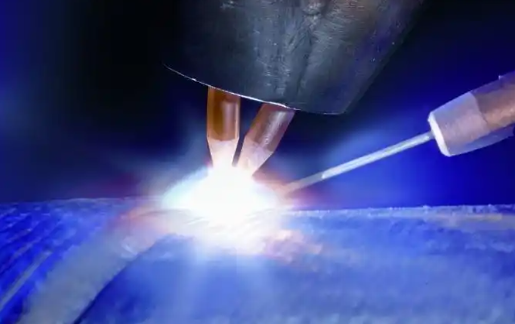
Wang et al. investigated the Tungsten Inert Gas (TIG) welding of TZM molybdenum alloy. Their results indicated that well-formed welds could be achieved by employing appropriate parameters for welding current, welding speed, and shielding gas flow rate. The weld zone was characterized by coarse columnar grains, while the heat-affected zone consisted of coarse equiaxed grains. Additionally, Jiang et al. studied the TIG welding of Mo-Cu composites to stainless steel, utilizing a Cr-Ni filler wire. Research by Wang et al. revealed that welds produced via Electron Beam Welding (EBW) or Tungsten Inert Gas (TIG) welding of cast molybdenum alloys exhibit few pores; conversely, welds in powder metallurgy (PM) pure molybdenum or molybdenum alloys suffer from severe porosity, including the presence of large-sized pores. The addition of carbon (C) can improve the ductility of welds in PM pure molybdenum or molybdenum alloys and significantly reduce the porosity within the weld metal. Refining the columnar grain structure within the weld metal enhances the fracture toughness of molybdenum and molybdenum alloy welds. Furthermore, the addition of titanium (Ti) and hafnium (Hf) to the weld metal helps suppress centerline cracking and porosity in PM pure molybdenum welds, increases the hardness of the weld zone, and shifts the location of tensile fracture from the weld zone to the heat-affected zone (HAZ).
Matsuda et al. investigated the EBW and TIG welding of 1.5 mm-thick titanium-zirconium-molybdenum (TZM) alloy prepared via powder metallurgy. Their study indicated that high welding heat input leads to a significant decline in the toughness of TZM alloy welded joints; specifically, the ductile-to-brittle transition temperature (DBTT) of TIG-welded joints was approximately 120°C higher than that of EBW joints. Additionally, they observed that during TIG welding, porosity defects appeared only near the arc initiation and termination points of the weld; in contrast, EBW conducted in a vacuum environment resulted in a significant increase in porosity defects throughout the weld metal. X-ray inspection results revealed approximately 700 porosity defects within a 200 mm-long EBW seam. Kolarikova et al. investigated the EBW and Gas Tungsten Arc Welding (GTAW) of thin sheets of pure molybdenum. The base material consisted of PM-processed stock, subsequently rolled into thin sheets of 0.2 mm and 0.4 mm thickness. The 0.2 mm pure molybdenum sheets were used for EBW, while the 0.4 mm sheets were used for GTAW. Under their respective optimized process parameters, joints produced by both methods were free of cracks and porosity defects. The fusion zone (FZ) widths for the EBW and GTAW joints were 0.8 mm and 1.7 mm, respectively; however, the widths of the heat-affected zones (HAZ) differed significantly between the two methods, measuring 1.4 mm for the EBW joints and 35 mm for the GTAW joints. …mm. The grain sizes in both the Fusion Zone (FZ) and Heat-Affected Zone (HAZ) of the EBW joints were also significantly smaller than those in the GTAW joints. This indicates that the high-energy-density EBW method is more suitable for welding molybdenum than the GTAW method.
3. Laser Welding
Liu et al. investigated the continuous-wave Nd:YAG laser welding of lap joints made from 0.13 mm thick powder-metallurgy molybdenum alloy (50Mo-50Re). The base metal exhibited a recrystallized, equiaxed grain structure with an average grain size of approximately 33 µm. The shielding gas used was oxygen with a purity of 99.5%. Welding was performed under conditions of 75 W power, a welding speed of 25 mm/min, and a laser spot diameter of 2.5 mm. Following welding, cracks appeared at the fusion interface within the weld zone; additionally, numerous large-sized pores were observed at this interface, with pore diameters ranging from approximately 15% to 20% of the base metal plate thickness. Fractographic analysis revealed that the fracture mode was intergranular. A large number of dark-colored compounds were present both within the grains and along the grain boundaries; compositional analysis indicated that the carbon (C) and oxygen (O) contents within these dark compounds were 30% and 15% (atomic fraction), respectively. Post-weld microhardness measurements yielded average values of approximately HV290 for the base metal, HV370 for the HAZ, and HV420 for the FZ; this indicates that both the weld seam and the HAZ underwent significant hardening after welding. The authors concluded that the coarse grain structure and the presence of deleterious impurity elements were the primary causes of the observed hardening at the fusion interface and the subsequent intergranular cracking of the joints. Research by Lin, Y. demonstrated that replacing resistance welding with pulsed Nd:YAG laser welding for joining 0.5 mm diameter pin-shaped pure molybdenum conductive components resulted in an approximate twofold increase in joint strength.
Kramer et al. investigated the electron beam welding and pulsed Nd:YAG laser welding of 0.5 mm thick sheets of Mo-44.5% Re alloy. The base metal was fabricated via a powder metallurgy process, followed by rolling and annealing treatments, ultimately yielding Mo-44.5% sheets with a thickness of 0.5 mm. Re-alloy thin sheets. Prior to electron beam welding, the workpiece underwent a preheating treatment using a low-energy-density beam. Studies revealed that the microstructure of the laser-welded joint was finer; furthermore, the electron beam welded Mo-44.5% Re alloy joint exhibited excellent weld formation, free from porosity and cracking defects. However, cracks were observed in the Fusion Zone (FZ) of the laser-welded Mo-44.5% Re alloy joint, and subsequent mechanical property tests showed that the fracture surface of the laser-welded joint exhibited a brittle fracture morphology. Chatterjee et al. investigated the electron beam welding (EBW) and the arc-preceded Nd:YAG laser-TIG hybrid welding of butt joints in 1–2 mm thick forged Ti-Zr-C alloy sheets [containing 0.50 wt% Ti, 0.08 wt% Zr, and 0.04 wt% C]. Neither of the welding methods produced joints with significant porosity defects. In both cases, the FZ and Heat-Affected Zone (HAZ) of the joints exhibited coarse columnar and coarse equiaxed grain structures, respectively; however, the grain sizes in the FZ and HAZ of the EBW joints were significantly smaller—approximately 55% and 65% of the corresponding grain sizes in the hybrid-welded joints. The weld widths produced by the EBW and hybrid methods were approximately 1.4 mm and 2.6 mm, respectively; in both instances, however, the width of the HAZ was approximately 1.5 times that of the weld zone. Softening occurred in both the weld zone and the HAZ for both cases; the microhardness in the FZ of the EBW joint decreased by approximately 26% relative to the base metal, whereas in the hybrid-welded joint, the softened region was wider and the degree of softening was more pronounced. Tensile test results indicated that the tensile strengths of the joints produced by the laser-TIG hybrid welding and electron beam welding methods were approximately 41% and 47% of the base metal’s strength, respectively. Although softening occurred in both the FZ and HAZ, neither type of joint exhibited virtually any tensile plasticity during the tensile tests—their reduction of area and elongation values were nearly zero—whereas the base metal exhibited an elongation of up to 8.4%. The tensile fracture surfaces of both types of joints… All specimens exhibited a brittle fracture morphology characterized by transgranular fracture. Although the EBW welding was conducted in a high-vacuum environment (<1.33 MPa), TEM observations of the fusion zone (FZ) within the EBW weld joints revealed the presence of numerous uniformly distributed, dispersed second-phase particles within the grains, ranging in size from 0.1 to 10 µm. Compositional analysis indicated that these dispersed second phases were molybdenum oxides, containing approximately 65 at.% oxygen and 34.5 wt.% molybdenum. Fracture surface analysis and TEM results demonstrated that the near-zero elongation observed in the weld joints was attributable to grain boundary segregation.
4. Resistance Welding
Xu et al. conducted a study on the process optimization of resistance spot welding for lap joints made of a 0.127-mm-thick 50Mo-50Re (wt.%) alloy. The base material was fabricated via powder metallurgy using powders with a purity of no less than 99.980%; following sintering and rolling, the material underwent stress-relief annealing at 1050°C. All processing steps were performed under a protective hydrogen atmosphere, and prior to welding, the material underwent a deoxidation treatment at 1200°C for 30 minutes in hydrogen derived from ammonia decomposition. The study revealed that increasing the duration of the post-weld forging force (applied after power cutoff) resulted in higher joint strength and improved toughness. As the post-weld forging time increased from 50 ms to 999 ms, the load-bearing capacity of the joint rose from 100 N to 113 N, and the microscopic morphology of the fracture surface transitioned from brittle intergranular fracture to a ductile dimpled morphology. EDS results indicated that when the post-weld forging time was short (50 ms), molybdenum enrichment occurred at the grain boundaries within the fusion zone; conversely, when the post-weld forging time was extended to 999 ms, no grain boundary molybdenum enrichment was observed, and the elemental composition of the fusion zone fracture surface was nearly identical to that of the base material. This phenomenon is attributed to the fact that increasing the post-weld forging time accelerates the cooling rate of the weld, thereby suppressing the segregation of molybdenum to the grain boundaries. Furthermore, an increased cooling rate also serves to reduce the size of the heat-affected zone (HAZ)—a region that typically constitutes a weak point in weld joints involving molybdenum and its alloys. The study also identified various… Under welding conditions, large-sized porosity defects were observed in the Fusion Zone (FZ) of all joints. Analysis suggests that the underlying cause lies in the presence of micropores within the powder metallurgy material, where residual volatile substances are frequently found. Elizabeth E. Ferrenz et al. employed a dual-pulse current waveform to control weld quality during the resistance spot welding of molybdenum and rhenium alloy wires. The first current pulse, of lower magnitude, served primarily to remove the oxide film; the second pulse utilized a higher current to effect the actual weld.
5. Brazing
Xia et al. investigated the vacuum brazing of lap joints made from 0.06 mm-thick 50Mo-50Re alloy. The base material was fabricated using powder metallurgy. The filler metal employed was a Ni-Cr-Si-B system alloy [Ni-19Cr-7.3Si-1.5B (wt%)], featuring a melting temperature range of 1081–1136°C. After holding the assembly at a brazing temperature of 1200°C for 20 minutes, the resulting braze seam exhibited excellent formation, free from defects such as microcracks or pores; however, brittle intermetallic compounds—specifically CrB and NiSi₂—were observed to form within the center of the braze seam. Song et al. investigated the vacuum brazing of lap joints made from 3 mm-thick titanium-zirconium-molybdenum (TZM) alloy [Ti 0.50 wt%, Zr 0.08 wt%, and C 0.04 wt%]. The filler metal used was a Ti-28Ni (wt%) eutectic alloy, with a melting temperature range of 940–980°C. The brazing temperature range spanned 1000–1160°C, maintained under a vacuum level of approximately 1.33 MPa. Brazed joints fabricated by holding the assembly at 1080°C for 600 seconds achieved a shear strength of approximately 107 MPa. The shear fracture surfaces exhibited a quasi-cleavage, transgranular fracture morphology.
6. Friction Welding
Fu et al. investigated the friction welding of molybdenum alloy to mold steel. Their results indicated that, during the friction welding process, a phenomenon occurred wherein material from the friction interface transferred toward the H11 mold steel side; this was primarily attributed to the differences in wear resistance and high-temperature strength between the two friction partners. Furthermore, the thermomechanical coupling effects occurring during the friction welding process facilitated grain refinement in the heat-affected zone (near-seam region) and promoted the closure of pores within the TZM powder alloy. By employing rigorous welding parameters, sound, defect-free friction-welded joints were successfully obtained. Yazdanian et al. conducted a study on the friction stir welding of 1.5 mm-thick pure molybdenum plates [99.5 wt%], utilizing a titanium-zirconium alloy stirring tool. Oxygen shielding was employed during the welding process. The weld joint exhibited fine grains in the stir zone and coarse grains in the heat-affected zone (HAZ). Butt joints fabricated under conditions of a rotational speed of 1000 r/min and a welding speed of 100 mm/min achieved a strength equivalent to 86% of that of the base metal; during tensile testing, fracture occurred within the HAZ. Reheis N et al. investigated the continuous drive friction welding of TZM molybdenum alloy tubes with an outer diameter of 55 mm and a wall thickness of 7.5 mm. Under optimized process parameters, well-formed joints were obtained; at room temperature, the tensile strength of the joints was comparable to that of the base metal, although their elongation was approximately 50% lower than that of the base metal. Ambroziak A et al. conducted a study on the continuous drive friction welding of 30 mm-diameter refractory metal rods across various combinations, including Mo-Mo, TZM-TZM, TZM-V, TZM-Ta, Mo-Nb, and TZM-Nb. Throughout the entire welding process, the specimens were immersed in IME82 oil to prevent contamination of the workpieces by ambient gases at high temperatures. The results demonstrated that, under appropriate process conditions, all combinations yielded well-formed weld joints characterized by fine grains, with no formation of intermetallic compounds observed in the bonding zones. More recently, M. Stütz et al. successfully achieved the continuous drive friction welding of pure molybdenum tubes with a wall thickness of 10 mm and an outer diameter of 130 mm.
Post time: Mar-21-2026