

Tungsten-copper (W-Cu) alloys combine the advantages of both tungsten and copper. Tungsten offers a high melting point (3410°C) and high density (19.34 g/cm³), while copper provides excellent electrical and thermal conductivity (melting point: 1080°C; density: 8.89 g/cm³). W-Cu alloys (typically ranging from WCu7 to WCu50 in composition) feature a uniform microstructure, high-temperature resistance, high strength, resistance to arc erosion, and high density. With moderate electrical and thermal conductivity, they are widely used in applications such as high-temperature-resistant materials for military use, electrical alloys for high-voltage switchgear, electrodes for electrical discharge machining (EDM), and microelectronic materials. As components and parts, they are extensively employed across various sectors, including aerospace, aviation, electronics, power, metallurgy, machinery, and sports equipment.
I. High-Temperature-Resistant Materials for Military Use
In the aerospace and aviation industries, W-Cu alloys are used for components such as missile and rocket engine nozzles, gas rudders, aerodynamic control surfaces, and nose cones. These applications require resistance to extreme temperatures (3000K–5000K) and the ability to withstand erosion from high-temperature gas flows. The material utilizes “transpiration cooling”—a process where copper evaporates at high temperatures—to lower the surface temperature of the W-Cu component, ensuring functionality under extreme thermal conditions.
II. Electrical Alloys for High-Voltage Switchgear
W-Cu alloys are widely used in high-voltage switchgear, including 128kV SF6 circuit breakers, high-voltage vacuum load switches (12kV–40.5kV, 1000A), and lightning arresters. High-voltage vacuum switches are compact, easy to maintain, and versatile, capable of operating in humid, potentially explosive, or corrosive environments. Key performance requirements for these applications include resistance to arc erosion and contact welding, low current-chopping levels, low gas content, and minimal thermionic electron emission. In addition to standard macroscopic performance requirements, specific criteria for porosity and microstructural properties must also be met. This necessitates the use of specialized, complex manufacturing processes, such as vacuum degassing and vacuum infiltration.
III. Electrodes for Electrical Machining
Early electrodes for electrical discharge machining (EDM) were typically made of copper or graphite; while inexpensive, these materials lack resistance to ablation and have largely been superseded by tungsten-copper electrodes. Tungsten-copper electrodes offer superior high-temperature resistance, high strength at elevated temperatures, excellent resistance to arc ablation, and high electrical and thermal conductivity, which facilitates rapid heat dissipation. They are primarily used as EDM electrodes, resistance welding electrodes, and electrodes for high-voltage discharge tubes.
Electrodes for electrical machining are characterized by a vast array of types and specifications; while individual batch sizes may be small, the total volume is significant. Tungsten-copper materials intended for use as electrodes must possess the highest possible density and microstructural uniformity—a requirement that is particularly critical for slender rod-shaped, tubular, or complex-profile electrodes.
IV. Microelectronic Materials
Tungsten-copper materials used for electronic packaging and heat sinks combine the low thermal expansion of tungsten with the high thermal conductivity of copper. By adjusting the tungsten-to-copper ratio, the material’s coefficient of thermal expansion (CTE) and its thermal and electrical conductivity can be precisely tuned, thereby broadening its range of applications. Due to their exceptional heat resistance, high thermal and electrical conductivity, and a CTE that can be matched to silicon wafers, gallium arsenide, and various ceramics, these materials are widely employed in the semiconductor industry. They are suitable for use in high-power device packaging, heat sinks, heat-dissipation components, and as substrates for ceramics or gallium arsenide-based devices.
Tungsten-copper composites are two-phase “pseudo-alloys”—a type of metal-matrix composite—composed primarily of tungsten and copper. Because of the significant disparity in the physical properties of tungsten and copper, they cannot be produced via conventional melting and casting; instead, powder metallurgy techniques are typically employed.
Tungsten-copper alloys have a broad range of applications, with significant use in sectors including aerospace, aviation, electronics, power generation, metallurgy, mechanical engineering, and sports equipment. Furthermore, these materials are used to manufacture components that must withstand high temperatures and arc erosion, such as contacts for high-voltage electrical switches, rocket nozzle throat inserts, and tail fins. They also serve as electrodes for electrical discharge machining (EDM), high-temperature molds, and in other applications requiring high electrical and thermal conductivity alongside high-temperature resistance. Tungsten-copper alloys combine the advantages of both metals: high strength, high specific gravity, resistance to high temperatures and arc erosion, excellent electrical and thermal conductivity, and good machinability. By utilizing high-quality tungsten powder and oxygen-free copper powder—processed through isostatic pressing, high-temperature sintering, and copper infiltration—the resulting material achieves high purity, precise composition, a dense microstructure, and superior performance. These alloys offer excellent arc-breaking capabilities, high electrical and thermal conductivity, and low thermal expansion. Because tungsten and copper are mutually insoluble, the alloy retains the low thermal expansion, wear resistance, and corrosion resistance of tungsten, while incorporating the high electrical and thermal conductivity of copper; it is also well-suited for various mechanical machining processes. Tungsten-copper alloys can be customized in terms of composition ratios and dimensions to meet specific user requirements. They are typically produced via a powder metallurgy process: powder preparation, blending, pressing, and sintering followed by copper infiltration.
Tungsten-Copper Electrodes
Welding Electrodes
Tungsten-copper alloys are ideal for use as welding electrodes due to their resistance to high temperatures and arc erosion, high specific gravity, excellent electrical and thermal conductivity, and ease of machining.
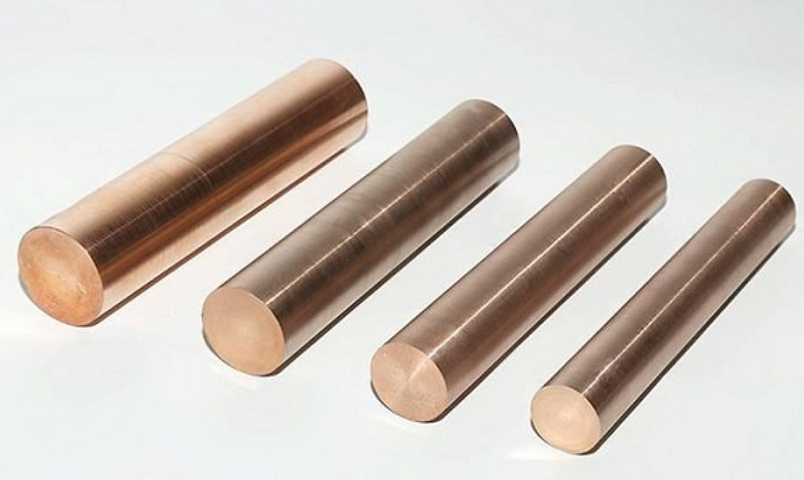
Tungsten-Copper Alloy Rods
Tungsten-copper is a composite material refined through isostatic pressing, high-temperature sintering, and copper infiltration. It leverages the exceptional metallic properties of high-purity tungsten powder alongside the plasticity and high electrical conductivity of high-purity copper powder. The material features excellent arc-breaking performance, high electrical and thermal conductivity, low thermal expansion, resistance to softening at high temperatures, high strength, high density, and high hardness. Tungsten-Copper Electronic Packaging Components
Tungsten-copper electronic packaging materials combine the low thermal expansion of tungsten with the high thermal conductivity of copper. The coefficient of thermal expansion, as well as the electrical and thermal conductivity, can be adjusted by varying the material composition, offering significant flexibility for various applications.
Tungsten-Copper Tubes
Tungsten-copper alloy tubes are widely used in the fields of cemented carbides and refractory metals. Because these alloys are easy to machine, tungsten-copper tubes are particularly valuable in applications that require precise surface machining and small internal diameters.
Tungsten-Copper Alloy Wires
Usage Precautions:
1. Do not apply colloidal graphite to the surface of tungsten-copper wires. At temperatures above 1000°C, ensure that the wires do not come into contact with iron, nickel, or carbon. Store the wires in a dry environment—where relative humidity does not exceed 65% at room temperature—and keep them away from acidic or alkaline substances.
2. After cleaning, store the tungsten-copper wires in a dry container to prevent direct contact with air and avoid oxidation.
Post time: Nov-04-2026