

I. Why Molybdenum Plates Are Highly Coveted
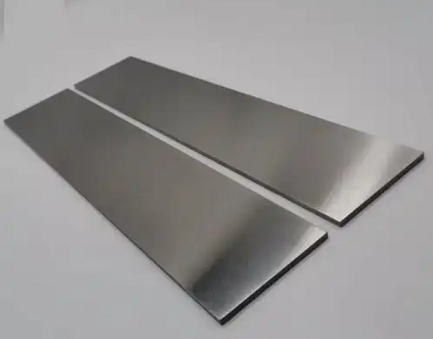
Molybdenum—a silvery-white metal—has emerged as a “hidden champion” in the industrial sector, thanks to its exceptionally high melting point of 2800°C and outstanding thermal conductivity. The production of molybdenum plates is akin to crafting handmade noodles: molybdenum powder is first pressed into a compact billet, sintered and shaped under a protective hydrogen atmosphere, and finally subjected to the rigorous tempering of both hot and cold rolling. The resulting plates can be as thin as 0.1 mm, yet they remain steadfast and stable—like an immovable mountain—even in extreme environments such as rocket nozzles and semiconductor mounts.
II. The Intricacies of the Manufacturing Process
Powder Metallurgy: Utilizing molybdenum powder with a particle size of 3–5 microns, a binder is added—much like kneading dough—before the mixture is pressed; this process allows the density to reach 85% of the theoretical maximum.
The Art of Sintering: Inside a vertical furnace heated to 1800°C, hydrogen gas is introduced to facilitate a magical metallurgical bonding process between the individual powder particles.
The Magic of Rolling: The process begins with hot rolling at 1200°C to break down and shape the billet, followed by precision finishing via cold rolling at room temperature; throughout this entire sequence, temperature and humidity must be meticulously controlled with the same care one would devote to looking after an infant.
III. Unexpected Applications
Beyond the well-known aerospace sector, molybdenum plates are now enabling new miracles: serving as rotating targets in medical CT scanners, substrates for thin-film photovoltaic cells, and even heat sinks for wireless charging coils in mobile phones. Even more astonishing are molybdenum alloy plates doped with rare earth elements; these materials retain their high strength while exhibiting a 40% increase in ductility, thereby opening up exciting new possibilities for the field of flexible electronics.
Post time: Mar-22-2026