

A Powerhouse in Extreme Heat: How Does TZM Alloy Reign Supreme in High-End Industry?
In cutting-edge sectors such as advanced manufacturing, aerospace, precision metallurgy, and vacuum electronics, extreme operating conditions—characterized by intense heat, high pressure, corrosive environments, and heavy mechanical loads—are the norm. Conventional metals often deform, soften, oxidize, or fail when exposed to temperatures in the thousands of degrees, rendering them unsuitable for the stable operation of high-end equipment. TZM alloy, however, stands out as a critical specialized material for such demanding environments, thanks to its exceptional heat resistance, superior mechanical stability, and outstanding overall physical and chemical properties. It is widely regarded as the “cornerstone of high-temperature industrial applications.” Today, this high-performance alloy is integral to a vast array of sophisticated, state-of-the-art equipment, serving as an indispensable material in modern high-end industry.
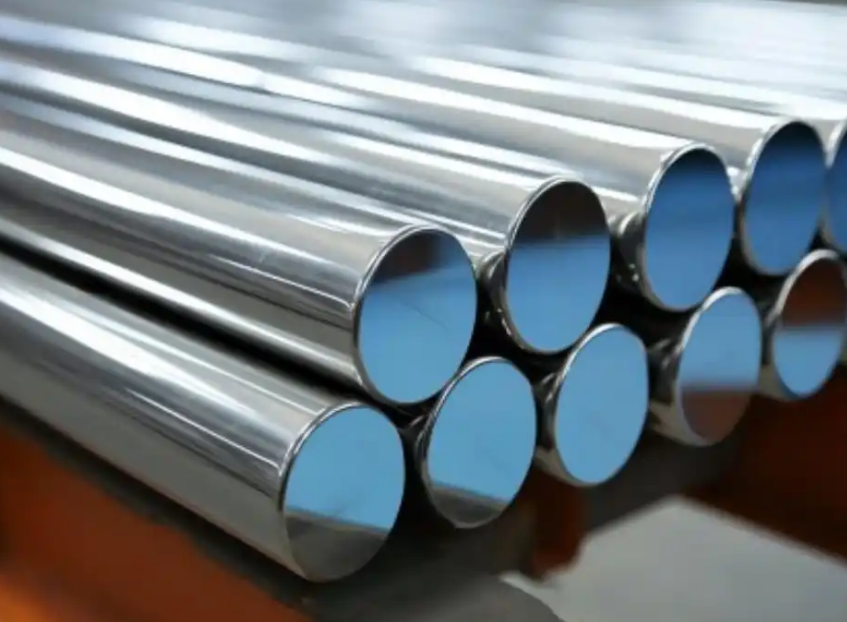
While the term “TZM alloy” may be unfamiliar to some, it is essentially an enhanced, optimized version of pure molybdenum. Its full name—Titanium-Zirconium-Molybdenum alloy—reflects its composition: a molybdenum matrix precisely alloyed with trace amounts of titanium, zirconium, and carbon. The industry-standard composition typically consists of 0.4%–0.55% titanium, 0.06%–0.12% zirconium, and 0.01%–0.04% carbon, with the remainder being high-purity molybdenum. Though these alloying elements are present only in minute quantities, they effectively overcome the inherent performance limitations of pure molybdenum, resulting in a dramatic leap in capabilities that makes TZM alloy perfectly suited for the most extreme high-temperature operational environments.
Compared to pure molybdenum and other conventional high-temperature alloys, the core advantages of TZM alloy lie in its superior high-temperature stability and comprehensive mechanical performance. First, it offers exceptional high-temperature resistance and resistance to recrystallization. While the recrystallization temperature of pure molybdenum is approximately 1100°C—beyond which grain growth, material softening, and a sharp decline in mechanical properties occur—the recrystallization temperature of TZM alloy is raised by over 250°C. It can stably withstand temperatures exceeding 1300°C, maintaining excellent structural stability and resisting deformation even in high-temperature environments ranging from 1000°C to 1400°C.
Second, it possesses superior high-temperature strength and creep resistance, which represent the core competitive advantages of TZM alloy. Under high-temperature and high-load conditions—exceeding 1000°C—conventional metals tend to undergo continuous, slow deformation (a phenomenon known as “creep”), which often leads to structural failure during long-term use. TZM alloy, however, forms fine, stable titanium carbide and zirconium carbide particles within its matrix. These particles effectively “pin” grain boundaries and inhibit grain growth, significantly enhancing the material’s creep resistance. Data indicates that at temperatures above 1000°C, the strength of TZM alloy is approximately double that of pure molybdenum; it can endure high-pressure loads over extended periods without deforming or cracking, making it perfectly suited for demanding applications involving sustained high-temperature stress.
Furthermore, TZM (titanium-zirconium-molybdenum) alloy offers a range of other valuable properties. Its extremely low coefficient of thermal expansion ensures minimal dimensional change at high temperatures, meeting the stringent precision requirements for the assembly and operation of sophisticated equipment. It exhibits excellent thermal and electrical conductivity—ensuring uniform heat transfer and stable electrical conduction—which makes it ideal for critical components such as heating elements and electrodes. Its exceptionally low saturated vapor pressure means it is highly resistant to volatilization in high-temperature vacuum environments, resulting in minimal material loss and a significantly extended service life. Additionally, the material demonstrates outstanding resistance to acid and alkali corrosion, oxidation, and erosion, while retaining good ductility, machinability, and weldability—effectively combining high performance with ease of fabrication. Superior performance stems from a mature and precise manufacturing process. Within the industry, TZM alloy is primarily produced via two methods: powder metallurgy and vacuum melting, with powder metallurgy being the most widely adopted. The entire production process is subject to strict parameter control. High-purity molybdenum, titanium, zirconium, and carbon powders are precisely proportioned and uniformly mixed, then compacted under high pressure. This is followed by sintering in a high-temperature vacuum environment. Finally, processes such as forging, rolling, and heat treatment are employed to refine the grain structure, optimize the microstructure, and eliminate internal defects. This ensures a highly uniform distribution of alloy components, maximizing the material’s performance potential. Vacuum melting, by contrast, is reserved for high-end applications requiring ultra-high purity and superior performance; it yields TZM alloy with greater purity, a denser microstructure, and exceptional performance stability.
Thanks to its comprehensive performance advantages, TZM (titanium-zirconium-molybdenum) alloy has become an indispensable specialty material across various core sectors of high-end industry. In the aerospace and defense sectors, it is frequently used to manufacture critical components—such as rocket nozzle throat inserts, high-temperature structural parts for missiles, gas distribution valve bodies for torpedo engines, and gas pipelines—capable of withstanding the extreme temperatures and intense airflow erosion encountered during space launches and high-speed operations, thereby ensuring the safety and stability of aerospace and military equipment.
In the metallurgy and heat treatment industries, TZM alloy is the preferred material for key components in high-temperature furnaces, including heating elements for vacuum furnaces, sintering boats, trays for continuous heating furnaces, and stirring spindles for glass melting. Its resistance to high temperatures, molten material corrosion, and deformation allows it to effectively withstand erosion from molten metals and glass. Compared to standard molybdenum or stainless steel, TZM offers a significantly longer service life, substantially reducing equipment replacement costs for enterprises.
In precision manufacturing and the electronics industry, TZM alloy—leveraging its low thermal expansion, high dimensional precision, and excellent thermal conductivity—is widely used in applications such as hot-runner nozzles for injection molding, resistance welding electrodes for copper, precision high-temperature molds, and electronic vacuum components. Its characteristic of zero dimensional drift under high-temperature conditions ensures machining precision for sophisticated components, meeting the production requirements of high-end electronics and precision machinery. Furthermore, the application scope for TZM alloy continues to expand into cutting-edge sectors such as new energy, semiconductors, and high-temperature scientific research.
As industry trends shift toward higher sophistication, greater precision, and the ability to withstand extreme environments, the performance limitations of conventional metallic materials have become increasingly apparent. TZM (titanium-zirconium-molybdenum) alloy effectively fills the market gap for specialized high-temperature materials. Compared to alternatives like tungsten-based alloys, high-temperature stainless steels, and nickel-based alloys, TZM alloy offers a superior combination of high-temperature resistance, high strength, ease of processing, low wear, and cost-effectiveness. Its exceptional versatility makes it one of the most cost-efficient specialized alloys for extreme, medium-to-high-temperature operating conditions.
Driven by the rapid growth of the aerospace, advanced metallurgy, semiconductor, and new energy sectors, market demand for high-performance, high-temperature materials—including TZM alloy—is steadily rising. Simultaneously, continuous improvements in manufacturing processes have enhanced the purity, stability, and consistency of TZM alloy, further broadening its potential applications. From critical defense equipment to high-end civilian manufacturing, and from industrial high-temperature machinery to precision electronic components, TZM alloy empowers a wide range of industries with its robust performance, serving as a vital material foundation for the evolution and upgrading of advanced industrial technologies.
In summary, TZM alloy has firmly established itself as a core material in the high-end specialized alloy sector, thanks to its superior high-temperature stability, creep resistance, and high strength—all of which far surpass those of pure molybdenum—along with its excellent overall physical and chemical properties. As a “universal” material for extreme environments, it not only resolves common industry challenges—such as high-temperature failure, rapid wear, and poor precision—but also serves as a cornerstone for the high-quality development of advanced manufacturing. Looking ahead, it is set to play an indispensable role in an even wider array of cutting-edge fields.
Post time: Oct-16-2026