

As the Spring Festival approaches, gold, silver, and copper remain the hottest topics around us.
Queues form at gold jewelry counters; silver is treated like “mini gold bars”; and copper is viewed as an essential resource for the power, AI, and new energy vehicle industries.
Yet, the element that truly keeps high-end manufacturing running is often the one that stays out of the spotlight.
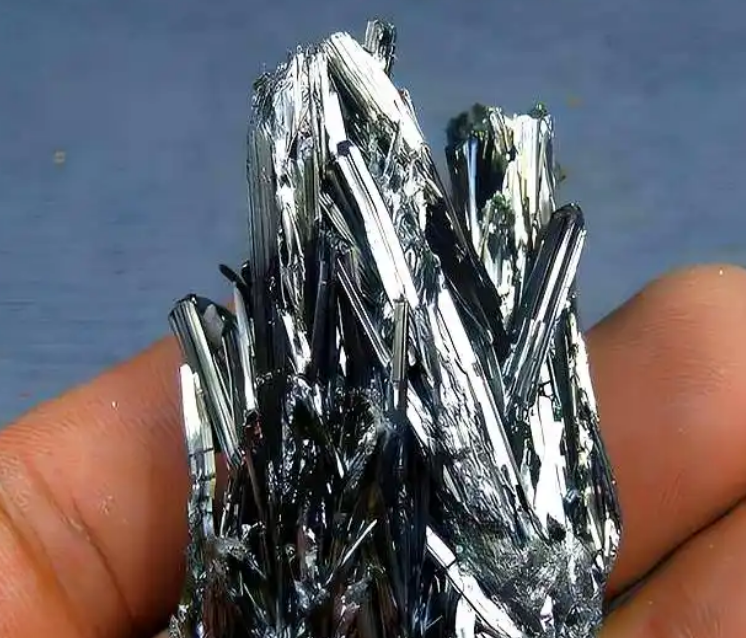
Low-profile tungsten is quietly establishing itself as a formidable “trump card.”
As we head toward 2026, this metal—often dubbed the “teeth of industry”—is steadily ascending to an invisible throne among non-ferrous metals, driven by its high-temperature resistance, scarcity, and surging demand.
What makes it so indispensably “hardcore”?
Think of tungsten as one of those “steel secret agents” that handles the most dangerous assignments.
It boasts a melting point of 3,422°C. While gold deforms easily under heat, copper’s performance degrades above 300°C, and silver oxidizes readily, tungsten remains “unfazed” by the scorching heat of rocket launches or the punishing environments inside nuclear fusion reactors.
In terms of hardness, tungsten is second only to diamond—1.7 times harder than ordinary steel—and offers exceptional wear and corrosion resistance. There is virtually no better substitute for cutting hard metals or manufacturing wear-resistant components; this is precisely why tungsten alloys are the preferred choice for armor-piercing projectile cores and missile counterweights.
From gas turbines, rockets, missiles, and nuclear reactors to aerospace, atomic energy, shipbuilding, automotive, electrical, electronics, chemical, and defense industries, tungsten serves as the key tool that unlocks the door to high-tech advancement.
Its “hardcore” nature is one thing; its scarcity and the leverage it grants within the supply chain are another.
Global proven tungsten reserves stand at approximately 4.63 million tons, with China accounting for 2.4 million tons—or 52% of the total.
In 2023, global primary tungsten mine production was approximately 79,500 tons, with China contributing about 66,000 tons. In 2024, global production stood at approximately 81,000 tonnes, with China accounting for about 67,000 tonnes (83%) and the rest of the world contributing around 14,000 tonnes—primarily from Vietnam, Russia, and Australia.
Regarding the distribution of global primary tungsten mine production in 2024, China held a share exceeding 80%, followed by Vietnam (5%), Russia (3%), and Australia (2%), with all other countries combined accounting for less than 10%.
More importantly, China’s involvement goes beyond mere extraction; the country long ago designated tungsten as a mineral subject to state-protected mining policies. Since 1991, China has restricted disorderly mining and gradually established a comprehensive industrial system covering mining, smelting, processing, and end-use applications.
Today, China accounts for over 75% of global processed tungsten products and boasts a self-sufficiency rate of more than 90% for high-end products, maintaining control over the entire value chain from source to end-user.
In 2025, tungsten’s status as a dominant market force was fully activated, driven by a straightforward combination of factors: tightening supply and surging demand.
Following the implementation of export controls on tungsten, tellurium, bismuth, molybdenum, and indium on February 4, exports of tungsten APT (ammonium paratungstate) plummeted by 70%—dropping from 782 tonnes in 2024 to just 243 tonnes during the first 11 months of 2025.
Prices trended steadily upward.
By November 2025, the average price of black tungsten concentrate had risen to 331,000 yuan per tonne, marking an increase of over 132% for the year.
The price surge for tungsten powder was even more dramatic, skyrocketing from 322,000 yuan per tonne at the start of the year to 1.09 million yuan per tonne—an increase far outpacing that of gold, silver, or copper.
While supply tightened here, anxiety mounted elsewhere.
High-end machinery and defense industries in Europe and the United States have long relied on imports of intermediate tungsten products from China.
Data from the U.S. Geological Survey for 2025 confirmed that the United States has had no domestic primary tungsten mining since 2015, relying entirely on imports, recycling, and strategic reserves, with only a few companies possessing downstream processing capabilities.
Between 2020 and 2023, China accounted for approximately 27% of U.S. tungsten imports.
By 2024–2025, this proportion had declined somewhat due to export controls and diversification efforts, yet China remained a critical supplier. Meanwhile, the U.S. Defense Logistics Agency’s strategic reserve stockpiles are low; shifting to a net-buyer position starting in 2025, the agency has begun active procurement to address pressures arising from DFARS compliance requirements.
Compounding the challenge is the fact that in high-end sectors—such as photovoltaic (PV) tungsten wire and military-grade alloys—the substitution rate for recycled tungsten remains below 15%. Furthermore, recycled tungsten costs 20% more than virgin ore, making it unrealistic to rely on recycling to bridge supply gaps in the short term.
Demand across multiple industries is simultaneously fueling the market.
Driven by the semiconductor, PV, and display panel sectors, demand for high-purity tungsten targets is growing at an annual rate exceeding 15%; the market size stood at approximately $12 billion in 2024 and is projected to surpass $13 billion in 2025.
In the PV industry, tungsten-wire diamond saws have replaced carbon steel wire as the mainstream technology for silicon wafer cutting. Penetration is expected to exceed 60% by 2025, with tungsten consumption per unit of installed capacity four times higher than that of traditional processes.
China accounts for 80% of global PV production capacity, a dominance that has directly driven a 22% increase in demand for tungsten wire.
In the semiconductor sector, manufacturers of tungsten hexafluoride are willing to pay a premium for raw materials, as material costs represent a relatively small fraction of total chip manufacturing expenses; notably, both TSMC and Nvidia utilize tungsten in their operations.
Regarding new energy vehicles (NEVs), the production of permanent magnet synchronous motors and “blade batteries” also requires tungsten alloys. Battery manufacturers are currently testing niobium-tungsten oxides to shorten charging times and enhance energy density.
If successful, this shift would increase tungsten usage per electric vehicle from 1.5 kg to 2.5 kg; consumption in this segment is projected to rise by 22% year-over-year in 2025, reaching 1,500 tonnes.
Looking ahead, global installed capacity for heterojunction (HJT) solar cells is expected to reach 80 GW by 2026—a development that alone could generate an additional 6,400 tonnes of tungsten demand.
In the realm of solid-state batteries, QuantumScape is evaluating tungsten oxide coatings to reduce interfacial resistance in prototypes slated for trial production in 2026.
Even sectors traditionally viewed as distinct—such as mining and oil & gas—remain heavily reliant on tungsten.
Tungsten carbide serves as a core component in drill bits, cutting tools, and wear-resistant parts, capable of withstanding extreme abrasion, high temperatures, and high pressures. The oil and gas industry relies heavily on tungsten-based tools for drilling deep, high-temperature wells; industry giants like Saudi Aramco have widely adopted advanced PDC drill bits, which often feature tungsten carbide matrices, for deep gas wells.
The resurgence of global oil and gas drilling activity in 2025 is directly driving this sub-sector; the market for tungsten carbide mining and drilling tools is projected to grow steadily between 2025 and 2026, with a compound annual growth rate (CAGR) of approximately 5–6%.
The AI boom has also unexpectedly fueled demand for PCB drill bits, pushing tungsten consumption into the range of 2,000 to 3,000 tons.
Looking further ahead, tungsten’s high melting point and radiation resistance have made it the material of choice for plasma-facing components in nuclear fusion reactors; estimates suggest that a single fusion reactor would consume 29,000 tons of tungsten over a 40-year lifespan.
Amidst this surge in demand, leading domestic companies are ramping up production, with tungsten demand in relevant sectors rising by 60% year-over-year.
The defense sector is equally active; tungsten’s high density and hardness make it ideal for armor-piercing projectile cores, missile counterweights, and fighter jet gyroscopes—components used in China’s Long March rockets and SpaceX’s Falcon rockets alike.
Defense orders surged by 42% in 2025, pushing companies to near-full capacity, with some orders already scheduled through 2026.
Export controls are also accelerating industrial restructuring, prompting companies to shift from exporting raw materials to producing high-value-added products like tungsten carbide.
Technological breakthroughs are placing our industrial chain on a more stable footing and enhancing its overall value.
Global geopolitical uncertainty is also driving a re-evaluation of the metal’s worth.
Historically, the price of tungsten has at times surpassed that of gold, with the value of tungsten ore rising significantly during wartime.
Current geopolitical risks suggest there is still upward momentum for prices.
In an attempt to reduce dependency, the U.S. sought to stimulate its domestic tungsten industry through tariffs; however, while the domestic supply chain failed to take off, prices rose immediately.
A comparison of current market prices is telling: gold trades at over 1,000 yuan per gram and silver at over 20 yuan per gram, whereas tungsten ore is priced at only about 1.2 yuan per gram.
This stark contrast makes it clear that tungsten ore is significantly undervalued. Even if the price of silver were to rise to 100 yuan per gram, the market could absorb it; since we control over 80% of global tungsten production capacity, we theoretically hold the initiative on pricing, and a rise to 10 yuan per gram wouldn’t be unreasonable given its intrinsic value.
Raising prices would allow us to channel actual revenue into technological R&D while simultaneously strengthening our leverage in global supply chain cooperation.
However, I’d like to discuss a specific nuance here.
Can we simply equate “pricing power” with the ability to drastically raise prices at any moment?
My view is: no.
Rapid price hikes might unlock resource value in the short term, but they also stimulate the development of alternatives, recycling systems, and the reopening of dormant mines overseas. At the same time, they instantly amplify cost pressures and volatility for downstream sectors like photovoltaics, semiconductors, and electronics manufacturing.
A smarter approach might be to control the pace ourselves: using export controls, quota management, long-term contracts, and strategic stockpiles to ensure a steady, gradual price increase. We should shift the profit focus from raw ore to high-value-added segments—such as tungsten carbide, high-purity sputtering targets, tungsten hexafluoride, micro-diameter cutting tools, and ultrafine powders—thereby transforming pricing power into genuine influence over technology and industry standards.
This fosters trust across the supply chain and ensures long-term benefits for the industry.
Fundamentally, gold and silver serve primarily as hedges against currency fluctuations; their intrinsic value remains unchanged—what has changed is the excessive issuance of the US dollar and the erosion of its credibility.
The recent rally in gold and silver prices is, at its core, a story about currency.
Tungsten, however, is different; its value is deeply tied to sectors that define the future—photovoltaics, AI, electric vehicles, nuclear fusion, and the defense industry.
In terms of utility, value, and growth potential, tungsten rivals—or even surpasses—silver.
Over the next year or two, tungsten is highly likely to undergo a significant revaluation. Its strategic importance is on par with rare earths, and the possibility of its value growing several-fold—or even tenfold—is far from a fantasy.
At this point, you might be asking a question that hits close to home: if tungsten prices continue to climb, how should I weigh the opportunities against the risks—whether in personal investment or in business decisions within my industry?
My advice is to accept short-term volatility as the norm and keep a close eye on a few key signals. Monitor the pace of policy implementation and quota adjustments; watch for widening price spreads between APT and black tungsten concentrate; keep a close eye on overseas inventory levels and the timing of U.S. strategic stockpiling; and track the rollout of new photovoltaic production lines, the progress of heterojunction (HJT) installations, oil and gas rig utilization rates, new defense industry production orders, and shipment trends for PCB drill bits.
For companies, the strategy should be to secure core raw materials through long-term contracts, proactively establish recycling systems, and upgrade to products that are difficult to substitute. Companies should increase the proportion of high-value products—such as tungsten carbide, high-purity sputtering targets, tungsten hexafluoride, and micro-cutting tools—while effectively hedging against exchange rate fluctuations and raw material price volatility.
For individuals, the key is to diversify investments and remain wary of the timing lag between price hikes and actual profit realization; one should avoid applying a short-term trading mindset to a technology materials sector characterized by long-term, compounding growth potential.
As long as we solidify the industry’s “hard power” and transform pricing leverage into comprehensive influence over technology and standards, time will reveal the long-term value of tungsten to those who remain patient.
Post time: Aug-17-2026