

Gold-related themes are particularly popular in movies and TV shows, often revolving around the struggle for vast sums of gold, with various characters appearing and engaging in a series of legendary tales of intrigue, love, and hate.
Such gold robberies have also occurred in real life, but the methods used are far more sophisticated and involve far more violence than those depicted in movies and TV shows.
According to reports, someone used gold as collateral to obtain loans of 19 billion yuan from various banks. It was later discovered that the collateralized gold was fake; the surface was a layer of gold, while the interior was mixed with tungsten. Because tungsten’s density is almost equal to that of gold (tungsten density 19.35 g/cm³, gold density 19.32 g/cm³), common gold detection methods such as the water bath method and X-rays are completely ineffective, allowing these thieves to repeatedly succeed.
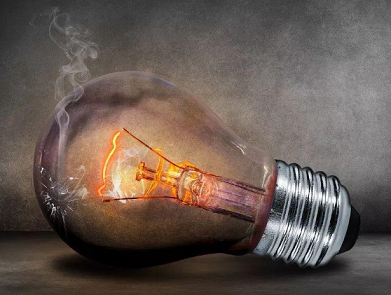
While the term tungsten might be unfamiliar to some, most people are familiar with tungsten filament, which is mainly used in incandescent lamps, halogen lamps, and other electric light sources.
Tungsten filaments are made of tungsten, a non-ferrous metal that feels heavy to the touch. Tungsten has a density of 20 grams per cubic centimeter, very close to that of gold, which is why it’s sometimes used to counterfeit gold.
Tungsten is also a rather brittle metal. It only possesses ductility and high tensile strength when it’s highly pure. However, these aren’t its primary characteristics. Melting a piece of tungsten requires extremely high temperatures; its melting point is 3420 degrees Celsius. This is why it’s used to make the filament for incandescent light bulbs.
However, if you pass an electric current through very thin tungsten filaments in air, it will overheat and break, stopping the light production. This is because tungsten oxidizes at high temperatures, forming tungsten trioxide on its surface. Tungsten trioxide has a melting point of only about 1500 degrees Celsius.
The high-temperature calcination of tungsten creates beautiful colored marks on its surface due to variations in the thickness of the oxide film. What we see in light bulbs is not just this beautiful oxide film, but also a different one. This is because oxygen has been removed from the bulb, and a mixture of nitrogen and argon has been introduced. Without oxidation, the tungsten filament can emit light for a long time.
Interestingly, close observation of the tungsten filament reveals why modern incandescent bulbs don’t last as long as older bulbs. Older bulbs used a simple spiral filament, while modern bulbs have a thinner double-helix structure, resulting in more uneven thickness and significantly reducing lifespan.
Since ancient times, humans have used various substances to generate light through combustion, such as oil, natural gas, and coal gas. However, these light sources have very low efficiency.
Initially, light bulbs used carbon filaments, which also had relatively short lifespans.
Until the early 20th century, the advent of tungsten filaments greatly improved luminous efficiency.
The first tungsten filament light bulb was invented in 1910.
In 1917, a tungsten filament that does not deform at high temperatures was invented.
The light bulb industry has very high requirements for tungsten filaments: they must be heat-resistant, possess excellent high-temperature anti-sagging properties, have good plasticity, and good electrical conductivity.
Currently, there are three types of tungsten filaments used in the market: pure tungsten filaments, doped tungsten filaments, and various alloy tungsten filaments.
Pure tungsten filaments can be further classified according to their properties into paste-extruded tungsten filaments, colloidal tungsten filaments, and ductile tungsten filaments, etc. Only ductile tungsten filaments have good performance and are widely used; other types are less common due to their brittleness.
Doped tungsten filaments were developed to address the poor anti-sagging properties and low luminous efficiency of pure tungsten filaments at high temperatures. They are mainly made by doping tungsten trioxide with silicon, aluminum, and potassium, and are primarily used in the heating filaments of light bulbs and electron tubes.
Alloy tungsten filaments mainly include tungsten-rhenium alloy wires, thorium-tungsten-rhenium alloy wires, and tungsten-molybdenum alloy wires, etc. The applications vary depending on the properties of each alloy tungsten filament material.
How are fine tungsten wires made?
The raw material for tungsten wire is ammonium paratungstate, a white crystalline solid that is slightly soluble in water. When calcined in a furnace at nearly 700 degrees Celsius for 40 minutes, it produces blue crystalline tungsten oxide with particles ranging from 12 to 19 micrometers.
The raw material used to produce tungsten powder is doped with blue tungsten oxide to meet the specific requirements of tungsten wire. Elements such as aluminum and potassium are added to enhance the properties of the tungsten wire, such as resistance to sagging and increased toughness.
The blue tungsten oxide is reduced to tungsten powder in a hydrogen reduction furnace. This tungsten powder has an average particle size of 2 to 5 micrometers. The tungsten powder is placed in a mold and pressed into a billet using an isostatic press. The pressed tungsten billet is then sintered in a furnace. The density of the sintered tungsten billet is typically 17.7 g/cm³.
The tungsten billet is then forged into a round bar shape for drawing, with a density exceeding 19 g/cm³. The forged tungsten billet is then drawn into tungsten wire.
Graphite, a lubricant, is added during the tungsten filament drawing process. The diameter of the tungsten filament ranges from 20 micrometers to 1 millimeter, and it is packaged in reels.
Aside from a small amount used as heating material in high-temperature furnaces, heat exchangers in electron tubes, and reinforcing ribs in composite materials, tungsten filaments are mostly used to make filaments for various incandescent and halogen tungsten lamps, as well as electrodes for gas discharge lamps.
Now, some people are turning tungsten filament lamps into works of art, providing both illumination and artistic appeal. The tungsten filaments are shaped into various complex forms; when electricity is applied, the filament heats up, seemingly bringing the objects inside the bulb to life.
With advancements in science and technology, tungsten filament bulbs are rarely used now, but they made a significant contribution to humanity during their time, leading to their continued use in many settings to add a unique retro charm.
Post time: Mar-10-2026