

The material world contains various compounds composed of tungsten, among which tungsten disulfide and tungsten carbide have attracted attention in the field of materials science. Although these two substances have similar names, their atomic arrangements, physical and chemical properties, and the resulting applications are vastly different.
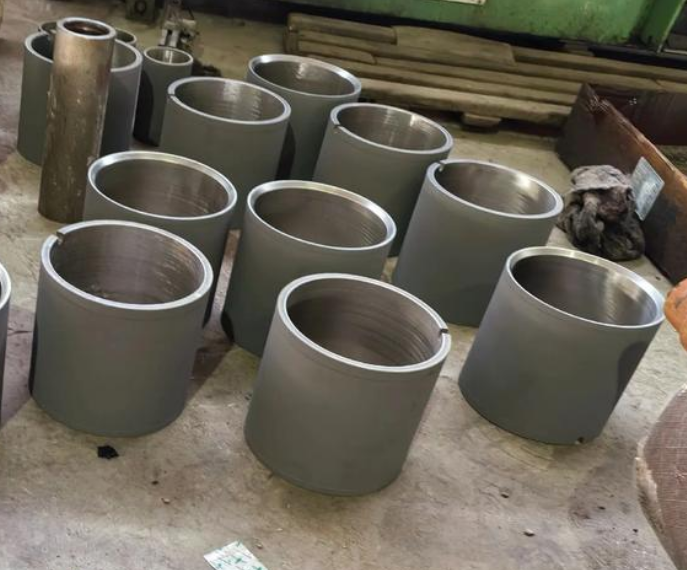
The fundamental difference between these two materials becomes apparent from the way their atoms are bonded. Tungsten carbide is an interstitial compound formed by strong covalent bonds between tungsten and carbon atoms. In this structure, smaller carbon atoms are embedded in the interstices of the tungsten metal lattice, forming an extremely dense and robust crystal structure. This strong bonding endows tungsten carbide with extremely high hardness and excellent wear resistance, with a hardness value approaching that of diamond. In contrast, tungsten disulfide belongs to the transition metal dichalcogenide group. Its crystal structure is layered, with each layer consisting of a “tungsten-sulfur-sulfur-tungsten” sandwich unit. Atoms within each layer are tightly bound by covalent bonds, while the layers are stacked together by weak van der Waals forces. This unique layered structure is key to understanding its function.
Based on these different microstructures, the macroscopic properties of tungsten carbide and tungsten disulfide differ significantly. Tungsten carbide’s extremely high hardness makes it difficult to compress or scratch, while maintaining shape stability and strength at high temperatures. In applications subject to immense pressure and friction, such as cutting tool edges, drill bits in drilling equipment, and some wear-resistant liners, tungsten carbide is the preferred material. Conversely, the layered structure of tungsten disulfide makes its layers highly susceptible to shear slip. When placed between friction surfaces, these layers can slide, significantly reducing the coefficient of friction and exhibiting excellent solid lubrication properties. This lubrication characteristic is particularly important in extreme environments where liquid lubricants fail, such as vacuum, high temperature, or high load.
The expansion of application areas further confirms their performance-oriented differences. The core applications of tungsten carbide always revolve around its ability to “resist wear.” Besides machining, it is also made into cemented carbide, widely used in molds, precision bearing balls, and other components requiring long-term dimensional accuracy. Tungsten disulfide applications, on the other hand, focus on “promoting slip.” It is often added as a solid lubricating powder to high-temperature greases and polymer composites, or used to form anti-friction coatings on the surface of mechanical parts through processes such as spraying and sputtering. In recent years, its monolayer form has also shown research potential in fields such as electronic devices and catalysis.
In summary, tungsten disulfide and tungsten carbide represent two different performance limits of tungsten compounds. The former minimizes friction through weak interlayer interactions, while the latter achieves innovative resistance to wear through a strong covalent bond structure. Their value lies not in which is superior, but in how to precisely match their inherent material properties according to specific mechanical environments and technical requirements. A deeper understanding of these two materials helps in making more rational material choices in designs involving wear resistance and lubrication.
Post time: Jul-22-2026