

I. Introduction to Tungsten-Copper Alloys
Tungsten-copper alloy (WCu alloy) is a high-performance composite material that combines the advantages of both metallic tungsten and copper, offering broad prospects for industrial application. Tungsten boasts an exceptionally high melting point of 3410°C and a density of 19.34 g/cm³, exhibiting extreme high-temperature resistance and strength. In contrast, copper features a melting point of 1080°C and a density of 8.89 g/cm³, possessing excellent electrical and thermal conductivity. These distinct characteristics enable tungsten-copper alloys to occupy a pivotal position across numerous high-end manufacturing sectors.
The compositional range of tungsten-copper alloys typically spans from WCu7 to WCu50. Characterized by a uniform microstructure, these alloys possess attributes such as high-temperature resistance, high strength, and resistance to electric arc erosion, while simultaneously offering moderate electrical and thermal conductivity. This combination of comprehensive properties has led to the widespread application of tungsten-copper alloys in industries including military defense, aerospace, electronics, electric power, metallurgy, and mechanical engineering.
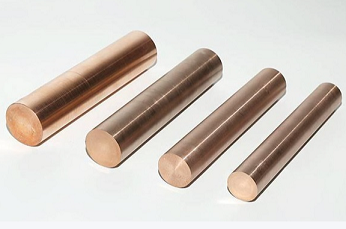
II. Key Characteristics of Tungsten-Copper Alloys
1. High Melting Point and High Strength
Tungsten’s high melting point (3410°C) and high density (19.34 g/cm³) endow tungsten-copper alloys with exceptional stability and strength in high-temperature and high-pressure environments. This ensures outstanding performance in applications involving extreme conditions, such as those found in the aerospace and nuclear industries.
2. Excellent Electrical and Thermal Conductivity
Copper’s superior electrical and thermal conductivity—combined with tungsten’s high-temperature stability—results in tungsten-copper alloys possessing excellent conductive and thermal properties. Consequently, they are well-suited for use as electrodes in electrical discharge machining (EDM), as electrical contact materials in high-voltage switches, and as electronic packaging materials.
3. Resistance to Electric Arc Erosion
Tungsten-copper alloys demonstrate excellent resistance to erosion under high-temperature electric arc conditions; they are therefore frequently utilized as electrode materials and components for high-temperature switching devices. This specific characteristic secures their vital role within the electrical and electronics industries.
III. Application Fields of Tungsten-Copper Alloys
High-Temperature-Resistant Military Materials: Due to their high melting point and exceptional strength, tungsten-copper alloys are extensively employed as high-temperature-resistant materials within various military equipment and systems. Electrical Alloys for High-Voltage Switches: Their exceptional electrical and thermal conductivity make them an ideal material for critical components within high-voltage switches and circuit breakers.
Electrical Discharge Machining (EDM) Electrodes: In the field of electrical discharge machining (EDM), tungsten-copper alloys excel as electrode materials, effectively withstanding high-temperature and high-pressure environments.
Microelectronics Materials: Applications of tungsten-copper alloys in the microelectronics sector include chip packaging and heat dissipation materials, ensuring the efficient operation of electronic devices.
Aerospace, Aviation, Electronics, Electric Power, Metallurgy, Machinery, Sports Equipment, and Other Industries: Tungsten-copper alloys are widely utilized as components and parts across these industries, enhancing product performance and reliability.
IV. Chemical Composition and Physical-Mechanical Properties of Tungsten-Copper Alloys
The composition and properties of tungsten-copper alloys vary depending on the specific application. The following outlines several common tungsten-copper alloys and their respective properties:
Tungsten-Copper (50) – CuW(50)
Composition: 50% Tungsten, 50% Copper
Physical Properties: Density of approximately 13.85 g/cm³
Mechanical Properties: Hardness of approximately HB 180
Applications: EDM electrodes, high-temperature electrode materials.
Tungsten-Copper (55) – CuW(55)
Composition: 55% Tungsten, 45% Copper
Physical Properties: Density of approximately 14.7 g/cm³
Mechanical Properties: Hardness of approximately HB 200
Applications: Arc welding and resistance welding electrodes.
Tungsten-Copper (60) – CuW(60)
Composition: 60% Tungsten, 40% Copper
Physical Properties: Density of approximately 15.6 g/cm³
Mechanical Properties: Hardness of approximately HB 230
Applications: High-voltage switches, electronic packaging, and heat dissipation materials.
Tungsten-Copper (70) – CuW(70)
Composition: 70% Tungsten, 30% Copper
Physical Properties: Density of approximately 16.7 g/cm³
Mechanical Properties: Hardness of approximately HB 260
Applications: Microelectronics materials, welding electrodes, and thermal management materials. Copper-Tungsten (75) – CuW(75)
Composition: 75% Tungsten, 25% Copper
Physical Properties: Density of approximately 17.2 g/cm³
Mechanical Properties: Hardness of approximately HB 270
Applications: High-temperature-resistant materials for military use, and electrical contact alloys for high-voltage switches.
V. Market Outlook for Copper Alloys
Driven by technological advancements and rising industrial demand, tungsten-copper alloys possess broad prospects for industrial application. In particular, demand for tungsten-copper alloys is expected to see sustained growth within high-end manufacturing sectors such as aerospace, aviation, electronics, and electric power.
VI. Recommendations for Future Development
New Materials R&D: Integrate nanotechnology and alloy composite techniques to enhance the performance of tungsten-copper alloys, thereby meeting the requirements of increasingly demanding applications.
Precision Machining Technologies: Develop highly efficient machining and forming processes to satisfy market demands for high precision and superior quality.
Environmental Protection and Recycling: Conduct research into technologies for the recycling and reuse of tungsten-copper materials to improve resource utilization efficiency and foster sustainable development.
In summary, as a high-performance composite material, tungsten-copper alloy enjoys extensive application prospects and significant market demand on a global scale. By strengthening collaboration between enterprises and research institutions to drive advancements in the field of tungsten-copper alloys, we can provide robust material support for high-end manufacturing, thereby contributing to technological progress and economic growth.
Products related to this article: copper-tungsten alloy

Author: Ms. Cherry Zhao, over 20 years of experience in Refractory metals industry.
Post time: Mar-28-2026