

In the field of advanced materials, one alloy is garnering increasing attention from enterprises due to its superior high-temperature resistance, electrical conductivity, and corrosion resistance: tungsten-copper alloy (CuW80).
Driven by the rapid development of aerospace, new energy vehicles, and high-end electronics, this material is taking center stage in the market.
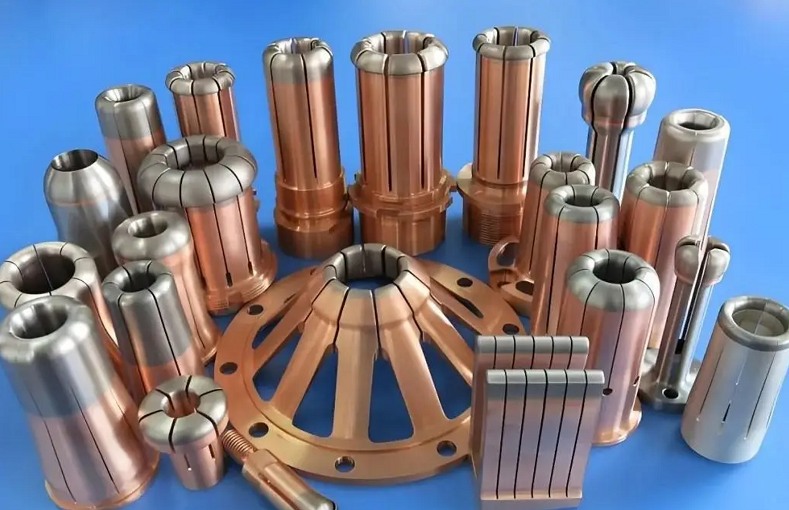
What Is Tungsten-Copper Alloy (CuW80)?
Tungsten-copper alloy is a composite material created via powder metallurgy, combining high-melting-point tungsten with highly conductive copper.
The designation “CuW80″ indicates a composition of approximately 80% tungsten and 20% copper.
This specific ratio allows the material to possess the high melting point, hardness, and ablation resistance of tungsten, while simultaneously retaining the high thermal and electrical conductivity of copper.
This unique combination of “rigidity and flexibility” enables it to perform reliably across a variety of extreme operating conditions.
Key Performance Advantages of CuW80
High-Temperature Stability: Maintains structural integrity even at temperatures exceeding 2000°C, making it ideal for high-heat environments.
Excellent Electrical and Thermal Conductivity: Ensures superior performance in applications such as electrical discharge machining (EDM), electrical contacts, and heat-dissipation components.
Oxidation and Corrosion Resistance: Capable of long-term, stable service in complex operating environments.
High Strength and Wear Resistance: Well-suited for the manufacture of critical components, including electrode blocks and switch contacts.
These properties establish CuW80 as more than just a material—it is a strategic pillar for advanced manufacturing.
Applications of CuW80 Tungsten-Copper Alloy
Aerospace: Used for rocket nozzle liners and ablation-resistant spacecraft components, ensuring stable operation under extreme high-temperature conditions. New Energy Industry: Used as heat-dissipation substrates for IGBT modules in new energy vehicles (NEVs), enhancing the safety of electronic control systems.
Electronic and Electrical Equipment: Utilized for arcing contacts in high-voltage switchgear and vacuum interrupter contacts, significantly extending their service life.
Molds and Precision Manufacturing: Employed as electrodes for electrical discharge machining (EDM) and in cooling structures for molds, improving both processing efficiency and product quality.
In short, CuW80 is integral to a wide range of high-growth industrial chains over the next decade—from aerospace and new energy to electronics and electrical equipment.
Why does CuW80 have such a promising outlook?
The world is entering a major era for new energy and aerospace:
The continuous rise in new energy vehicle sales has triggered a surge in demand for high-temperature-resistant, heat-dissipating alloys.
The development of domestic large aircraft and the increasing frequency of rocket launches necessitate large quantities of ablation-resistant materials.
The rapid pace of innovation in the electronics and chip industries has led to an ever-growing reliance on high-performance thermal management materials.
Tungsten-copper alloy (CuW80) directly addresses the critical challenges within these sectors. By ensuring stability in extreme environments and enhancing both the lifespan and safety of products, it is regarded as a strategic material with immense potential for the coming decade.
Procurement and Market Value
Currently, CuW80 is primarily supplied in forms such as plates, rods, and electrode blocks. When sourcing this material, key criteria typically include:
Density (approaching theoretical density to ensure consistent performance);
Hardness (≥HB200, meeting wear-resistance requirements);
Electrical Conductivity (≥30% IACS, ensuring electrical performance);
Ablation Resistance (offering a service life several times longer than that of standard copper alloys).
As downstream industries continue to expand, the market demand for CuW80 is expected to grow, establishing it as an indispensable material for high-end manufacturing.
Post time: Nov-03-2026