

01 From Unfamiliar to Familiar: The Invisible Everyday Life of Tungsten Carbide
You may not have heard of “tungsten carbide,” but it has already quietly permeated every aspect of your life. From the wear-resistant watch case on your wrist to the sharp knives used to cut steel in factories; from the wear-resistant brake coating of Tesla’s electric pickup truck to the precision surgical instruments on the operating table, and even the nib of the pen in your hand, all rely on this magical material hailed as the “King of Hardness.”
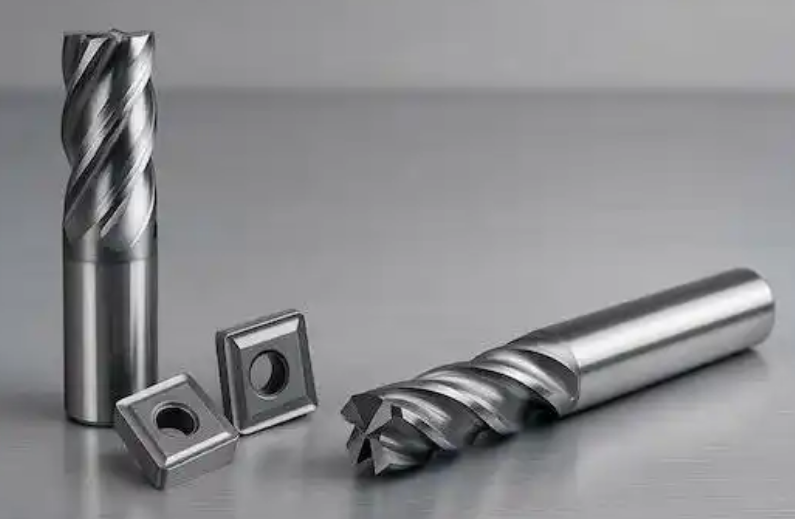
02 What is Tungsten Carbide?
2.1 The “King of Alloys,” Second Only to Diamond in Hardness
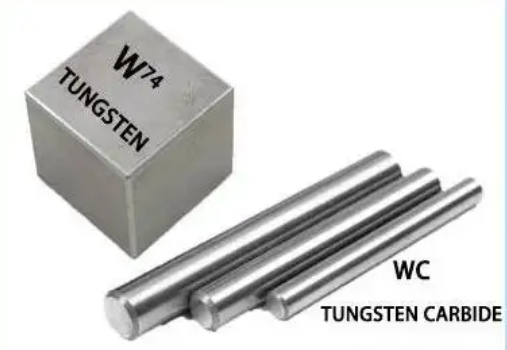
Tungsten carbide, with the chemical formula WC, is an ultra-hard compound formed by combining tungsten and carbon at high temperatures. It is not naturally occurring but a product of human ingenuity. It appears as a black hexagonal crystal with a unique metallic luster.
Core Characteristic: Extreme Hardness Tungsten carbide has a hardness of 8.5–9.5 on the Mohs hardness scale, with a microhardness reaching 17,300 MPa, making it capable of cutting and shaping almost any other material.
2.2 Brittle and Glass-like? Powder Metallurgy “Bonds” Itself
Pure tungsten carbide is as brittle as glass. To solve this problem, scientists invented powder metallurgy: mixing tungsten carbide powder with metal binders such as cobalt and nickel, and sintering it under high pressure. This is like using “metal glue” to bond hard “tungsten carbide particles,” forming a composite material called “cermet”—hard alloy—which perfectly balances hardness and toughness, becoming the cornerstone of industrial applications.
03 More Than Just Hard: The “All-Round” Properties of Tungsten Carbide
King of Wear Resistance: Its wear resistance is dozens of times that of tool steel, making it the first choice for bearings and sealing rings.
Master of Heat Resistance: Maintains hardness even above 500℃, suitable for jet engines and missile warheads.
Chemically Inert: Insoluble in water, hydrochloric acid, and sulfuric acid at room temperature, and corrosion-resistant.
Dimensionally Stable: Its shape and size remain virtually unchanged even under extreme conditions, making it ideal for precision machining.
04 From Fingertips to Space: The Vast Stage of Tungsten Carbide
4.1 The Backbone of Industrial Manufacturing
40% of tungsten carbide is used to manufacture cemented carbide cutting tools, with a lifespan 5-10 times that of traditional high-speed steel, greatly improving processing efficiency and precision; it is also indispensable for crushing equipment in mining and oil drilling.
4.2 The Guardian of High-End Manufacturing and Everyday Life
Never-Wearing Watch and Pen Nibs
Tesla Cybertruck Brake Coating
Porsche Braking System
Corrugated Roller—Core Equipment for Corrugated Cardboard—Longer in Lifespan Due to It
4.3 The Armor of Defense and Aerospace
Armor-Piercing Projectile Cores and Ultra-High-Temperature Components of Aerospace Engines Rely on It for Impact Resistance and High-Temperature Resistance.
4.4 Catalysts for Cutting-Edge Technologies
Tungsten carbide nanoparticles exhibit platinum-like catalytic activity in water electrolysis for hydrogen production, potentially significantly reducing the cost of green hydrogen energy; photocatalytic degradation of pollutants is also showing promise.
05 China’s Strength: The Backbone of the Global Tungsten Carbide Industry
China is already the world’s largest producer of tungsten carbide, accounting for over 60% of global production in 2024. Chinese Companies are driving the industry’s transformation towards deep processing and green manufacturing; efficient recycling technologies such as zinc melting have achieved tungsten and cobalt recovery rates exceeding 98%, safeguarding sustainable development.
06 Future Outlook: Smarter and Greener
Self-lubricating cemented carbide reduces the coefficient of friction, enabling “dry cutting.”
3D printing of complex structures shortens manufacturing cycles.
Tungsten carbide nanoparticles continue to shine in cutting-edge fields such as catalysis and sensors.
From the first knife that illuminated human civilization to a catalyst driving the future energy revolution, the story of tungsten carbide is an epic of materials science empowering modern industry. It is no longer just a cold tool in the workshop, but a key element integrated into the blood of innovation, shaping a more durable, efficient, and greener future. This “industrial tooth” is biting through one technical hurdle after another with unimaginable hardness, and its brilliance is destined to grow ever more dazzling.
FOTMA ALLOY, a leading global tungsten, molybdenum and new energy materials company, has a prominent tungsten carbide materials business and the ability to deeply process tungsten carbide powder. It has significant advantages in raw material supply, cost control and technological synergy.
Post time: May-21-2026