

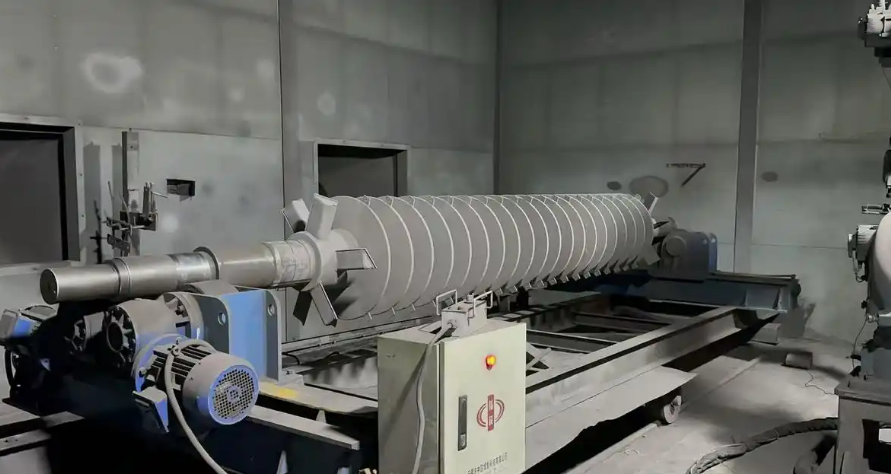
In the realm of industrial manufacturing, tungsten carbide is a highly prized material, valued for its exceptional hardness, wear resistance, and corrosion resistance. The process of applying tungsten carbide to various substrates via spraying—creating a hard coating—endows industrial equipment with extended service life and high-performance capabilities. Today, let us step inside a tungsten carbide spraying facility to unveil the story behind the creation of these robust, hard coatings.
Tungsten Carbide: An Industrial “Hardcore” Powerhouse
Tungsten carbide (chemical formula: WC) is an inorganic compound composed of tungsten and carbon. It boasts extreme hardness—second only to diamond—with a Mohs hardness rating of 9 to 9.5. This remarkable hardness makes it widely applicable in fields such as cutting tools, molds, and wear-resistant components. However, since tungsten carbide exists naturally as a powder, effectively applying it to substrates of diverse shapes and materials posed a significant challenge. This is where spraying technology came into play.
Spraying Technology: Giving Tungsten Carbide New Life Through Adhesion
Simply put, tungsten carbide spraying involves using specialized equipment to propel tungsten carbide powder—carried by a high-speed gas stream or flame—onto a pre-treated substrate surface, forming a uniform, dense, and hard coating. This coating not only retains the material’s inherent hardness but also enhances the component’s overall wear, corrosion, and high-temperature resistance through its bond with the substrate.
Within tungsten carbide spraying facilities, the technology generally falls into two categories: thermal spraying and cold spraying. Thermal spraying methods—such as flame spraying, plasma spraying, and arc spraying—utilize high temperatures to melt or soften the tungsten carbide powder before propelling it onto the substrate surface. In contrast, cold spraying operates at lower temperatures; a high-speed gas stream accelerates tungsten carbide powder to supersonic speeds, causing it to impact the substrate surface and form a coating. Due to advantages such as minimal thermal impact on the substrate and the creation of dense coatings, cold spray technology has seen widespread application in the field of tungsten carbide coating in recent years.
A “Precision Dance” in the Manufacturing Plant: The Transformation from Powder to Coating
Stepping into a tungsten carbide coating facility, one is immediately struck by the array of precision equipment and technical processes. The process begins with the preparation and screening of tungsten carbide powder. High-purity tungsten and carbon powders are selected and synthesized into tungsten carbide powder via a high-temperature carbonization reaction; the powder then undergoes meticulous screening and classification to ensure that particle size and distribution meet specific spraying requirements.
Next comes substrate pretreatment. The substrate surface must undergo cleaning, degreasing, and sandblasting to remove contaminants and oxide layers, thereby enhancing the bond between the coating and the substrate. The quality of this pretreatment directly influences the coating’s adhesion and overall performance.
Then follows the spraying process itself. The facility selects the appropriate spraying technology and equipment based on the substrate’s material and shape, as well as the specific coating requirements. In thermal spraying, a flame or plasma beam melts or softens the tungsten carbide powder—creating molten or semi-molten droplets—before propelling them onto the substrate surface. In cold spraying, a high-speed gas stream accelerates the powder to supersonic speeds, driving it to impact the substrate surface directly and form the coating. Whether using thermal or cold spray methods, precise control of parameters—such as spray distance, angle, and velocity—is essential to ensure coating uniformity and density.
Once spraying is complete, the coating surface may exhibit defects such as porosity, cracks, or areas of incomplete fusion. To address this, the facility employs post-processing techniques—including grinding, polishing, and pore sealing—to further enhance the coating’s surface quality and performance.
Wide-Ranging Applications: From Aerospace to Everyday Products
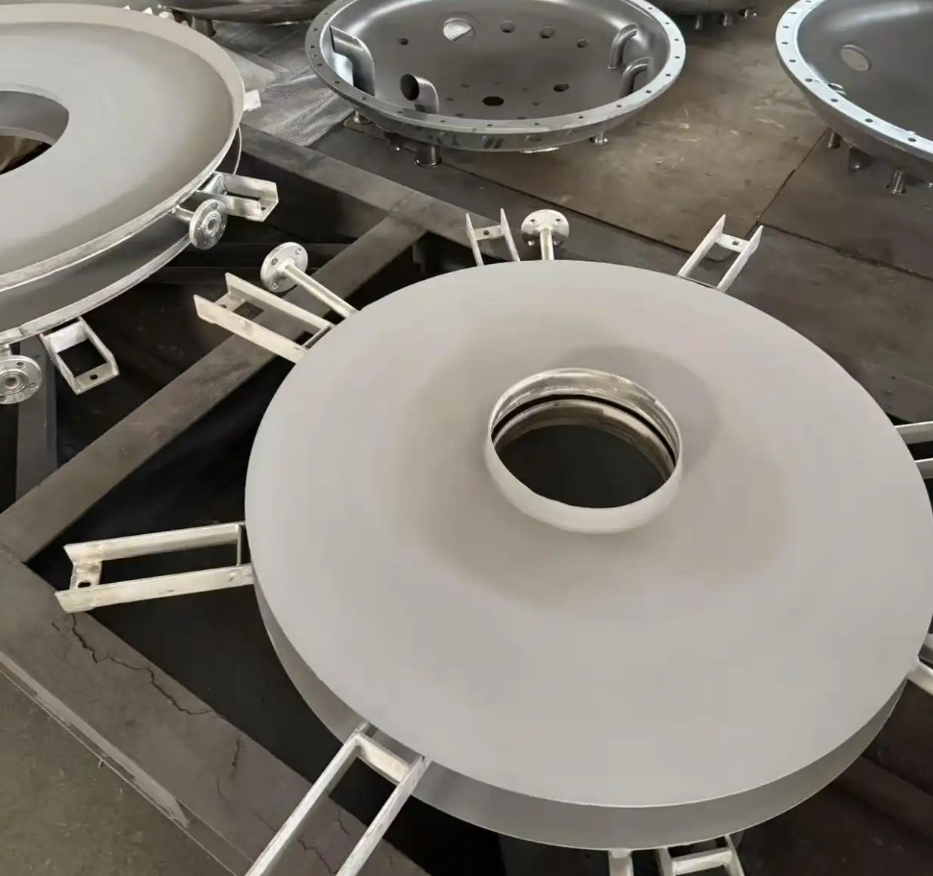
Due to their exceptional performance, sprayed tungsten carbide coatings are widely used across numerous sectors. In the aerospace industry, these coatings are applied to critical components—such as engine blades and turbine disks—to enhance surface properties, thereby improving wear and high-temperature resistance and extending service life. In automotive manufacturing, they are applied to friction-prone parts like cylinder liners and piston rings, reducing wear and fuel consumption while boosting engine efficiency. In mold manufacturing, tungsten carbide coatings are applied to mold cavity surfaces to improve wear and corrosion resistance, ultimately reducing the frequency and cost of mold replacement.
Furthermore, sprayed tungsten carbide coatings play a vital role in sectors such as energy, chemicals, and metallurgy. For instance, in oil extraction, they are used to reinforce the surfaces of components like drill bits and sucker rods, enhancing wear and corrosion resistance to withstand harsh underground environments. In chemical processing equipment, the coatings protect surfaces on components such as reaction vessels and pipelines, preventing chemical corrosion and wear.
Future Outlook: Technological Innovation Driving Industry Growth
Driven by continuous technological progress and rapid industrial development, manufacturers of sprayed tungsten carbide coatings face both new opportunities and challenges. On one hand, market demands for coating performance are rising, requiring greater hardness, superior wear resistance, and enhanced corrosion resistance. On the other hand, environmental protection and energy conservation have become key industry trends; manufacturers must continually explore new spraying technologies and materials to lower energy consumption and reduce environmental pollution.
Looking ahead, manufacturers will continue to intensify their efforts in technological innovation, developing more efficient and eco-friendly spraying equipment and processes. For instance, nanotechnology can be employed to produce finer tungsten carbide powders, thereby enhancing coating density and performance; novel spraying techniques—such as laser spraying and electron beam spraying—can be developed to achieve greater precision in coating application; and composite coating technologies can be explored to co-spray tungsten carbide with other materials, creating coatings with multifunctional properties.
At the same time, tungsten carbide spraying manufacturers will strengthen cooperation and communication with upstream and downstream enterprises to jointly drive industry development. Collaborating with raw material suppliers ensures the quality and supply stability of tungsten carbide powders, while partnering with end-users facilitates an understanding of market demands and feedback, enabling the continuous optimization of products and services.
Post time: Oct-14-2026