

When humanity explores extreme working conditions, the limitations of conventional materials act as invisible barriers—the intense heat of a high-temperature furnace is enough to soften steel, the friction under high-speed impact can instantly shatter ordinary alloys, and the chemical corrosion in harsh environments can further undermine the structural stability of most metals. At this point, a special material renowned for its “hardness” steps forward, becoming the key to breaking through these limits: tungsten alloys. It is not simply a mixture of metals, but a “super warrior” crafted through a scientific formulation of multiple superior properties, continuously writing legendary chapters of material innovation in defense, aerospace, medical devices, and even emerging technologies.
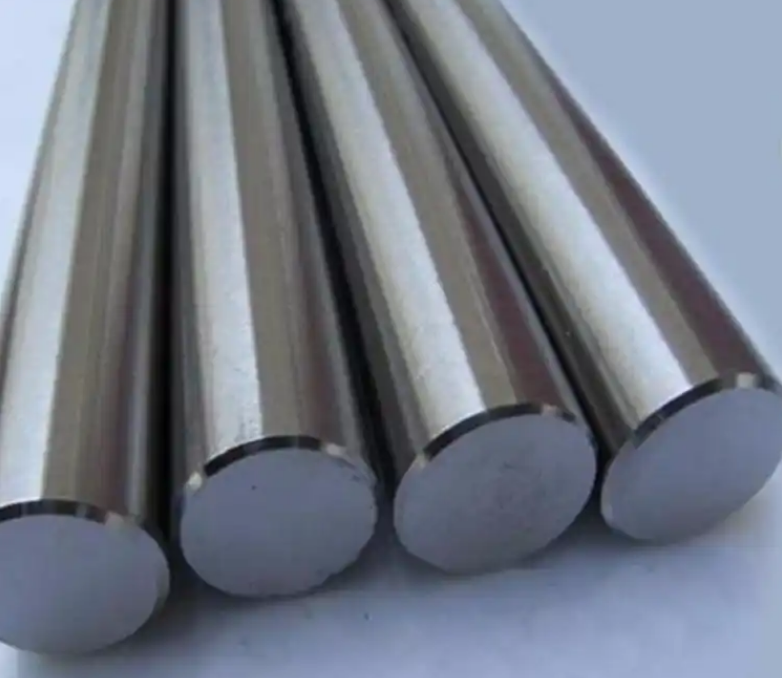
I. The Essence of Tungsten Alloys: The Performance Code of Multi-Element Synergy
Tungsten alloys are composite materials made by fusing tungsten with other metallic or non-metallic elements in specific proportions. Their core appeal stems from the wisdom of compositional design where “1+1>2″. Tungsten, the dominant element, boasts the highest melting point in nature, endowing the alloy with exceptional high-temperature resistance. Combined with binder phases such as nickel, iron, and copper, which offer good ductility, it effectively compensates for the brittleness of pure tungsten, giving the material both strength and toughness. To further enhance density, high-density elements like cobalt and molybdenum are introduced, significantly increasing the mass per unit volume. This precise compositional control is like blending a sophisticated “material cocktail,” where each component plays a unique role, collectively shaping comprehensive performance suitable for various applications.
Compared to traditional single metals, tungsten alloys offer overwhelming advantages across the board. Pure steel softens rapidly above 800°C, while high-quality tungsten alloys maintain stable mechanical properties even at 1600°C. Aluminum alloys, though lightweight, are fragile and easily deform and fracture under high-speed impacts, while tungsten alloys, with their ultra-high hardness, can withstand severe collisions with ease. Even in harsh chemical environments such as strong acids and alkalis, the dense oxide film formed on its surface provides a robust defense. It is this multi-dimensional performance advantage that makes it an irreplaceable choice in many high-end fields.
II. Forging Excellence: The Art of Tungsten Alloy Production
Transforming dispersed metallic elements into high-performance alloys relies heavily on advanced manufacturing processes. Powder metallurgy is considered the “soul” of tungsten alloy production. Technicians first mix tungsten powder with other metal powders in precise proportions, then cold isostatically press it to form a high-density billet. This is followed by high-temperature sintering to achieve metallurgical bonding between particles. This process is akin to reassembling countless tiny “building blocks,” preserving the high hardness of the tungsten particles while allowing the binder phase to fill the gaps like glue, ultimately forming a dense and uniform alloy structure.
For high-performance alloys with special requirements, upgraded processes such as hot-pressing sintering and spark plasma sintering are employed. These technologies further enhance the material’s density and grain refinement by optimizing the combination of temperature, pressure, and current fields. To eliminate internal residual stress and improve microstructure uniformity, subsequent finishing processes such as rolling, forging, or heat treatment are required. Each step requires precise parameter control; even slight deviations can significantly reduce performance, which is precisely the technological barrier in tungsten alloy production.
III. A Multifaceted Flourishing: The Applications of Tungsten Alloys
In the military field, tungsten alloys are the sharpest “spear of war.” Armor-piercing projectiles, with their high-density tungsten alloy cores, can penetrate multiple layers of composite armor instantly thanks to their immense kinetic energy. Similarly, the warheads of high-explosive anti-tank (HEAT) projectiles rely on their high hardness to focus energy and tear apart targets upon detonation. Even man-portable defensive munitions gain a tactical advantage due to the small-caliber, highly efficient lethality of tungsten alloys.
In the aerospace field, tungsten alloys represent a vast and promising future. Satellite attitude control systems require high-precision counterweights, and the high specific gravity of tungsten alloys allows them to provide sufficient rotational inertia within confined spaces. Missile gyroscope rotors utilize tungsten alloys, which can withstand the immense centrifugal force of high-speed rotation while maintaining a highly symmetrical mas
Post time: Sep-04-2026