

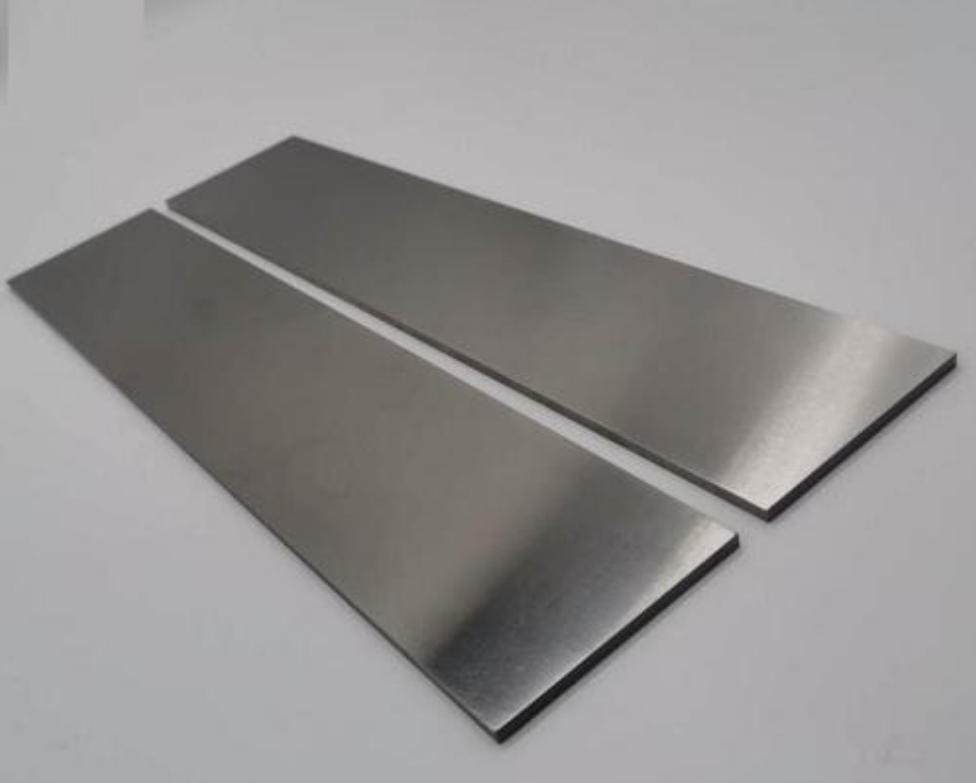
Molybdenum plates, which remain sturdy even at 1600℃, are not only the unsung heroes of mobile phone screens and spacecraft, but also the invisible guardians of chip manufacturing and oil extraction. It’s like oxygen in the industrial field—you don’t usually feel it, but you only realize its devastating effects when you lack it.
I. An Industrial “Special Forces” Unfazed by High Temperatures
In a vacuum furnace, molybdenum plates maintain thermal stability at 1600℃. Without them, the sapphire crystals used in mobile phone screens simply cannot grow.
Spacecraft engine nozzles must be made of molybdenum alloys; otherwise, they simply cannot withstand the intense friction during atmospheric reentry.
Even in the protective layers of nuclear power plants, molybdenum plates are hidden, acting like “radiation-proof armor” for the reactor.
Molybdenum’s ability stems from its inherent property: its coefficient of thermal expansion is only 1/3 that of steel, meaning it hardly deforms when heated. Imagine if ordinary metals are like chocolate that softens when heated; molybdenum plates are like a perpetually hard “metal biscuit.”
II. The “Invisible Guardian” in Semiconductor Factories
When you’re playing games on your phone, you might not realize that molybdenum plates play a crucial role behind the scenes in chip manufacturing:
In the wafer dicing process, molybdenum blades can cut silicon wafers with a precision one-tenth the thickness of a human hair. Even more remarkably, in glass furnace electrodes in strong acid and alkali workshops, only molybdenum plates can withstand 2000 hours of operation without corrosion.
Recently, with the rise of flexible electronics, molybdenum plates have been given new applications. Scientists have discovered that by making molybdenum plates thinner than an A4 sheet of paper, they can be used to manufacture circuit boards for foldable phones.
III. From Steelmaking to Oil Extraction: A “Lifesaver” for Traditional Industries
While molybdenum shines in cutting-edge technology, it’s also a “stabilizing force” in traditional industries:
Adding molybdenum to special steel directly increases its strength by a level; the Hong Kong-Zhuhai-Macau Bridge uses this “molybdenum steel formula.” In oil extraction, molybdenum catalysts increase crude oil conversion rates; and molybdenum alloy components in automotive painting workshops have a lifespan several times that of ordinary materials. Interestingly, 75% of the world’s molybdenum is actually used as an additive in steelmaking. It’s fair to say that without molybdenum, there would be no modern metallurgical industry.
Next time you see stainless steel tableware, aircraft engines, or photovoltaic power plants, consider this unsung hero of materials. It may not make headlines as often as rare earth elements, but as one materials scientist put it, “Molybdenum is like oxygen in industry—you don’t usually feel it, but you only realize how deadly it is when you lack it.”
Post time: Jan-14-2026