

Introduction: Thermal spray molybdenum wire is typically manufactured using ammonium molybdate or high-purity molybdenum oxide as raw materials through a complex production process. First, the raw material is reduced to molybdenum powder. Next, the powder undergoes isostatic pressing and high-temperature sintering to form molybdenum rods, which are then hot-rolled into coarse wire. Finally, the material passes through multiple drawing stages to produce thermal spray molybdenum wire in the specific dimensions required by the customer.
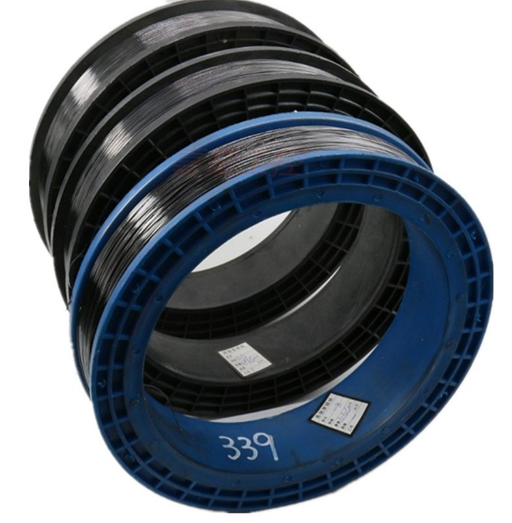
Thermal spray molybdenum wire generally boasts a purity of ≥99.95%. Production adheres to strict tolerances to ensure consistent mechanical properties and excellent coating adhesion (interlayer bonding). Quality is guaranteed through various inspection methods, such as eddy current testing, ensuring uniform wire diameter and the absence of internal cracks, splits, continuous pits, or scratches. In addition to pure molybdenum wire, lanthanum or yttrium can be added as dopants to enhance high-temperature performance. Thermal spray molybdenum wire offers numerous advantages: it is available in various diameters to meet diverse customer needs; it features a high melting point and excellent high-temperature resistance; it offers high purity (low impurity and contamination levels); and its mechanical properties can be tailored to specific requirements by adjusting the content of lanthanum or yttrium. Thermal spray molybdenum wire plays a vital role in the industrial sector. It is widely used in automotive and machinery manufacturing—for instance, to apply thin coatings to wear-prone automotive parts such as piston rings, transmission synchronizer components, and gear shift forks, enabling them to withstand high mechanical loads. Furthermore, it is used to repair worn crankshafts, rolls, shafts, and other mechanical components, or to serve as an intermediate bonding layer. Under conditions of high temperature and heavy load, the resulting coating exhibits exceptional interlayer adhesion strength. Characteristics of Thermal Spray Molybdenum Wire
Diverse Diameter Options
Thermal spray molybdenum wire is available in a wide range of diameters, offering customers extensive choices. The market currently offers specifications spanning from small to large sizes, catering to the needs of various industries and application scenarios. For instance, precision machining may require thinner molybdenum wire to achieve fine coating results, whereas the repair of large mechanical components might necessitate thicker wire to ensure adequate coating thickness and strength. This variety of diameter options allows thermal spray molybdenum wire to leverage its unique advantages across diverse fields.
High Melting Point and High-Temperature Resistance
Thermal spray molybdenum wire possesses an exceptionally high melting point, enabling it to maintain stable performance in high-temperature environments. With a melting point of approximately 2620°C, the material exhibits excellent high-temperature resistance. In demanding environments—such as inside automotive engines or industrial furnaces—the wire withstands extreme heat without melting or deforming. It operates reliably at high temperatures, providing effective protection for such equipment. For example, applying a molybdenum wire coating to components like automotive engine piston rings enhances their high-temperature resistance and extends their service life.
High Purity and Low Contamination
Thermal spray molybdenum wire boasts a purity level exceeding 95%, with minimal impurity content. This high purity ensures that performance remains unaffected by impurities during use. Furthermore, the low impurity level minimizes the generation of contaminants, making the material environmentally friendly. High-purity molybdenum wire offers excellent electrical conductivity, thermal conductivity, and corrosion resistance, ensuring stable operation in harsh environments. Consequently, it serves as a high-performance material in sectors with stringent purity requirements, such as the electronics industry. Customizable Mechanical Properties
Molybdenum wire for thermal spraying can be modified with various elements—such as lanthanum or yttrium—to achieve specific mechanical properties. Adding these elements allows for the adjustment of characteristics like hardness, strength, and toughness to meet the requirements of diverse applications. For instance, in applications demanding high strength, an appropriate amount of lanthanum can be added to enhance the wire’s strength; conversely, yttrium can be added to improve toughness where that quality is prioritized. This ability to customize mechanical properties ensures that thermal spray molybdenum wire delivers optimal performance across a wide range of fields.
Global Market Size and Growth Drivers
Global Market Size
Thermal spray molybdenum wire is widely used across the globe, and its market size continues to expand. Industry data indicates steady growth in the global market for this product in recent years. Sales have consistently risen, driven by demand in sectors such as automotive manufacturing, machining, and aerospace. In automotive manufacturing, for example, the continuous increase in global vehicle production has led to a corresponding year-over-year rise in demand for thermal spray molybdenum wire. In the machining sector, the wire is used to repair worn mechanical components and extend their service life, further contributing to market expansion. Additionally, the aerospace industry’s need for high-performance materials has spurred increased adoption of thermal spray molybdenum wire in that sector.
Growth Drivers
Technological Advancements
Continuous advancements in thermal spray technology have led to improved performance in molybdenum wire. The emergence of sophisticated techniques—such as High-Velocity Air-Fuel (HVAF) spraying and High-Velocity Oxy-Fuel (HVOF) spraying—has resulted in higher coating quality, stronger bond strength, and lower porosity. These technological strides have not only enhanced the wire’s performance in application but also broadened its scope of use, thereby driving market growth.
Rising Industry Demand
The rapid development of sectors such as automotive manufacturing, machining, and aerospace has fueled a steady increase in demand for thermal spray molybdenum wire. In the automotive manufacturing sector, an increasing number of manufacturers are adopting thermal-spray molybdenum wire technology to enhance the performance and service life of vehicle components. In the field of mechanical machining, this material is used to repair worn mechanical parts, thereby reducing production costs and boosting efficiency. In the aerospace industry, properties such as high-temperature and corrosion resistance make thermal-spray molybdenum wire a vital material for the manufacture of aerospace equipment.
Rising Environmental Standards
As environmental awareness grows, so does the demand for eco-friendly materials. As a high-purity, low-pollution material, thermal-spray molybdenum wire meets environmental standards; consequently, it is increasingly being utilized in sectors with stringent environmental requirements, such as the electronics and medical industries. This trend is providing new momentum for the growth of the thermal-spray molybdenum wire market.
Post time: Oct-13-2026