

Discussions about robotics often focus on software, sensors, artificial intelligence, and automation platforms, but these are not the whole story. The operation of every robot still relies on physical components capable of moving, grasping, cutting, guiding, pressing, rotating, and undergoing thousands or even millions of repetitive actions. This is precisely why material selection is more important than many realize.
As robots enter more demanding industrial environments, the question is no longer just what a robot can do, but how accurately it can consistently perform those tasks. Robotic arms on assembly lines, grippers in packaging facilities, medical device components, or robotic care systems all rely on parts that withstand friction, pressure, heat, impact, and wear.
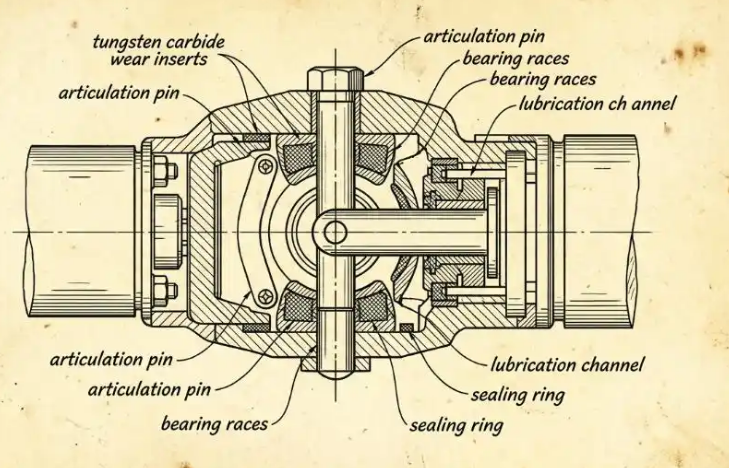
Tungsten carbide, with its hardness, strength, and wear resistance, has become one of the key materials for meeting these demands. It plays a quiet yet indispensable role in maintaining the long-term stable operation of automated systems.
Wear Issues and Robot Reliability
In the field of robotics, minor malfunctions often lead to major problems. A worn pin, a damaged guide rail, a dulled cutting edge, or an imprecise tool surface can all disrupt production, reduce accuracy, and even force maintenance teams to halt production lines. In high-volume environments, such downtime can result in tangible economic losses.
This is precisely why tungsten carbide manufacturing is so closely linked to advanced robotics. Through this manufacturing process, engineers can create parts that can withstand high-intensity motion, contact, and pressure without easily deforming, exhibiting performance far superior to ordinary soft metals.
Unlike standard steel parts, tungsten carbide parts are specifically designed for situations where wear is not a minor issue but a core design consideration. This is crucial in robotics, as robots do not perform one-off tasks but rather repeat actions continuously within tight tolerances. Common robotic applications include: wear-resistant parts, precision pins, bushings, and guide rails in automated handling systems; tooling used in robotic machining or forming; gripper inserts for abrasive or difficult-to-handle materials; and parts used for inspection, cutting, stamping, or assembly. When physical parts can maintain their shape for longer periods, robots are more likely to maintain repeatable performance, the foundation of reliable automation.
Precision Maintenance of Automated Systems
Automation relies on predictability. A robot that performs well at the beginning of a shift but gradually deviates from tolerances later can cause problems for engineers, operators, and production managers, and wear is one of the major causes of this problem.
Every motion system has contact points. In robotic systems, these contact points are often subjected to repeated sliding, clamping, rotating, or pressing. Over time, friction alters the surface of parts, affecting alignment accuracy, clamping strength, motion patterns, and final product quality.
Tungsten carbide is harder than many conventional metals, effectively resisting wear and surface deformation, making it particularly valuable in robotic systems handling metals, composites, glass, plastics, ceramics, or other hard materials. This doesn’t mean every robot component needs to be made of cemented carbide. Smart engineering involves using the right material in the right place. However, when parts face continuous wear, tungsten carbide helps extend service life and reduce maintenance frequency.
For manufacturers, this has tangible practical value: fewer worn parts mean fewer interruptions, which in turn mean more stable production schedules. In industries where automation is directly linked to output, this stability is often just as important as speed. Materials Applications in Precision Manufacturing
Precision is one of the main drivers for companies investing in robots. Robots offer high consistency in placement, cutting, inspection, welding, sorting, and assembly, supporting the demands of modern manufacturing. However, this precision depends on the condition of components both inside and outside the system.
If physical tooling begins to deform, the effectiveness of the robot’s software is significantly reduced. Wear on gripper inserts can cause contact point misalignment, decreased guide pin precision can affect alignment, and deterioration of forming tools can cause finished parts to deviate from specifications.
This is precisely why tungsten carbide manufacturing is being incorporated into broader precision discussions. Tungsten carbide components are typically used in environments requiring tight tolerances to be maintained over multiple cycles, making them valuable in industries such as automotive manufacturing, electronics assembly, medical device production, aerospace components, battery manufacturing, and high-volume packaging and material handling. In each of these fields, precision is not just about manufacturing a good part, but about repeatedly producing parts of the same quality. Durable materials help robots maintain this standard for longer periods.
Challenges of Emerging Robot Application Scenarios
Robots are taking on more demanding tasks, no longer limited to simple pick-and-place operations or fixed assembly movements. Modern systems capable of handling diverse materials, performing delicate operations, collaborating with humans, and supporting high-speed production place new demands on component design.
Warehouse robots and CNC machine tool monitoring robots have vastly different needs; collaborative robots in light assembly and metal forming robots face different pressures; and medical robot platforms require significantly higher standards of cleanliness and precision than heavy-duty industrial processing robots. Despite this, many systems face the same fundamental challenge: component durability.
When standard materials reach their performance limits, tungsten carbide offers engineers an alternative. It is suitable for applications where hardness, dimensional stability, and wear resistance are more important than low-cost replacements. This becomes especially important as automation extends to facilities with high uptime requirements. The value of robots lies not only in their speed of movement but also in their reliable, safe, and continuous operation as part of a larger operational system.
Robot Machining and Tooling Durability
The connection between robots and machining is increasingly close. Robots are used in processes such as deburring, grinding, polishing, trimming, cutting, drilling, and finishing, tasks that place stringent demands on tooling.
When robots perform finishing operations, the cutting tools must maintain their edge or surface condition. Uneven wear alters the final result, leading to rough surfaces, inconsistent dimensions, scrapped parts, or the need for additional manual handling.
Tungsten carbide tooling is favored in these applications because it remains stable under grinding conditions, helping robotic systems perform physical tasks involving repeated contact with hard or difficult-to-handle materials. For example, robotic finishing systems in metal manufacturing rely not only on motion control but also on tool durability. The robot moves along a precise path, but the tool must also be stable enough to achieve the desired finishing effect. The same applies when robots cut or drill to meet stringent part requirements.
In this sense, cemented carbide is not independent of automation performance; it is part of the performance chain: software guides motion, sensors provide feedback, and tooling performs the work.
Long-Term Economic Benefits of Automation Investments
When evaluating automation solutions, companies often focus on the robot itself, integration costs, and expected labor savings. While these figures are important, they do not reflect the whole picture.
Hidden costs often only become apparent later. Maintenance, parts replacement, quality issues, downtime, and production delays all alter the economics of automation projects. A system that appears efficient on paper becomes significantly less attractive if it requires constant adjustments or frequent parts replacements.
Durable components help protect this investment. Tungsten carbide parts, with their longer lifespan than softer alternatives, reduce maintenance downtime and help the system operate closer to its intended performance levels. This is especially important in high-volume production, where the impact of even short-term shutdowns can quickly amplify, affecting staffing, shipments, inventory, customer delivery times, and downstream operations.
Tungsten carbide manufacturing supports this aspect of automation by starting with components designed for extended lifespan. The benefits are not immediate but gradually manifest over time through more stable production and fewer unexpected events.
Tungsten Carbide Component Selection Considerations
Not all tungsten carbide components perform the same way. Grade, binder content, grain structure, geometry, surface treatment, and intended use all affect performance. For robotics engineers and purchasing personnel, this makes selection more than just a purchasing decision.
Parts used for positioning and guidance have different requirements than cutting tools; wear-resistant inserts on packaging lines and tungsten carbide punches in forming processes operate under different conditions; components used in abrasive material environments and those subjected to impact or corrosion also require different material balances.
Reasonable material planning requires examining the actual work a part needs to perform, including: the type of contact the part faces, the amount of wear it endures, pressure or impact forces, the tolerances required for repeatable motion, the surface finish required for the application, and the downtime costs in case of premature part failure.
This is precisely where the value of experienced tungsten carbide manufacturers lies—integrating material selection with production realities. The goal is not just to manufacture a rigid part, but to manufacture a part suitable for its conditions.
The Strategic Role of Material Selection in Robot Design
The next phase of robotics will not be shaped solely by software. Engineers are paying more attention to how mechanical design, materials, control, tooling, and production realities work together.
This is a positive shift. A robot is not just a digital system with a mobile arm; it is a machine living in the physical world, dealing with dust, heat, vibration, pressure, friction, chemicals, impacts, and human expectations. The better materials match task requirements, the better the system performance.
This is why material selection should be incorporated into the design process earlier. Instead of waiting for parts to fail and then searching for stronger replacements, robotics teams should identify high-wear areas from the outset. This approach leads to better decision-making: engineers can choose tougher materials for components under the most stress, procurement personnel can move beyond simply pursuing the lowest part price, and production managers can reduce post-installation maintenance issues. In robotics, durability is not an afterthought, but a component of performance.
Looking Ahead: Materials Innovation and the Future of Robotics
The future of robotics is often described as intelligent, adaptable, and interconnected, but ultimately, it still depends on machines capable of performing practical tasks.
Factory, warehouse, laboratory, and production line environments do not favor fragile systems; they require equipment that can perform repetitive tasks, adapt flexibly, operate continuously, and deliver stable results. Tungsten carbide aligns with this future direction because it underpins the physical aspects of robotic advancement.
As robot capabilities continue to improve, materials used in tooling, guideways, grippers, wear-resistant parts, and precision components will receive increasing attention. Stronger materials won’t replace better software or smarter sensors; they’ll complement them.
This balance is crucial. Next-generation robots need intelligence, but they also need a body built for the task. Tungsten carbide manufacturing helps build this foundation by providing engineers with components specifically designed for wear resistance, pressure resistance, and precision.
Robotics is entering a more challenging phase. Machines need to work longer hours, handle more demanding tasks, and provide support in production environments where consistency is critical every hour of the day. This places higher demands on the components that keep the system running.
While tungsten carbide may not be as eye-catching as artificial intelligence or machine vision, it plays a very real role in the future of automation: helping robots maintain precision, reducing wear in high-contact areas, and providing the kind of reliability modern manufacturers require. In next-generation robotics, performance isn’t just about smarter control; it’s about stronger parts, better materials, and real-world engineering decisions.
Q&A
Q1: Why is tungsten carbide being emphasized in robot component manufacturing?
A: Tungsten carbide possesses extremely high hardness, strength, and wear resistance, enabling it to maintain the shape and dimensional accuracy of parts under harsh conditions such as repeated friction, high pressure, and impact, far surpassing ordinary steel. Robot systems require the repetitive execution of precision movements over extended periods; wear on components leads to decreased precision and production interruptions. Tungsten carbide effectively extends component lifespan, reduces maintenance frequency, and helps robot systems operate stably for extended periods.
Q2: In which robot applications are tungsten carbide components suitable?
A: Tungsten carbide components are widely used in wear-resistant parts for automated material handling systems, precision pins and guideways, robot machining tooling, gripper inserts, and in processes such as cutting, stamping, and inspection. They are particularly common in industries with extremely high precision requirements, such as automotive manufacturing, electronic assembly, medical equipment production, aerospace, and battery manufacturing. Tungsten carbide components play a crucial role in any application requiring the maintenance of strict tolerances over numerous cycles.
Q3: What factors need to be considered when selecting tungsten carbide components?
A: When selecting a component, it is necessary to comprehensively consider the type of contact the component will face (sliding, impact, grinding, etc.), the pressure and wear it will withstand, the required motion repeatability accuracy, the surface finish requirements, and the cost of downtime due to premature component failure. In addition, the grade of tungsten carbide, the binder content, the grain structure, and the geometry will all affect the final performance. Therefore, the most suitable material specifications should be selected according to the specific working conditions, rather than simply pursuing the lowest purchase price.
Contact us to start your project!
Post time: May-20-2026