

The True Strength of a Pseudo-Alloy: Why Silver-Tungsten Rods are Called the “Electrical Skeleton”
While tungsten-silver alloy rods may appear to be simply “tungsten mixed with silver,” they are actually a non-solid-solution composite system: tungsten forms a continuous framework, with silver embedded in a dispersed or network-like pattern. This intermingling yet non-solid-solid arrangement ensures the material remains stable at high temperatures, preventing the formation and separation of brittle phases, thus maximizing both thermal stability and mechanical strength.
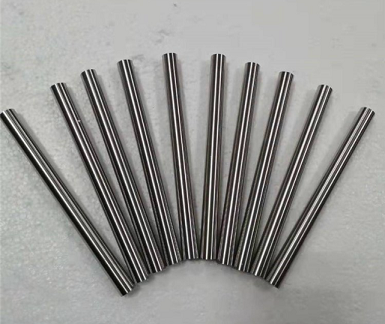
Three Key Performance Aspects: High, Hard, Conductive, Low, Self-Healing
1. High Melting Point + High Modulus: Withstanding “Temperature Bursts”
Tungsten’s high melting point and high modulus act like armor for the alloy, maintaining its geometric integrity even at hundreds of degrees Celsius, without softening or creeping, its dimensions remaining rock-solid.
2. Silver’s low resistivity and high thermal conductivity result in zero current loss and instant heat dissipation. The silver phase creates wide and straight electron channels, reducing contact resistance and temperature rise in seconds. Simultaneously, the heat conduction path is opened, visibly reducing power consumption.
3. Arc self-healing doubles lifespan. The rapid melting and re-solidification of the silver phase creates an “anti-corrosion film” on the tungsten skeleton surface, physically preventing welding and material transfer. Even after tens of thousands of cycles, the contacts remain bright and new.
4. Moderate density and oxidation resistance ensure stability even in a vacuum. With a density between tungsten and silver, it saves material while providing heat dissipation channels. Long-term operation in a vacuum or inert atmosphere results in negligible contact resistance drift.
High-voltage switches:
The “stabilizing force” for millions of cycles. The core contacts of vacuum circuit breakers or SF₆ circuit breakers utilize silver-tungsten rods as blades and contacts. Low current cutoff and high withstand voltage provide double protection, effectively eliminating reignition. Even after tens of thousands of operations, the contacts remain unsticked and unburned, minimizing power outages.
Vacuum Electronic Devices: “Accelerators” for High-Power Microwaves. Traveling wave tubes and klystrons utilize silver-tungsten rods as the grid or anode. Low work function significantly increases electron emission velocity, while high thermal conductivity dissipates heat, visibly extending tube lifespan. In X-ray tubes with rotating anode targets, it acts as a support shaft, withstanding high-temperature torque, dissipating heat, and preventing overheating, drastically reducing target wear rate.
The Era of Customization: From Laboratory to Mass Production – A “Flexible Factory”
FOTMA ALLOY has been deeply involved in tungsten and molybdenum products for nearly 30 years. From powder formulation to hot isostatic pressing, every process can be adjusted to meet specific needs. Specifications, performance, dimensions, and grades are all customizable, from small research samples to large power plant spare parts, all achievable on the same production line. Want something lighter, harder, and more arc-resistant? Just throw your requirements at us, and we’ll leave the rest to our materials engineers.
Post time: Feb-22-2026