

The relationship between people and cars seems to be subtly changing. More and more people are treating cars as partners and integral parts of their lives, rather than just tools. Simultaneously, performance requirements for vehicles are increasing, driving continuous innovation in the automotive industry. Using thermal spraying to improve the performance of automotive parts is one example.
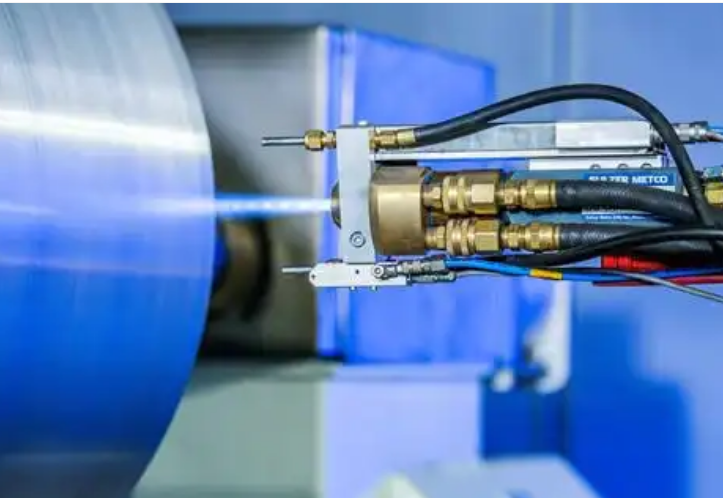
Thermal spraying is a highly effective surface coating strengthening technology. Using techniques such as arc spraying, flame gun spraying, plasma spraying, and HVOF, a thin coating is formed on the surface of easily worn automotive parts, such as piston rings, transmission synchronizers, and gear shift forks, enabling them to withstand high mechanical loads.
Molybdenum wire is one of the most widely used materials in thermal spraying processes. Due to its excellent adhesion, high wear resistance, and compatibility, molybdenum is an ideal material for coatings that can withstand high mechanical loads. Molybdenum coatings, due to their constant coefficient of friction and their protection against overload, are widely used in the automotive and mechanical engineering industries.
Molybdenum wire is generally sprayed using high-speed flame spraying. In flame spraying, molybdenum is fed into the spray gun in the form of a spray filament, where it is melted by flammable gases such as oxy-acetylene and oxy-hydrogen. The molten molybdenum is sprayed onto the surface to be coated, where it solidifies to form a hard layer. Arc spraying is often the preferred process when dealing with large areas, requiring thicker layers, or when specific adhesion requirements must be met. In this process, two wires made of conductive material are fed towards each other. They melt due to the electric arc and are sprayed onto the workpiece surface using compressed air. The density of sprayed molybdenum can reach over 99%, with a bonding strength approaching 10 kg/mm², effectively improving the wear resistance of workpieces and repairing worn crankshafts, rolls, shafts, and other mechanical components.
However, many spraying processes have their limitations in achieving highly dense, high-performance wear-resistant coatings. Coatings with good microstructure, mechanical properties, and improved wear resistance remain a challenge in the field of thermal spraying.
FOTMA ALLOY uses powder metallurgy technology to produce sprayed molybdenum wire, ensuring the purity of raw materials and allowing customers to benefit from an effective coating process, resulting in parts with excellent lubricity and wear resistance.

Post time: Mar-25-2026