Molybdenum copper sheet is a two-phase composite alloy mainly composed of molybdenum (Mo) and copper (Cu). Manufactured through mature industrial technologies such as powder metallurgy and copper infiltration, it serves as a high-performance functional material with synergistic comprehensive properties. Its internal microstructure normally presents a uniform dual-phase distribution, or a typical composite structure with pure copper filled into continuous molybdenum skeleton. With tight interfacial bonding and stable internal organization, this material perfectly combines the structural advantages of molybdenum and the thermal-electric advantages of copper, making it a core thermal management material widely used in high-end electronic packaging and communication industries.
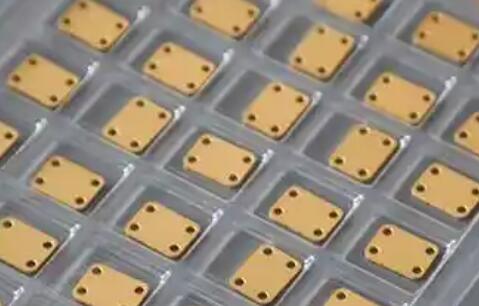
From the perspective of material design, MoCu sheets realize complementary performance advantages. Molybdenum features ultra-high melting point, low thermal expansion coefficient and excellent high-temperature structural stability, while copper delivers outstanding thermal conductivity and electrical conductivity. By adjusting alloy ratio and optimizing manufacturing parameters, manufacturers can flexibly customize key physical indicators. This targeted performance design enables MoCu materials to match the thermal expansion parameters of mainstream semiconductor substrates such as silicon and gallium arsenide, effectively relieving internal thermal stress and preventing cracking or delamination of electronic components caused by frequent temperature changes.
Molybdenum copper alloy sheets boast a full range of superior characteristics, including high thermal conductivity, excellent electrical conductivity, high mechanical strength, low thermal expansion, high temperature resistance and good brazing performance. The copper phase provides efficient heat dissipation capacity; when the copper content reaches 20%, the thermal conductivity can reach 170W/(m·K). The stable molybdenum base greatly restricts overall thermal expansion, ensuring long-term dimensional stability in high and low temperature cycling environments. Meanwhile, its reliable electrical conductivity makes MoCu sheets an ideal connecting material for circuit interconnection, balancing low expansion performance and conductive requirements for precision electronic components.
The mainstream industrial production of molybdenum copper sheets mainly adopts powder metallurgy and infiltration processes. Powder metallurgy is one of the most widely applied mass production methods. High-purity molybdenum powder and copper powder are fully blended in precise proportions, then pressed into green bodies through mould pressing or isostatic pressing. After sintering under hydrogen protection or vacuum conditions, low-melting-point copper fills the micro-pores of molybdenum particles, forming a stable molybdenum skeleton composite structure.
The infiltration process is more suitable for high-molybdenum and high-density MoCu products. Firstly, molybdenum powder is pressed and high-temperature sintered to form a porous molybdenum matrix with controllable porosity. The porous molybdenum frame is heated in a professional mould, and molten copper fully penetrates into internal pores under capillary action. After cooling and shaping, a dense, low-defect molybdenum copper composite material is finally formed. Both processes can be fine-tuned in terms of raw material particle size, sintering temperature and holding time to stabilize product consistency.
Thanks to balanced thermal, electrical and mechanical properties, molybdenum copper sheets are extensively adopted in power transistors, integrated circuits and LED heat dissipation substrates. They are commonly used as heat sink carriers for high-power chips in 5G base stations, quickly transferring concentrated heat and avoiding structural failure caused by thermal mismatch. In hybrid integrated circuits, MoCu sheets can replace traditional Kovar alloy for packaging bases and lead frames. They effectively reduce solder joint fatigue and failure caused by long-term thermal cycling, greatly improving the overall service life and operational stability of electronic modules.
In addition to consumer electronics and communication equipment, molybdenum copper materials also show great application potential in aerospace electronics, laser equipment and high-power power modules. With the continuous upgrading of high-density electronic integration and high-power equipment,
MoCu composite materials have become an indispensable key solution for modern industrial thermal management and precision packaging.
Post time:
May-04-2026