

Material
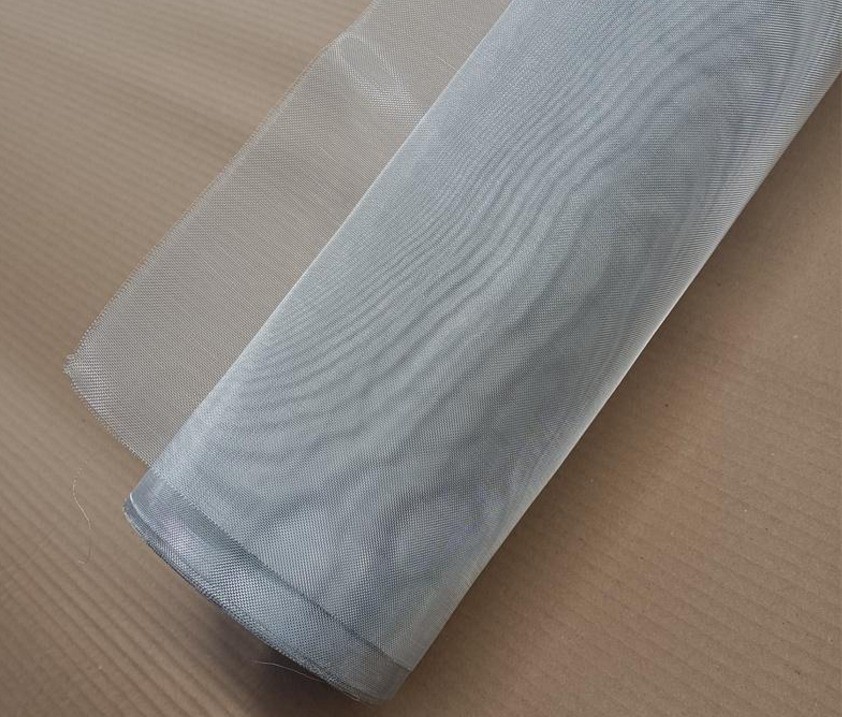
Nickel-chromium (Ni-Cr) alloy mesh is mainly composed of nickel (Ni) and chromium (Cr), with nickel content typically ranging from 30% to 80% and chromium content approximately 10% to 30%. In addition to these two primary elements, it may also contain small amounts of iron (Fe), molybdenum (Mo), aluminum (Al), and other elements.
- Cr20Ni80: One of the most common grades, also known as 80-20 nickel-chromium alloy, containing about 80% nickel and 20% chromium. It features high-temperature resistance, excellent physical properties, and stable electrical resistance, making it widely used in electric heating elements, high-temperature furnaces, and other fields.
- Cr30Ni70: This alloy contains approximately 70% nickel and 30% chromium. Compared with Cr20Ni80, it has different physical and chemical properties, suitable for applications with specific performance requirements.
- Cr15Ni60: With a relatively high nickel content (about 60%) and chromium content of around 15%, this grade also offers good high-temperature resistance and physical properties, ideal for fields requiring special material performance.
- Cr20Ni35: Containing about 20% chromium and 35% nickel, it is suitable for environments where both corrosion resistance and moderate high-temperature performance need to be considered.
- Cr20Ni30: Featuring approximately 20% chromium and 30% nickel, it can be used in applications with certain corrosion resistance requirements and moderate temperature conditions.
Properties
- High-Temperature Stability: Nickel-chromium alloy mesh exhibits excellent high-temperature resistance with a melting point between 1300℃ and 1400℃. It maintains good strength and dimensional stability in high-temperature environments without easy softening or deformation. For example, as a supporting mesh for heating elements in industrial furnaces, it can withstand high temperatures inside the furnace and ensure the normal operation of the heating process.
- Corrosion Resistance: The addition of chromium endows the alloy mesh with good corrosion resistance. It can resist erosion by various chemical substances, showing excellent stability in acid, alkali, and salt solutions of certain concentrations. In marine environments or corrosive media in chemical production, nickel-chromium alloy mesh can effectively prevent rust and corrosion, extending its service life.
- Oxidation Resistance: In high-temperature oxygen-containing environments, nickel-chromium alloy mesh forms a dense oxide film that prevents further reaction between oxygen and the metal elements inside the alloy, thus protecting the mesh from continuous oxidation. For instance, in high-temperature heat treatment furnaces, it can maintain good performance even when exposed to air for a long time.
- Good Electrical Conductivity: Nickel-chromium alloy has a certain level of electrical conductivity, enabling its use in applications requiring electrical conduction. Although its conductivity is not as good as that of pure copper and other metals, it performs well in scenarios where high conductivity is not essential but high-temperature and corrosion resistance are required, such as electrode protection meshes in electric heating equipment.
- High Strength and Toughness: Nickel-chromium alloy mesh possesses high mechanical strength, capable of withstanding certain external impacts and tensile forces. Meanwhile, it has good toughness and is not prone to fracture after bending or twisting. As a filter material, it can withstand fluid pressure and impacts from solid particles during the filtration process.
Applications
- Industrial Heating: In heating equipment such as industrial electric furnaces and muffle furnaces, nickel-chromium alloy mesh is often used as a supporting mesh for heating elements. It protects heating wires from mechanical damage and chemical corrosion while ensuring uniform heat dissipation of the heating elements. For example, in electric furnaces for ceramic firing, nickel-chromium alloy mesh can fix heating wires in appropriate positions, making the temperature distribution inside the furnace more uniform and improving the firing quality of ceramic products.
- Chemical Industry Filtration: Used for filtering chemical raw materials, reaction products, industrial wastewater, etc. When filtering corrosive chemical liquids such as strong acid solutions (e.g., sulfuric acid and nitric acid), it can resist corrosion and effectively filter out solid impurities in the liquids. In chemical synthesis processes, it can also filter catalyst particles in reaction products for convenient recycling and reuse.
- Food Processing Industry: In food baking equipment, nickel-chromium alloy mesh can be used as a supporting mesh for baking trays or grills. Its high-temperature and corrosion resistance meet the high-temperature and cleanliness requirements in food processing. For example, as a supporting mesh at the bottom of baking trays during bread baking, it ensures uniform heating of the bread bottom and is easy to clean and reuse.
- Electronics Industry: In the production of electronic components, nickel-chromium alloy mesh can be used in heat dissipation devices of electronic equipment. It can serve as a supporting structure for heat sinks to help electronic components dissipate excess heat. Additionally, in electronic equipment requiring electromagnetic shielding, it can be used as a material for shielding meshes to block external electromagnetic interference.
- Aerospace Field: In the combustion chambers and exhaust systems of aero-engines, nickel-chromium alloy mesh can filter impurities in high-temperature gas to prevent damage to subsequent engine components. Meanwhile, in the thermal insulation systems of aerospace vehicles, it can act as a supporting mesh for thermal insulation materials to improve insulation effects.
- Automotive Industry: In automotive exhaust gas purification devices, nickel-chromium alloy mesh can be used as a catalyst carrier. It can withstand high temperatures and corrosive components in exhaust gas while ensuring uniform distribution of the catalyst to improve exhaust purification efficiency. In automotive engine radiators, it can also serve as a supporting mesh for cooling fins to enhance heat dissipation capacity.
Post time: Dec-05-2025