

In daily life, we sometimes need to cut hard metals, but their hardness often makes us hesitant.
There is a remarkable metallic element called molybdenum.
Molybdenum wire, made from molybdenum, can easily cut steel plates. You might find it hard to imagine how it works!
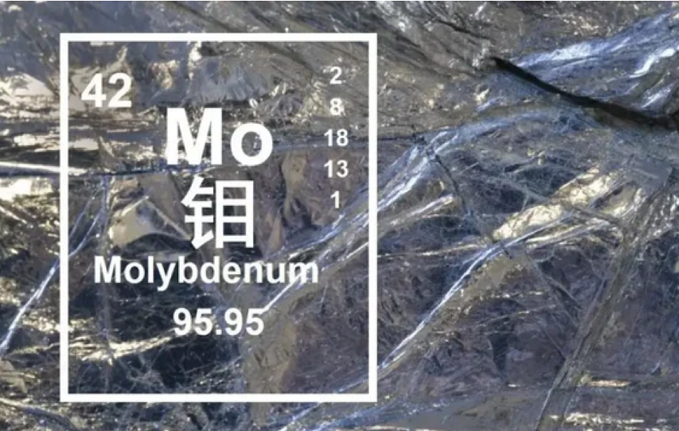
The Amazing Metal Molybdenum
While many may be unfamiliar with molybdenum, it is an essential element present in trace amounts in the human body.
Molybdenum plays a crucial role in human metabolism. A deficiency can lead to growth retardation or even death in infants.
In adults, it can cause high levels of uric acid and purines, endangering health.
Excessive molybdenum can also disrupt metabolism, leading to kidney and urinary tract stones. Given its importance, where does molybdenum come from in the human body?
Many foods we eat contain trace amounts of molybdenum, which is sufficient to meet the body’s needs.
For example, tomatoes and various grains are relatively high in molybdenum, and most vegetables contain molybdenum.
If someone is found to be deficient in molybdenum, they should pay attention to their diet.
As a naturally occurring metal, molybdenum has some fascinating properties.
Molybdenum in Nature
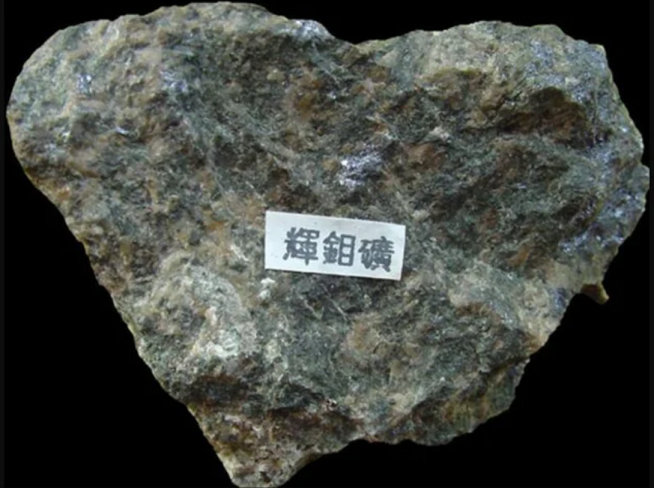
Under natural conditions, molybdenum forms a mineral called molybdenite. After certain refining processes, pure metallic molybdenum can be obtained.
Refined metallic molybdenum is gray and has a cubic metallic structure.
Although it looks like graphite, its melting and boiling points are significantly higher than graphite.
Metallic molybdenum has a melting point as high as 2600 degrees Celsius and a boiling point of approximately 4600 degrees Celsius. It has an exceptionally high density and is extremely tough, making it commonly used in the manufacture of other metals.
In the steel industry, adding an appropriate amount of molybdenum can increase the hardness and corrosion resistance of steel, as well as raise its melting point.
In the aerospace field, molybdenum-doped composite materials are crucial raw materials for constructing high-temperature resistant components.
Scientific research shows that nickel-based superalloys containing more than 18% molybdenum can withstand temperatures exceeding 3000 degrees Celsius, making them highly practical.
Therefore, molybdenum is also used in various electromechanical applications, serving as a robust protective barrier.
Molybdenum metal is not only hard but also has a low coefficient of friction and a very smooth surface; molybdenum disulfide, containing molybdenum, is also an important lubricant.
Besides high-end applications, molybdenum is also used in fertilizers to promote the healthy growth of various plants.
There is speculation in the scientific community that molybdenum may potentially replace graphene in related fields.
Graphene, due to its unique molecular structure, possesses high stability and can be used in various fields, especially in high-end areas such as new energy and transistors, where it plays a vital role.
However, related research indicates that it has superior properties compared to graphene.
The California Institute of Nanotechnology previously developed a new type of chip using molybdenum disulfide and molybdenum disulfide. This chip is smaller and thinner than ordinary chips, and its flexibility and cost are superior to chips made from graphene.
Unfortunately, the technology for molybdenum-based chips is currently too demanding for mass production. It is believed that future technological advancements will fundamentally solve this problem.
Coincidentally, scientists at the Swiss Federal Institute of Technology in Lausanne (ETH Zurich) have also created a new type of chip using molybdenum.
Scientists discovered that the molecular structure of molybdenum is two-dimensional, allowing for extremely thin chips.
Combined with its flexibility, this makes molybdenum chips implantable in the human body.
Scientists state that molybdenum disulfide, containing molybdenum, is an excellent semiconductor material with immeasurable potential in the manufacture of chips, diodes, and related fields.
Furthermore, molybdenum wire is widely used in cutting, and its cutting methods are truly beyond imagination.
Cutting Methods Using Molybdenum Wire
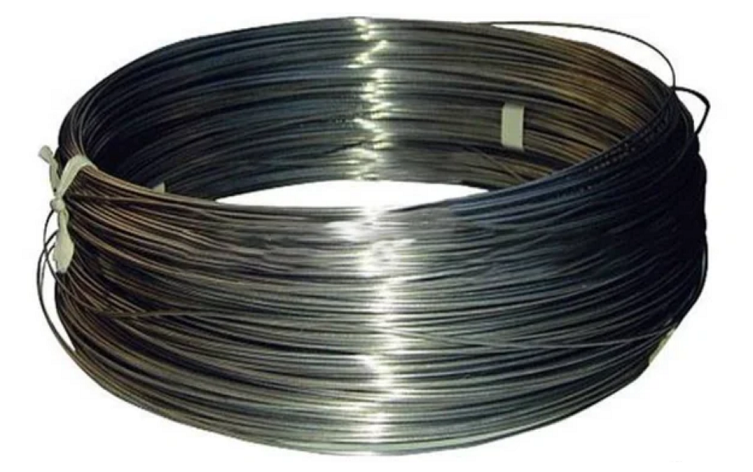
Common cutting methods in our daily lives involve physically destroying the material’s structure to achieve separation. However, steel has a special material composition, and common cutting methods are ineffective. This is where wire cutting comes in.
A cutting device made using tools such as molybdenum wire is called a wire cutter. Its structure is simple: the machine has a groove at both ends connected by a molybdenum wire. Most steel can be easily cut in half by passing through the molybdenum wire.
The key to this amazing cutting method lies in the molybdenum wire itself.
Because a high-voltage current flows through the molybdenum wire, the contact between the current-carrying wire and the steel instantly generates high temperatures, melting the contact point and achieving the cutting purpose.
Of course, this cutting method requires the wire to have an extremely high melting point, which molybdenum wire happens to meet, making it the primary raw material for wire cutting.
The cutting speed varies depending on the material of the wire.
Wire cutting machines using high-melting-point raw materials like copper and iron are considered low-end models. Their melting points aren’t very high, resulting in weak current handling, low speed, and poor wear resistance, leading to premature damage.
Molybdenum wire, on the other hand, is a high-end model. Its material is stable, and with sufficient current, it can easily cut steel at high temperatures, making it highly practical.
The Origin of the Wire Cutting Machine
So who invented this practical machine?
In the mid-20th century, the Lazarenko couple in the Soviet Union discovered that metals corrode and oxidize when exposed to electrical discharge sparks.
They immediately realized that since metals possess this property, why not develop an electrical discharge device to solve the problem of cutting metals?
So, they spent several years developing the electrical discharge machining method, the prototype of the wire cutting machine. After continuous improvements, the first wire cutting machine appeared in 1960.
However, this cutting method was not accepted by Europeans and Americans, so it was sold to my country.
Therefore, my country was the first country in the world to use wire EDM machines in industrial production.
The results were astonishing; this cutting machine proved remarkably efficient, perfectly solving many problems in industrial production.
Through numerous improvements by Chinese scientists, the wire used in wire EDM machines has been continuously upgraded. Since the properties of molybdenum were discovered, molybdenum wire has become a crucial component of wire EDM machines, fully leveraging their advantages.
Today, European and American countries also use wire EDM machines for various metal cutting operations. my country’s wire EDM machine development has advanced significantly, achieving intelligent operation.
my country’s more advanced wire EDM machines primarily employ microcomputer control, enabling automated and precise operation of the cutting object, representing world-class cutting technology.
After learning about the operation of wire EDM machines made with molybdenum wire, you should now have a better understanding of the amazing element molybdenum. What other remarkable properties does it possess?
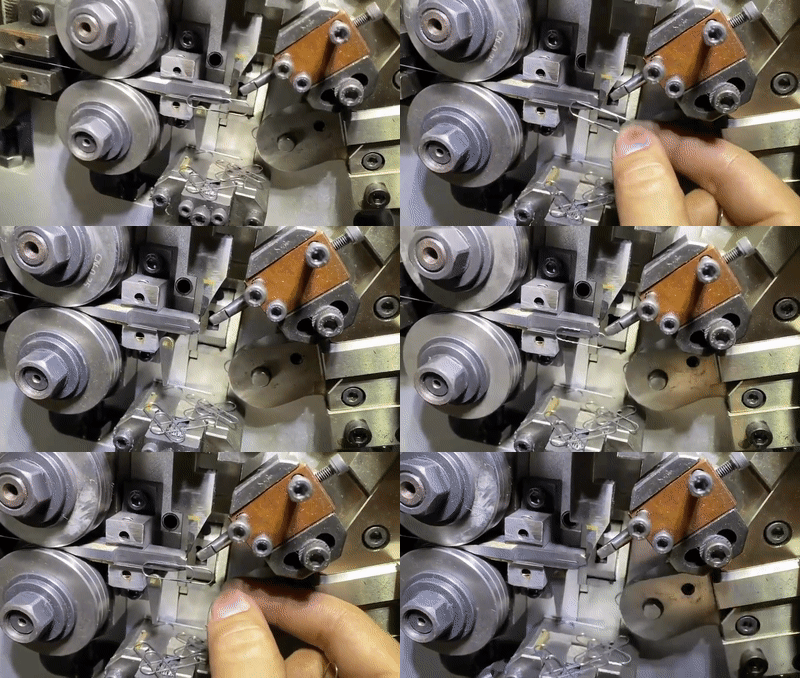
The Value of Molybdenum:
Molybdenum can be used in pharmaceuticals. For example, ammonium molybdate can supplement the molybdenum needed by the human body; appropriate use can enhance the healthy development of children.
Alloys made using molybdenum have many advantages and are widely used in various fields. Unfortunately, molybdenum reserves on Earth are limited, with approximately 8 million tons mined.
How to utilize these limited reserves of molybdenum is a question humanity will need to consider in the future.
Author: Mr. Li Liu, CEO of FOTMA ALLOY
Post time: Mar-24-2026