

Tungsten-copper (W-Cu) alloys are widely used in sectors such as electronics, defense, and aerospace due to their unique combination of properties. However, performance varies significantly depending on composition and processing methods—some prioritize high density, while others aim for high conductivity. How do you choose the most suitable material? This article compares the characteristics of different tungsten-copper alloys across three key dimensions—composition, performance, and application scenarios—to help you quickly find a solution that meets your needs.
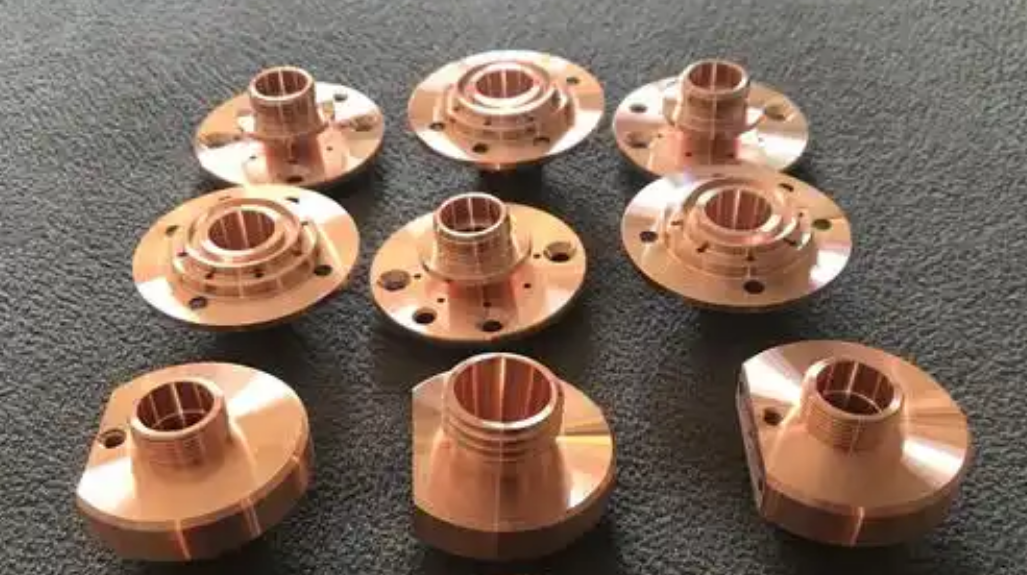
I. Core Properties of Tungsten-Copper Alloys: High Density vs. High Conductivity
The properties of tungsten-copper alloys are primarily determined by the ratio of tungsten (W) to copper (Cu); different ratios yield vastly different characteristics:
| Property Metric | High Tungsten Content (70%–90% W) | High Copper Content (20%–50% Cu) |
| Density | Extremely high (15–17 g/cm³) | Moderate (10–14 g/cm³) |
| Electrical Conductivity | Lower (30–50% IACS) | Higher (50–80% IACS) |
| Thermal Conductivity | Moderate (160–200 W/m·K) | Higher (200–250 W/m·K) |
| Hardness | High (HV 250–350) | Lower (HV 150–220) |
| Typical Applications | Armor-piercing projectiles, counterweights, radiation shielding | Electrodes, heat sinks, electronic packaging |
Conclusion:
- High-tungsten alloys (e.g., W70Cu30): Sacrifice some conductivity to achieve ultra-high density; suitable for defense and radiation shielding applications.
- High-copper alloys (e.g., W50Cu50): Offer superior electrical and thermal conductivity but lower density; suitable for electronic heat dissipation and high-current contacts. II. Classification by Composition: Comparison of 4 Common Tungsten-Copper Alloys
1. High-Tungsten Alloys (W80Cu20, W90Cu10)
- Characteristics: Tungsten content ≥80%; density approaches that of pure tungsten (19.3 g/cm³), though the copper content improves machinability.
- Advantages: Arc erosion resistance, high-temperature resistance, radiation resistance.
- Disadvantages: Relatively poor electrical conductivity; difficult to machine.
- Applications: Missile counterweights, X-ray shielding, EDM (Electrical Discharge Machining) electrodes.
2. Balanced Alloys (W70Cu30, W60Cu40)
- Characteristics: Balances density and electrical conductivity; offers the best overall performance.
- Advantages: Combines mechanical strength with thermal conductivity; easy to sinter and form.
- Disadvantages: Higher cost.
- Applications: High-voltage switch contacts, rocket nozzle throat inserts.
3. High-Copper Alloys (W50Cu50, W40Cu60)
- Characteristics: Copper content ≥50%; electrical/thermal conductivity approaches that of pure copper (390 W/m·K).
- Advantages: Excellent electrical transmission properties; easy to machine.
- Disadvantages: Lower density; insufficient high-temperature strength.
- Applications: Semiconductor heat-dissipating substrates, high-power electronic packaging.
4. Specially Modified Alloys (e.g., nano-tungsten-copper, functionally graded materials)
- Characteristics: Performance optimized through the use of nanopowders or gradient designs.
- Advantages: Higher strength or thermal conductivity compared to conventional alloys.
- Disadvantages: Complex manufacturing process; high cost.
- Applications: High-end electronic devices, heat dissipation components for laser weapons. III. Classification by Process: Powder Metallurgy vs. Infiltration
Different manufacturing processes also affect alloy properties:
| Process | Powder Metallurgy | Infiltration |
| Density | High (95%–98%) | Very High (Close to 100%) |
| Conductivity | Slightly lower (affected by porosity) | Superior (uniform copper distribution) |
| Cost | Lower | Higher |
| Suitable Materials | Low-to-medium tungsten content (W ≤ 70%) | High tungsten content (W ≥ 80%) |
Selection Recommendations:
- High conductivity requirements (e.g., electronic heat dissipation) → Infiltration W50Cu50
- High density requirements (e.g., military components) → Powder Metallurgy W90Cu10
IV. How to Choose? Recommendations for 3 Key Application Scenarios
1. Military/Aerospace (High density, high-temperature resistance) → W80Cu20 (Infiltration)
2. Electronic heat dissipation/Contacts (High electrical & thermal conductivity) → W50Cu50 (Powder Metallurgy)
3. High-end scientific equipment (Comprehensive performance) → Nano-W70Cu30
Summary
Choosing the right tungsten-copper alloy centers on balancing density and conductivity:
- For maximum density → Choose high tungsten content (W ≥ 80%)
- For efficient heat dissipation/conductivity → Choose high copper content (Cu ≥ 50%)
- For high-end needs with a sufficient budget → Consider nano-structured or functionally graded materials
Master these comparisons to precisely match your project requirements! If you have a specific application scenario, feel free to leave a comment and discuss!
Post time: Sep-08-2026