

As satellite internet constellations and space-based computing power become focal points of cutting-edge technological competition, the space optical communication technology that underpins their high-speed connectivity is experiencing explosive growth. However, ensuring the stable operation of core chips within optical modules amidst the extreme conditions of space poses an ultimate challenge for materials science. Copper-tungsten alloy chip bases—leveraging a seemingly contradictory combination of physical properties: high thermal conductivity and low thermal expansion—are emerging as the key “invisible” material to solve this puzzle, quietly extending their reach from the terrestrial battlefield of 800G optical modules to the vastness of space.
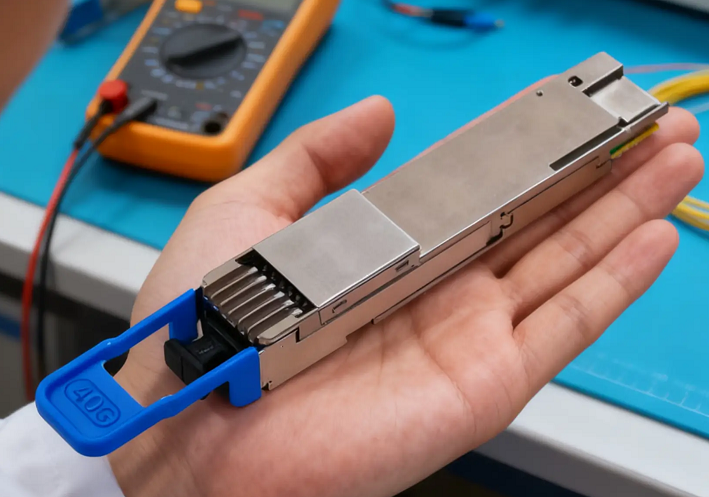
01 The Material Mystery: Why is “Copper-Tungsten Alloy” the Ideal Choice for Space Environments?
In space optical modules, the laser chip serves as the “heart” that generates and modulates optical signals. While this “heart” generates significant heat during operation, the space environment itself is characterized by an extreme vacuum and drastic temperature fluctuations—ranging from over 100°C in direct sunlight to below -100°C in the shade. This imposes rigorous, dual demands on the base material supporting the chip:
Extremely high thermal conductivity: It must rapidly dissipate waste heat generated by the chip to prevent performance degradation or even catastrophic failure due to overheating.
Extremely low coefficient of thermal expansion (low CTE): It must maintain virtually constant dimensions despite drastic temperature changes. Otherwise, the micron-scale connections between the base, the chip, and other optical components would experience stress caused by thermal expansion and contraction, leading to optical path misalignment, signal degradation, or even physical detachment (solder joint failure).
Ordinary metals struggle to balance these two requirements. Copper offers excellent thermal conductivity but exhibits significant thermal expansion and contraction; tungsten is highly stable with a very low expansion coefficient but lacks copper’s thermal conductivity. Copper-tungsten alloys combine these materials through powder metallurgy, achieving a perfect fusion of their “advantageous traits”: the alloy inherits tungsten’s low expansion, high strength, and stability, while gaining superior thermal and electrical conductivity through the copper network. This characteristic makes it an irreplaceable foundational material for high-speed optical modules, particularly those designed for the extreme environments of space.
02 Terrestrial Cornerstone: A “Hidden Champion” Serving Global High-Speed Optical Modules
As global data centers upgrade to 400G, 800G, and even 1.6T speeds, the power consumption and heat generation of optical modules have surged, exponentially increasing the demands on chip bases regarding heat dissipation and stability. FOTMA ALLOY’s copper-tungsten alloy bases are the core components meeting these evolving needs. The company’s products have successfully entered the supply chains of leading global optical module manufacturers, playing a pivotal role in the optical communication revolution driven by the AI computing boom.
This involves more than just selling materials; it entails providing a comprehensive solution covering everything from material formulation and precision machining to application testing. This capability for R&D and mass production—deeply integrated with top-tier downstream clients—forms a formidable technological moat for the company and provides the confidence to extend its technology into the space sector.
03 Space Connectivity: From Terrestrial 800G to “Inter-Satellite Laser Links”
Although publicly documented use cases explicitly labeled as “space-grade optical module” copper-tungsten alloy bases remain rare, there is a highly certain logical connection between the material’s physical properties and the critical requirements of space-based optical communication.
With the dense deployment of low-Earth orbit (LEO) satellite internet constellations (such as Starlink and China SatNet), high-speed inter-satellite laser links have become a key technology for increasing network capacity and reducing latency. Every satellite equipped with a laser terminal is essentially an “optical communication node” operating at high speeds in an extremely harsh space environment.
This poses ultimate challenges regarding the reliability, lightweight design, and thermal management of space-borne optical communication equipment. Traditional designs and materials struggle to meet these demands, creating the perfect arena for copper-tungsten alloys to demonstrate their advantages:
Ensuring long-term in-orbit reliability: Its low coefficient of thermal expansion guarantees the dimensional stability of optical systems over decades in orbit, preventing performance degradation caused by thermal cycling. Handling transient high thermal loads: Laser chips generate intense heat during peak-power operation; the material’s high thermal conductivity enables rapid heat spreading, thereby preventing localized overheating.
Facilitating lightweight design: Compared to alternative solutions, copper-tungsten alloys meet performance requirements while enabling device miniaturization and weight reduction—factors of critical importance for aerospace launch missions where every gram counts.
It is foreseeable that the core optical engines of future laser communication terminals—customized for high-reliability satellites or deep-space exploration missions—will likely require specialized substrates made from composite materials such as copper-tungsten alloys or even more advanced copper-diamond composites. FOTMA’s current technical expertise and industry standing position it as one of the strongest contenders in this potential future market.
Post time: Oct-09-2026