

The following analysis outlines the core differences and technical positioning of four types of molybdenum wire products offered by FOTMA ALLOY, based on their material properties and industrial applications:
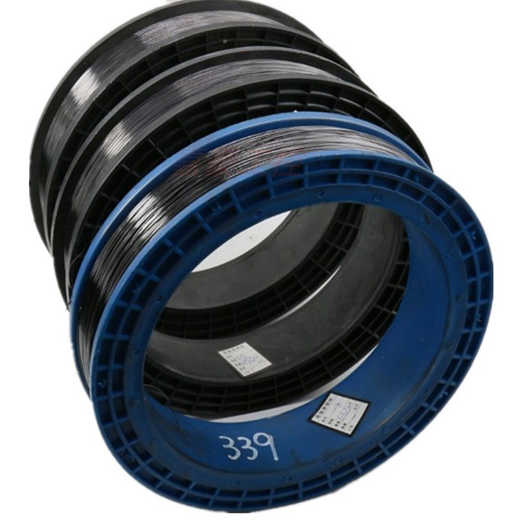
Primary Use: Preparation of wear-resistant surface coatings.
Process Characteristics: Applied via thermal spraying (flame or plasma) to create a dense coating (50–200 μm thick) on a substrate, with a bond strength reaching 42 MPa.
Performance Advantages: Features a friction coefficient of 0.15–0.2, reduces wear by 40%, and extends the service life of components—such as automotive piston rings and transmission synchronizer parts—by a factor of three.
Applications: Repair of automotive components; protective coatings for neutron-shielding assemblies in nuclear power plants.
II. Molybdenum Binding Wire
Primary Use: Structural reinforcement and weaving of composite materials.
Process Characteristics: Multiple strands of molybdenum wire are twisted into a rope-like structure, increasing tensile strength by over 30% and providing excellent resistance to high-temperature creep.
Applications: Suspension systems for high-temperature furnaces; reinforcing frameworks for aerospace composite components.
III. High-Temperature Molybdenum Wire (General-Purpose)
Primary Use: Structural support components for high-temperature environments.
Material Innovation: Doped with lanthanum-series rare earths (La₂O₃), achieving a recrystallization temperature of 1400–1600°C and retaining over 80% of its strength at high temperatures.
Typical Applications: Supports for halogen lamps; pins/fasteners for high-temperature furnaces; guide wires for quartz material processing.
IV. Heating Wire for High-Temperature Furnaces
Primary Use: Core heating element for high-temperature equipment.
Specialized Characteristics:
Boiling a melting point of 2610°C, it can operate continuously at 1800°C, with a surface oxidation rate only 7.4% that of standard molybdenum wire.
Precision-processed using gemstone wire-drawing dies, it maintains a diameter tolerance of ±0.001 mm, ensuring uniform thermal fields.
Applications: Semiconductor melting furnaces; sapphire crystal growth furnaces; vacuum sintering equipment.
Technical Positioning Comparison
Product Type | Core Function | Temperature Limit | Differentiating Technology
Thermal-Spray Molybdenum Wire | Surface wear-resistance enhancement | ≤1500°C | Liquid-solid doping to improve coating adhesion
Stranded Molybdenum Wire | Structural load-bearing | ≤1800°C | Multi-strand twisted design for creep resistance
High-Temperature Molybdenum Wire (General) | High-temperature structural components | ≤1600°C | Rare-earth doping to increase recrystallization temperature
Heating Elements for High-Temperature Furnaces | Active heating components | ≤1800°C | Oxidation-inhibiting coating process
Market Note: Rare-earth doping increases costs by 30–40% compared to standard molybdenum wire, but offers significantly better high-temperature stability than conventional products.
Post time: Oct-29-2026