

I. Composition
Tungsten Carbide is a compound formed by tungsten (W) and carbon (C) bonded together by chemical bonds, with the chemical formula WC.
Its composition is relatively simple, mainly composed of tungsten and carbon, with an atomic ratio typically close to 1:1.
Tungsten alloys are formed by adding other metallic elements (such as nickel, iron, copper, cobalt, molybdenum, etc.) to tungsten as the base metal.
Common tungsten alloys include tungsten-nickel-iron alloys and tungsten-nickel-copper alloys, with specific compositions varying depending on the application requirements.
II. Performance Characteristics
Extremely High Hardness: Hardness can reach HV1600-2300, second only to diamond, exhibiting excellent wear resistance.
High Melting Point: Melting point is approximately 2870℃, maintaining good stability even at high temperatures.
Relatively Brittle: Although it has high hardness, its toughness is relatively poor, making it prone to fracture upon impact.
Tungsten Alloys
High Density: Density can reach 16.5-19.0 g/cm³, more than twice that of ordinary steel, providing excellent counterweight properties.
Good Strength and Toughness: By adding other metallic elements, the strength and toughness of tungsten alloys are significantly improved, resulting in strong impact resistance.
Good Thermal and Electrical Conductivity: The thermal and electrical conductivity of tungsten alloys is close to that of pure tungsten, making them suitable for applications requiring heat dissipation or electrical conductivity.
Good High-Temperature Resistance: Although the melting point is slightly lower than that of tungsten carbide, it still maintains a certain level of strength and stability at high temperatures.
III. Preparation Process
Tungsten alloys are typically prepared using powder metallurgy. The specific steps are as follows:
Mix tungsten powder and carbon powder in a certain proportion.
Carbonize at a high temperature (approximately 1400-1600℃) to produce tungsten carbide powder.
Mix the tungsten carbide powder with a binder (such as cobalt), then press and sinter to produce tungsten carbide products.
The manufacturing process primarily utilizes powder metallurgy, with slight variations depending on the type of tungsten alloy. Taking tungsten-nickel-iron alloy as an example:
Tungsten powder, nickel powder, and iron powder are mixed in a specific ratio.
A blank is formed using methods such as pressing or injection molding.
Sintering is carried out under hydrogen protection, typically at temperatures between 1300 and 1500℃.
To further improve performance, subsequent processing such as heat treatment can be performed.
IV. Application Areas
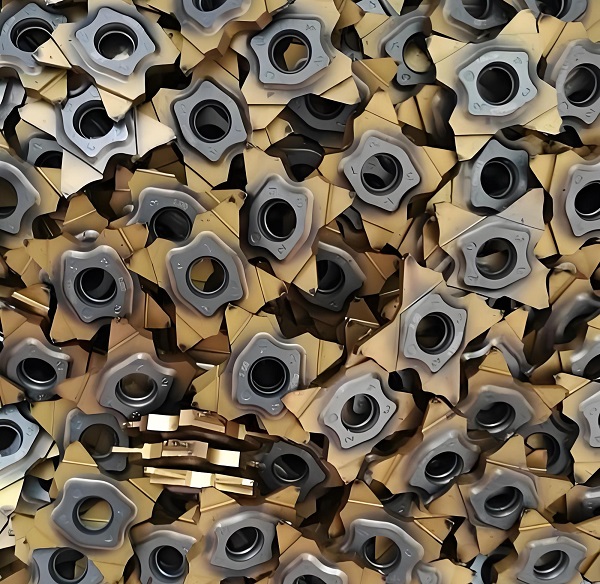
Cutting tools: such as lathe tools, milling cutters, and drill bits, used for machining hard materials.
Wear-resistant parts: such as sealing rings, ejector pins, and nozzles, suitable for applications with severe wear.
Molds: used to manufacture stamping dies and die-casting molds.
Mining and petroleum industry: such as rock drilling tools and sucker rods.
Military field: due to its high density and excellent armor-piercing properties, used to manufacture armor-piercing projectiles and high-explosive anti-tank projectiles.
Aerospace field: used as counterweights and inertial components in aircraft, missiles, and other equipment. Electronics industry: Used to manufacture high-density shielding materials to prevent radiation leakage, such as in the nuclear industry and medical equipment.
Machinery industry: Used to manufacture various counterweights, balance weights, etc.
Post time: Jul-27-2026