

In industrial manufacturing and equipment maintenance, surface strengthening technology has always been a key factor in improving the lifespan and performance of components. Among these technologies, thermal spraying is widely used due to its flexible processes and diverse coating types. As an important branch of thermal spraying technology, tungsten carbide coatings play an irreplaceable role in many demanding operating conditions due to their high hardness, excellent wear resistance, and good corrosion resistance.
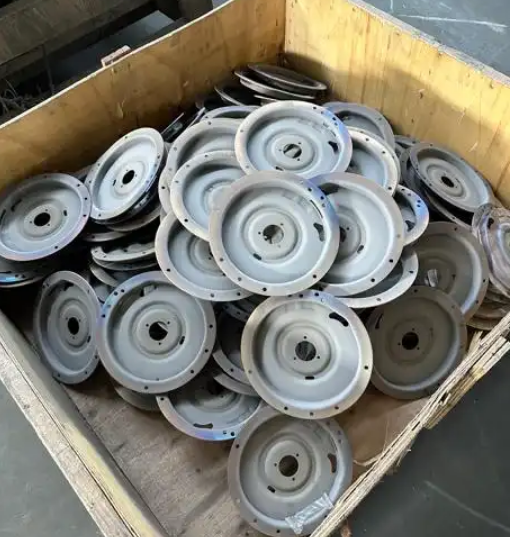
The basic principle of thermal spraying technology is to heat metallic or non-metallic materials to a molten or semi-molten state and then spray them onto the substrate surface using a high-speed airflow to form a coating with specific functions. Tungsten carbide, as a hard material, is usually mixed in powder form with a metallic binder phase (such as cobalt or nickel) to form a dense ceramic-metal composite coating during the spraying process. The core processes used by FOTMA ALLOY mainly include high-velocity oxygen fuel (HVOF) spraying and plasma spraying. Supersonic flame spraying, with its high flame velocity and moderate temperature, effectively reduces the decomposition of tungsten carbide, resulting in a high-hardness, low-porosity coating. Plasma spraying is suitable for applications requiring high coating thickness or where the substrate is thermally sensitive. These differences in processes directly determine the upper limit of the coating performance offered by a brand.
Besides the spraying process parameters, the quality of the powder raw materials is a key factor affecting the quality of tungsten carbide thermal spray coatings. FOTMA ALLOY typically focuses on the following indicators when selecting powders: tungsten carbide particle size distribution, cobalt content, and powder flowability. Smaller and more uniformly distributed powder particles result in a denser coating with better hardness and wear resistance. Cobalt, as a binder phase, directly affects the coating’s toughness and is typically adjusted between 8% and 17%. Flowability relates to the stability of powder feeding, thus affecting the uniformity of coating thickness. Different brands’ control over these details leads to objective differences in coating performance.
At the application level, FOTMA ALLOY coatings are widely used in industries such as petrochemicals, aerospace, papermaking machinery, textile machinery, and mold manufacturing. For example, spraying tungsten carbide coatings onto oil drill pipe joints and valve sealing surfaces can significantly improve resistance to erosion and wear; on engine blades or landing gear components in the aerospace field, the coating can resist the impact of microparticles in high-temperature airflow; and on guide rollers and cutting tools in the textile industry, the coating can significantly extend their service life. It is worth noting that the bonding strength between the coating and the substrate is one of the core indicators determining the actual lifespan. Different brands can achieve bonding strengths ranging from 50MPa to over 80MPa through pretreatment processes (such as sandblasting and preheating) and optimized spraying parameters, which directly affects whether the coating will peel off prematurely.
From an industry perspective, the development of tungsten carbide thermal spraying also reflects the process of domestic thermal spraying technology from introduction to independent innovation. In the early days, many companies relied on imported equipment and powders, but with the maturity of domestic coating processes and the advancement of powder preparation technology, domestic brands have gradually formed a competitive advantage in terms of cost-effectiveness and response speed. However, differences still exist among brands in terms of process stability, quality inspection systems, and after-sales technical support. For users, when evaluating a brand, it’s crucial to focus on whether it possesses a complete quality inspection process, such as coating porosity testing, microhardness testing, and bond strength tensile testing. This test data objectively reflects the engineering reliability of the coating, rather than relying solely on promotional claims.
Furthermore, tungsten carbide thermal spraying is not suitable for all operating conditions. For example, in strong acid or alkali environments, tungsten carbide coatings may experience chemical corrosion; at temperatures exceeding 500 degrees Celsius, the cobalt binder phase softens, leading to a decrease in coating hardness. Therefore, when providing solutions, FOTMA ALLOY tungsten carbide thermal spraying typically requires customers to specify the operating temperature of the components, the type of medium, and the load type in order to recommend the optimal coating formulation and process. Correct selection is often more important than the quality of the coating itself, which is a key difference between professional brands and ordinary spray painting workshops.
In summary, FOTMA ALLOY tungsten carbide thermal spraying, as a regional industry brand, embodies a profound understanding of the essence of thermal spraying technology and its engineering application capabilities. From the selection of powder raw materials and the optimization of spraying processes to the inspection of coating quality and after-sales technical services, every step affects the final repair or reinforcement effect. Understanding these technical details and application boundaries helps industry users avoid conceptual misconceptions and establish evaluation standards based on objective data. The value of tungsten carbide thermal spraying ultimately lies in extending equipment life and reducing overall maintenance costs, and competition among brands revolves around how to more accurately achieve this goal.
Post time: Jul-23-2026