

I. What is a Tungsten Carbide Ball Valve?
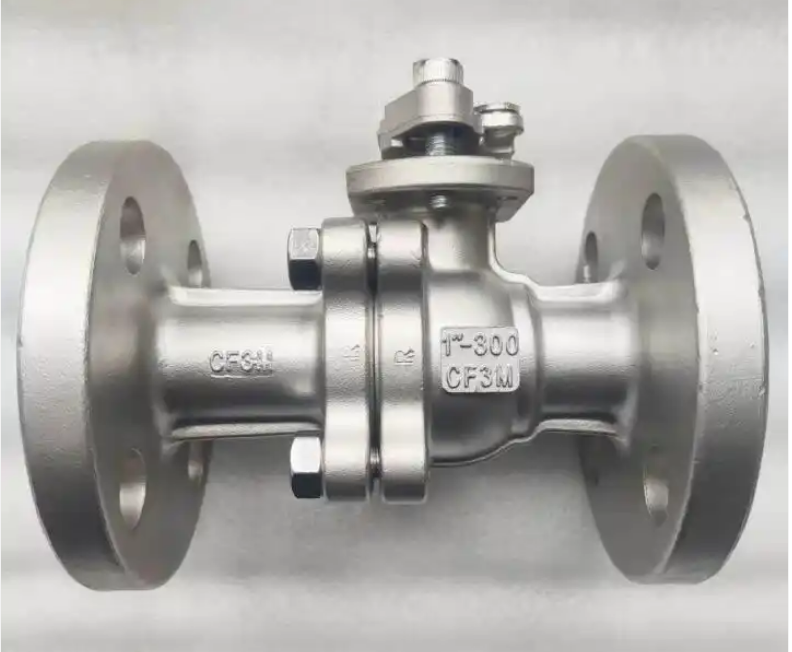
A tungsten carbide ball valve is a hard-seal ball valve that uses tungsten carbide (WC) as the core material (or coating) for the ball, seat, or sealing surface. Tungsten carbide is an ultra-hard alloy material, with a microhardness second only to diamond, reaching HRA 90 or higher (approximately HV 1500–1800), and a Rockwell hardness of HRC 65–90. It is currently one of the top wear-resistant sealing solutions used in industrial valves to cope with extreme operating conditions.
Tungsten carbide ball valves primarily utilize two technical approaches:
Technical Approach | Process | Coating/Material Thickness | Hardness | Typical Applicable Temperature
**Hypersonic Flame Spraying (HVOF)**: WC powder is sprayed onto the ball core/seat surface at speeds exceeding Mach 3. 0.2–2 mm | HRC 60–70 | ≤450℃ (limited by the coefficient of linear expansion)
**Integral Sintered Tungsten Carbide**: WC is integrally sintered to form the ball core/seat. | Overall | HRC 68–73 | Can exceed 540℃, no temperature limitations
II. Core Advantages
1. Extremely High Wear Resistance
Tungsten carbide exhibits approximately 100 times higher wear resistance than tool steel, stainless steel, cast iron, and brass, and approximately 3–4 times higher wear resistance than commonly used STL (Stelli alloy) hard seals. It performs exceptionally well in media containing hard particles (such as coal slurry, mineral powder, silicon powder, ash, etc.).
2. Excellent Erosion and Cavitation Resistance
Under high-temperature, high-hardness, high-speed impact, flash evaporation, and cavitation environments of gas-solid two-phase mixtures, tungsten carbide coatings/sintered parts effectively resist erosion and cavitation damage. In practical applications, sprayed tungsten carbide valves exhibit honeycomb failure in approximately one month at 250℃, while integrally sintered tungsten carbide valves can achieve a service life of over 12 months at 450℃.
3. Excellent High-Temperature Resistance
Sprayed type: Generally applicable temperature ≤450℃
Integral sintered type: Completely unaffected by temperature, maintaining stable performance even under ultra-high pressure and temperatures exceeding 540℃, not easily decomposed at high temperatures, and exhibits strong oxidation resistance.
4. Superior Corrosion Resistance
Tungsten carbide is chemically extremely stable, insoluble in water, and does not react with hydrochloric acid or sulfuric acid. It is even undissolved in aqua regia, making it suitable for corrosive media such as strong acids and alkalis.
5. High Density and High Precision
Tungsten carbide has a high density (approximately 15.63 g/cm³), providing superior sealing performance. Precision machining allows for high-precision dimensions and smooth surfaces, ensuring accurate fluid control of the valve.
6. Low Coefficient of Friction
When paired with steel, the coefficient of friction of tungsten carbide is only 1/3 to 1/2 that of conventional materials, effectively reducing operating torque, ensuring smooth operation, and minimizing the risk of jamming.
7. Significantly Extended Service Life
The service life of sprayed tungsten carbide hard-seal ball valves can be 3-5 times that of ordinary hard-seal ball valves.
In water, natural gas, and oil media, the service life can be increased by 10-20 times.
The number of opening and closing cycles of integrally sintered tungsten carbide valves can exceed 300,000, meeting the requirements for 8,000 hours of long-term operation.
III. Comparison with STL (Steel Alloy) Hard Seals
Comparison Items: Tungsten Carbide (WC) STL (Steel Alloy)
Hardness: HRC 65-90 (HV 1500-1800) HRC 40-55 (HV 400-600)
Abrasion Resistance: Extremely high, approximately 3-4 times that of STL Moderate, dependent on toughness and self-lubrication
High Temperature Resistance: Sprayed ≤450℃ / Sintered type: Unlimited Generally ≤400℃
Resistance to Particle Abrasion: Excellent Average, prone to scratches over long-term use
Applicable Scenarios Coal slurry, mineral powder, ash, high-hardness particles; medium-low temperature, low-abrasion environment
Cost: Relatively high; Relatively low
IV. Typical Structures and Applications
Common Product Types
Tungsten carbide sprayed hard-seal ball valve (two-piece/three-piece, flange or wafer connection)
Tungsten carbide ball valve with ceramic lining (WC ball core, Al₂O₃ ceramic lining inside valve body, DN15~DN150)
V-type tungsten carbide ball valve (with V-shaped notch, suitable for regulating and shut-off of high-viscosity, fibrous/particle-containing media)
C-type tungsten carbide ball valve (full bore, high flow capacity, suitable for shut-off and regulation)
Integral sintered tungsten carbide sealed auxiliary ball valve (used in coal chemical black water valves, coal powder control valves, disc valves, slide valves, etc.)
Actuation Methods
Manual, turbine, pneumatic (single-acting/double-acting), electric (on/off type/regulating type), explosion-proof rating up to Ex dⅡBT4 / Ex dⅡCT6.
Diameter and Pressure Range
Diameter: DN15 ~ DN1500 (Commonly DN15 ~ DN250)
Pressure: PN6 ~ PN16, CL150, or even higher
Temperature: -10℃ ~ 540℃+ (Depending on the process)
V. Main Application Areas
Industry Typical Operating Conditions
Coal Chemical Industry / Polysilicon Black water control, coal powder conveying, high-temperature slurry containing particles
Power Industry / Power Plant Ash Removal Hydraulic conveying of ash and slag, slag discharge valve
Metallurgy / Mining Slurry and mineral powder conveying, tailings treatment
Petrochemical Industry Particulate media, high temperature and high pressure, highly corrosive environments (such as desulfurization systems)
Paper Making / Food Industry / Pharmaceutical Industry Regulation and cutting of high-viscosity, fibrous media
VI. Selection Recommendations
Operating Condition Characteristics Recommended Solution
Contains hard particles (coal slurry, mineral powder, silicon powder, etc.) Tungsten carbide is preferred, its wear resistance far exceeds STL
Temperature >300℃ For applications requiring strong corrosion resistance, tungsten carbide (spraying or integral sintering) is suitable.
For applications requiring long-term maintenance-free operation (>10,000 cycles), integral sintered tungsten carbide is preferred (spraying is difficult to guarantee).
For applications requiring low to medium temperatures, low wear, and limited budgets, STL hard seals are sufficient.
For applications with extremely high hardness particles (silicon powder hardness reaches 62 HRC), tungsten carbide is essential.
In summary, tungsten carbide ball valves, with their six core advantages of ultra-high hardness, ultra-strong wear resistance, high temperature resistance, corrosion resistance, low friction, and long lifespan, have become the preferred valve selection solution for harsh working conditions such as coal chemical industry, power plant ash removal, mining slurry, and petrochemical industry. Compared to traditional STL hard seals, tungsten carbide solutions have lower total lifespan costs, especially in environments containing hard particles and high-temperature erosion, where their performance advantages are extremely significant. With the maturity of integral sintered tungsten carbide technology, its operating temperature and lifespan bottlenecks have been significantly overcome, and it is gradually replacing traditional spraying solutions as the mainstream trend for high-end wear-resistant valves.
Post time: Aug-24-2026