

In the vast realm of industrial manufacturing, wear resistance remains a critical metric for gauging equipment longevity and efficiency. Whether dealing with the massive gears of mining machinery, precision aerospace components, or turbine blades in the energy sector, engineers and technical teams are constantly challenged by the inevitable wear that occurs during prolonged operation. Amidst this ongoing battle against wear, tungsten carbide hard-facing spray technology—with its exceptional wear resistance and customizable nature—has emerged as an “unseen guardian” of the industrial world. This article explores the principles and applications of tungsten carbide hard-facing spray technology and offers guidance on selecting a professional custom manufacturer to provide scientifically sound solutions for the long-term performance of industrial equipment.
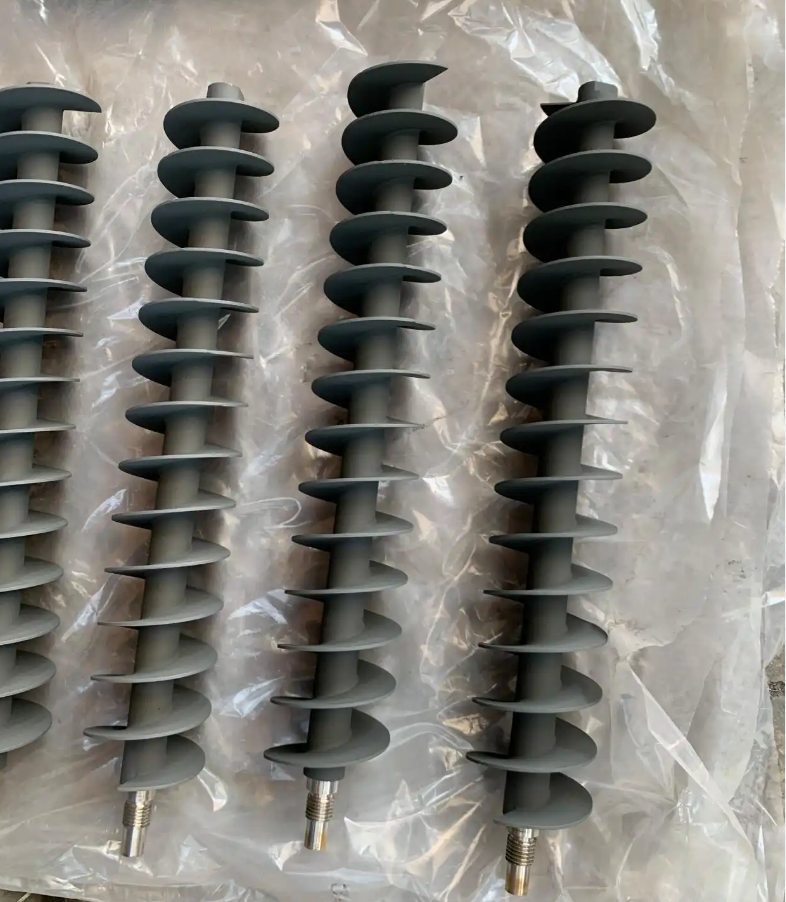
I. Tungsten Carbide Hard-Facing Spray: A “Hardcore” Representative of Wear-Resistance Technology
Tungsten carbide (WC) is a compound of tungsten and carbon boasting a hardness second only to diamond—reaching 9 to 9.5 on the Mohs scale—along with a high melting point, high strength, and excellent chemical stability. When tungsten carbide particles (at the micron scale) are applied to a metal substrate via a spraying process, they form a dense, hard coating that significantly enhances the substrate’s resistance to wear, corrosion, and impact. Known as tungsten carbide hard-facing spray, this technique is a form of thermal spraying; its core principle involves using a high-temperature, high-speed gas stream to melt powdered tungsten carbide and propel it onto the workpiece surface, creating a coating with controllable thickness and strong adhesion.
Compared to traditional surface treatment methods (such as electroplating or carburizing), tungsten carbide hard-facing spray offers three major advantages: First, the coating thickness is flexibly adjustable (typically ranging from 0.1 to 2 mm) to meet diverse operational requirements. Second, it is compatible with a wide range of substrates—including steel, aluminum alloys, and titanium alloys—all of which can benefit from performance enhancements through this process. Third, the coating bonds mechanically to the substrate without creating a heat-affected zone, thereby avoiding any degradation of the substrate’s original properties. These characteristics have led to the increasingly widespread adoption of tungsten carbide hard-facing spray technology across the industrial sector. II. Application Scenarios: Comprehensive Coverage from Mining to Aerospace
The value of tungsten carbide hard-facing spray technology lies in its ability to extend the service life and enhance the efficiency of industrial equipment. Take mining machinery as an example: components such as excavator bucket teeth and crusher hammers experience rapid wear due to prolonged contact with ore. While parts made from traditional materials might last only a few weeks, those treated with tungsten carbide spray can remain functional for months or even over a year, significantly reducing downtime and maintenance costs. In the energy sector, critical components like gas turbine blades and wind turbine gearboxes benefit from spray technology, which enables them to withstand erosion from high-temperature, high-speed gas flows or sand and dust, thereby ensuring stable equipment operation.
The aerospace sector imposes even more rigorous demands on material performance. Aircraft engine turbine blades must operate continuously in high-temperature, high-pressure environments, where even minute surface wear could lead to catastrophic consequences. Tungsten carbide hard-facing spray creates a hard, heat-resistant, and oxidation-resistant coating that acts as an additional protective barrier for the blades. Furthermore, in automotive manufacturing, applying this spray treatment to components such as engine cylinder liners and piston rings reduces frictional losses and improves fuel efficiency; in the mold industry, the process increases surface hardness, extending the mold’s service life and enhancing the surface quality of the finished products.
III. Core Capabilities of Custom Manufacturers: A Triple Guarantee of Technology, Equipment, and Service
Although tungsten carbide hard-facing spray technology offers significant advantages, its effectiveness depends heavily on the manufacturer’s technical expertise and equipment capabilities. When selecting a professional custom manufacturer, attention should be focused on the following three areas:
1. Expertise of the Technical Team
The spraying process draws upon multidisciplinary knowledge—including materials science, thermodynamics, and fluid dynamics—requiring a team of experienced engineers to design coating formulations and process parameters based on the workpiece material and operating conditions (such as temperature, pressure, and friction type). For instance, high-stress impact conditions require increased coating toughness, whereas corrosive environments necessitate the addition of anti-corrosion elements. Professional manufacturers typically maintain materials analysis laboratories, utilizing methods such as micro-hardness testing and metallographic analysis to optimize coating performance. 2. Advanced Production Equipment
The core equipment for tungsten carbide hardfacing—including spray guns, powder feeders, and control systems—operates with a level of precision that directly determines coating quality. Leading manufacturers employ advanced technologies such as plasma spraying and High-Velocity Oxy-Fuel (HVOF) spraying. HVOF, in particular, is the preferred choice for high-wear applications due to its high particle velocity (reaching Mach 3) and superior coating density (with porosity below 1%). Furthermore, automated spraying production lines enable uniform processing of components in batches, thereby minimizing human error.
3. Customization Capabilities
Components across various industries differ vastly in shape and size—ranging from turbine blades several meters in diameter to precision parts measured in microns—necessitating customized spraying solutions. Professional manufacturers must possess end-to-end service capabilities, covering everything from workpiece pre-treatment (cleaning, sandblasting) and the spraying process itself to post-treatment (sealing, grinding). They must also be able to tailor parameters such as coating thickness, hardness, and roughness to meet specific customer requirements. For instance, an automotive parts manufacturer commissioned a coating specialist to apply tungsten carbide to engine camshafts; by optimizing the spray angle and powder particle size, they successfully reduced the friction coefficient by 30%, significantly enhancing engine efficiency.
IV. Industry Trends: Green Manufacturing and Intelligent Upgrading
Driven by the advancement of Industry 4.0, the tungsten carbide hardfacing industry is evolving toward greener and more intelligent operations. On one hand, manufacturers are reducing material waste by optimizing spraying parameters and recovering un-deposited powder; some enterprises have achieved powder utilization rates exceeding 90%. On the other hand, the adoption of robotic spraying systems has not only improved precision but also mitigated safety risks associated with manual operation. Additionally, coating performance prediction models based on big data are currently under development; in the future, inputting operating condition parameters will allow for the direct generation of optimal spraying solutions, thereby further shortening R&D cycles.
Amidst increasingly stringent environmental regulations, eco-friendly solutions such as water-based spraying and low-temperature spraying processes are gaining traction. By reducing the use of organic solvents or lowering spraying temperatures, these technologies minimize environmental impact and risks to operators, aligning with the industry’s trend toward sustainable development. Conclusion: The future of wear-resistance technology begins with every precision spray application.
As the “unsung heroes” of the industrial wear-resistance sector, manufacturers specializing in custom tungsten carbide hard-facing sprays are providing long-lasting protection for equipment across diverse industries through technological innovation and service enhancements. From massive mining machinery to precision aerospace components, and from core energy infrastructure to everyday automotive parts, every hard coating embodies the manufacturer’s relentless pursuit of material performance and a deep understanding of customer needs. Choosing a professional spray specialist means more than just selecting a wear-resistant coating; it signifies a commitment to the entire lifecycle of industrial equipment. As industry evolves, tungsten carbide hard-facing technology will continue to safeguard the stable operation of equipment with its robust, high-performance capabilities.
Post time: Jul-09-2026