

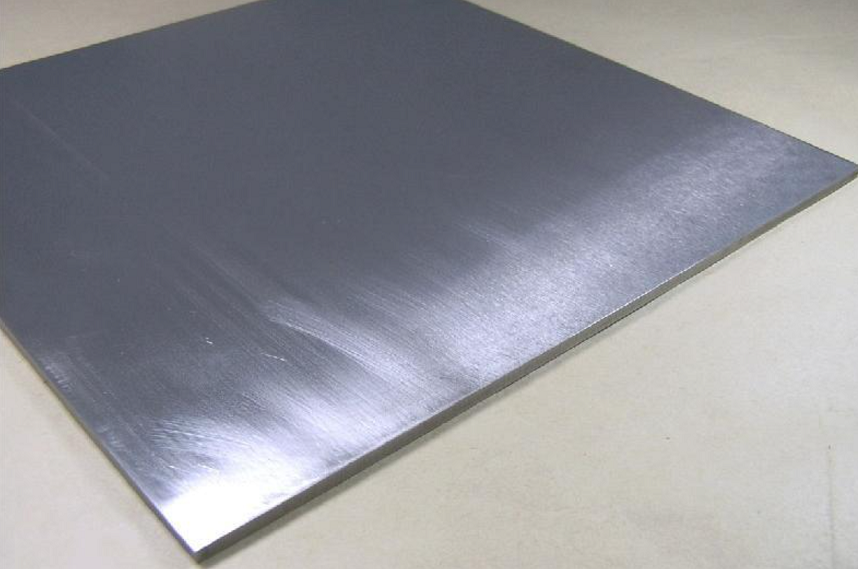
Molybdenum alloys are non-ferrous alloys made by adding other elements to molybdenum, exhibiting diverse properties. Their high density provides stability in complex environments. Despite their high density, their low melting point makes them suitable for high-temperature applications. Low vapor pressure ensures stability in high-vacuum environments, making them suitable for high-end fields such as aerospace. Low thermal expansion and high thermal strength ensure structural and performance stability at high temperatures, enhancing reliability. Strong toughness resists cracking and deformation under extreme conditions. Corrosion resistance ensures their integrity and stability in various environments. Molybdenum alloys have wide applications, such as in hot-working molds, molten metal processing, thermal spraying, and chemical treatment.
Molybdenum Alloy Industry Classification
Molybdenum alloys are mainly classified into binary molybdenum alloys and multi-component molybdenum alloys. Binary molybdenum alloys include tungsten-molybdenum alloys (W-Mo), molybdenum-copper alloys (Mo-Cu), molybdenum-zirconium alloys (Mo-Zr), and molybdenum-titanium alloys (Mo-Ti). Multi-component molybdenum alloys include the Mo-Ti-Zr-C series and the Mo-Hf-Zr-O series.
The Development History of the Molybdenum Alloy Industry
The development history of the molybdenum alloy industry can be traced back to the early 20th century, when it was mainly used in the military field, such as rocket and missile manufacturing. Over time, molybdenum alloys gradually entered the civilian sector, finding widespread applications in high-temperature alloys, electronic components, aerospace, and medical devices. In the early 21st century, with advancements in materials science and technology, the preparation and application technologies of molybdenum alloys have continuously improved, leading to increased applications in modern fields such as nuclear energy, semiconductor manufacturing, and environmental protection technologies. Simultaneously, the industry has focused on sustainable development and environmental protection, promoting the recycling and reuse of molybdenum alloys, as well as their development as alternatives to traditional materials, making it a promising materials industry.
The Upstream, Midstream, and Downstream Sectors of the Molybdenum Alloy Industry
Molybdenum alloys are important metallic materials, with their upstream raw materials primarily consisting of molybdenum and other added elements. Molybdenum alloys possess excellent properties such as high melting point, high strength, and corrosion resistance, thus finding wide application in downstream industries such as aerospace, electronics, chemicals, and metallurgy. For example, in the aerospace field, molybdenum alloys are used to manufacture high-temperature components and rocket engine nozzles; in the electronics field, they are used to manufacture high-temperature resistance wires and electrode materials; and in the chemical and metallurgical industries, they are used to manufacture corrosion-resistant pipes and containers.
My country’s Molybdenum Alloy Industry Market Size and Growth Rate In recent years, my country’s molybdenum alloy industry has continued to show strong growth momentum. Looking at production data, the national molybdenum alloy output reached 28.953 million tons in 2018, and remarkably, this figure climbed to 31.596 million tons in 2022, showing a very clear growth trend. At the same time, the market size of the molybdenum alloy industry has also continued to expand, from 680.396 billion yuan in 2018 to 824.656 billion yuan in 2022, demonstrating the industry’s robust growth. As an important trace element in alloys, molybdenum plays a crucial role in high-temperature alloys, significantly improving their performance and thus driving the continued growth in demand for high-temperature alloys, further fueling the long-term growth of molybdenum demand. Furthermore, in the steel industry, molybdenum is widely used as an additive in various alloy steels. It can significantly improve the strength and toughness of steel, while enhancing its corrosion resistance and wear resistance, providing broader application prospects for the steel industry.
Molybdenum Alloy Market Supply and Demand Situation
In my country—as the world’s largest consumer of molybdenum—its demand has a significant impact on global trends. According to the latest data from the International Molybdenum Association, my country’s molybdenum consumption reached a staggering 268.9 million pounds in 2022, equivalent to approximately 122,000 tons, accounting for 42.58% of global molybdenum consumption demand. Undoubtedly, my country plays a pivotal role in the global molybdenum market.
In terms of molybdenum production, China has risen to become the world’s largest molybdenum producer due to its abundant molybdenum reserves, demonstrating its dominant position in the global molybdenum industry. In recent years, with the continuous development and expansion of downstream industries, my country’s molybdenum industry has also gained rapid growth momentum. This trend can be confirmed by the data recently released by the International Molybdenum Association: in 2022, my country’s molybdenum production achieved an impressive 112,800 tons, a year-on-year increase of 12%.
Operating Status of the Molybdenum Alloy Industry my country’s molybdenum alloy industry has maintained steady growth in production and sales. According to data, my country’s molybdenum production was 91,580 tons in 2018, and by 2021, this figure had climbed to 100,833 tons, making China the only region globally to maintain molybdenum production growth. In the same year, my country’s molybdenum alloy sales also reached 262.247 million tons. Entering 2022, my country’s molybdenum production continued to rise, reaching 28,621.5 tons in the second quarter alone, a year-on-year increase of 14%.
Molybdenum Alloy Industry Policies The Chinese government’s support policies for the molybdenum alloy industry mainly cover environmental protection, resource conservation, and industrial upgrading. In terms of environmental protection, the government encourages enterprises to adopt clean production technologies to reduce pollution. At the same time, it strengthens the protection of rare metal resources and prevents over-exploitation through resource taxes and other means. Furthermore, to adapt to the development needs of emerging industries such as new energy and new materials, the government also promotes technological innovation and industrial upgrading in the molybdenum alloy industry.
Specifically, in terms of policy measures, my country has included molybdenum in its mandatory production plan for rare metals. For example, the mandatory production plan for molybdenum concentrate (containing 45% molybdenum) was 185,000 tons in 2010, and increased to 200,000 tons in 2011. These policies aim to regulate the supply and demand balance of molybdenum, protect limited resources, and promote the healthy development of the industry.
Problems in the Molybdenum Alloy Industry
The molybdenum alloy industry faces intense market competition and a significant problem of overcapacity. Due to the high technological content and large market demand of the molybdenum alloy industry, it has attracted a large number of companies, leading to overcapacity and intensified market competition. Secondly, the large fluctuations in raw material prices have a certain impact on the industry’s development. Molybdenum ore is the main raw material for molybdenum alloys, and its price is affected by various factors such as international market supply and demand and policy adjustments, resulting in significant price fluctuations. Furthermore, environmental pressure is also a major factor restricting the development of the molybdenum alloy industry. The production process of molybdenum alloys generates some pollution; how to ensure production efficiency while effectively carrying out environmental protection work is a crucial issue facing the industry. Finally, an unreasonable product structure is also a significant factor affecting the industry’s development. Currently, the added value of molybdenum alloy products in my country is relatively low, and the proportion of high-value-added products is not high, which also affects the industry’s profitability and development potential.
Molybdenum Alloy Industry Development Prospect Forecast
The molybdenum alloy industry has broad development prospects in the future. First, from the demand side, molybdenum is a silvery-white metal with high hardness and melting point, and it does not oxidize with air at room temperature. These properties make molybdenum and its alloys widely used in many fields, such as steel, petroleum, chemical, electrical and electronic technology, medicine, and agriculture. Especially in emerging fields and high-tech industries, such as nuclear energy, photovoltaics, aerospace, sensors, and military materials, the application of molybdenum is continuously expanding and deepening. Second, from the supply side, my country is the world’s largest molybdenum producer, possessing abundant molybdenum resource reserves. In recent years, my country’s molybdenum industry has achieved rapid progress, mainly due to the continuous development of downstream industries. In summary, benefiting from my country’s abundant molybdenum resources and the continuous development of downstream industries, and considering the wide application of molybdenum and its alloys in various fields and their future development potential, the molybdenum alloy industry is expected to maintain a good development momentum in the coming years.
Post time: Dec-17-2025