

From rocket nozzles to car factories, TZM alloy is disrupting traditional manufacturing with its aerospace-grade performance—zero loss after 150,000 die-casting cycles. 3D-printed honeycomb turbine blades further enhance temperature resistance by 200°C, while an 8% increase in yield in the semiconductor field reveals how “Made in China” is reshaping global industrial rules with a nanoscale materials revolution.
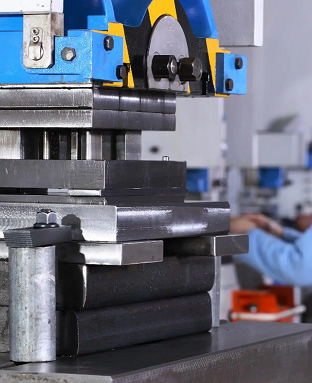
When the die-casting machine at Tesla’s Shanghai Gigafactory completed its 150,000th cycle, this manufacturing revolution sparked by aerospace materials finally reached its tipping point. Latest test data shows that the overall cost of the Model Y rear floor plate produced using TZM alloy molds is reduced by 30%. Meanwhile, a 3D printer in a Hunan laboratory is shaping this high-temperature alloy into aerospace turbine blades with a honeycomb structure, and its 200°C temperature resistance improvement test results dwarf traditional casting processes.
The disruptive impact of aerospace materials: From rocket nozzles to car factories
In Tesla’s die-casting workshop, TZM alloy is rewriting the physical laws of automobile manufacturing. Traditional mold steels develop thermal fatigue cracks after 60,000 die-casting cycles, while this molybdenum-titanium-zirconium alloy exhibits remarkable durability. TZM molds, prepared using powder metallurgy, have achieved a single-cycle repair capability exceeding 150,000 die-casting cycles, directly reducing the production cost of the Model Y’s rear floor plate by 30%.
This cross-industry success is no accident. The TZM alloy, through a dual strengthening mechanism of titanium-zirconium solid solution and carbides, raises the service temperature to 1.3 times that of traditional molybdenum alloys. Test reports from Shanghai Longsi New Materials Technology show that its TZM plates maintain a tensile strength of 920 MPa at 1400℃, and its creep resistance at 1200℃ is improved by 2.8 times. When aerospace-grade heat resistance is injected into automotive manufacturing, it brings not only cost optimization but also a revolution in the efficiency of the entire production system.
3D Printing’s Topological Revolution: Honeycomb Structures Reconstruct the Limits of Manufacturing
At the aerospace engine R&D center, an even more subtle transformation is underway. Complex cooling channel structures, difficult to achieve with traditional casting processes, are now within reach using TZM alloy 3D printing technology. Laser selective melting equipment deposits spherical alloy powder layer by layer, ultimately forming turbine blades with an internal honeycomb structure.
The breakthrough of this process lies in achieving “structural-functional integration” manufacturing of high-temperature alloys for the first time. Test data shows that topology-optimized TZM components exhibit a 45% increase in strength for the same weight, increasing the temperature resistance of hot-end components by 200°C. Components that traditionally require welding multiple parts can now be molded into a single monolithic structure—a miracle of lightweighting and a quantum leap in manufacturing precision.
The Semiconductor Industry’s “Nano-Bulletproof Vest”: The Material Code Behind an 8% Yield
When engineers at a Shanghai wafer fab replaced tungsten electrodes with TZM electrodes, an unexpected 8% increase in yield revealed a deeper material revolution. The microstructure formed by titanium zirconium carbides acts like a “nano-bulletproof vest” for electron emission systems, improving stability by an order of magnitude.
This performance leap stems from the unique strengthening mechanism of TZM alloys: titanium and zirconium atoms act like “steel bars” supporting the molybdenum matrix lattice, while nanoscale TiC and ZrC particles act like “anti-slip nails” preventing grain boundary migration. Maintaining a tensile strength of 750 MPa even at 1600℃, this alloy, originally designed for rocket engine nozzles, is now opening up new battlegrounds in semiconductor manufacturing.
The Tipping Point of Materials Science: Chinese Manufacturing Rewrites Global Industry Rules
The scene of investors rushing to sign checks when a Chengdu laboratory released the thermal conductivity data of its TZM heat dissipation substrate testifies to the radiating effect of fundamental materials innovation. Compared to products from Claymax Molybdenum in the US, the TZM alloy developed in China boasts 12% higher strength at 1600℃, and its processing yield has broken through the 60% technical bottleneck.
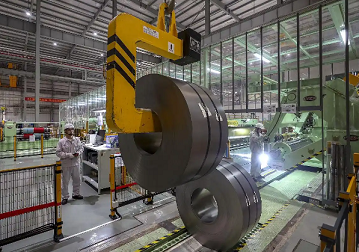
FOTMA ALLOY’s WRe-TZM composite material extends the lifespan of rotating anode targets by three times, directly reshaping the international competitive landscape of medical imaging equipment. From controlling the grain size of large-diameter φ80mm bars to achieving an extremely low oxygen content of 50ppm, Chinese engineers’ challenge to the limits of purity is reshaping the global high-end manufacturing supply chain.
Standing at the singularity of new materials, the evolution of TZM alloys continues. Researchers are developing an enhanced alloy with a recrystallization temperature exceeding 1500℃ through lanthanide doping and nanostructure design. When the exhaust plumes of future interstellar spacecraft illuminate the Martian surface, the shimmering light will undoubtedly reflect the wisdom of Chinese materials science. This cross-disciplinary revolution, originating in aerospace and sweeping through manufacturing, will ultimately define a new era of human industrial civilization.
PS. TZM alloy, also known as titanium-zirconium-molybdenum alloy, is a high-temperature alloy belonging to the category of solid solution hardening and particle-reinforced molybdenum-based alloys. This alloy is primarily composed of molybdenum, with trace amounts of titanium and zirconium, and a small amount of carbon. This alloy is designed to remove grain boundary embrittlement phases through solid solution strengthening with trace elements, while utilizing reactants (such as TiC and ZrC) as dispersed phases to strengthen the alloy, thereby improving its performance.
TZM alloys possess a variety of excellent properties, including high melting point, high strength, high elastic modulus, low coefficient of linear expansion, low vapor pressure, good electrical and thermal conductivity, strong corrosion resistance, and good high-temperature mechanical properties. These properties have led to the widespread application of TZM alloys in various fields, including military technology (such as stirrer spindles for high-temperature components), aerospace (such as nozzle throat liners for heat-resistant structural components), and medical devices (such as CT scanning X-ray tube targets for heat-resistant precision instruments).
In the production process, TZM alloys are typically manufactured using powder metallurgy methods, including alloy smelting, rotating electrode powder preparation, powder metallurgy (pressing and sintering), heat treatment, and machining. In addition, to further improve the performance of TZM alloys, methods such as solid solution strengthening, grain refinement strengthening, form control, and particle strengthening are employed.
TZM (Mo-0.8Ti-0.1Zr) alloy is a molybdenum alloy characterized by high melting point, low coefficient of thermal expansion, low creep rate, high strength (compared to pure Mo), and good electrical and thermal conductivity. It is commonly used in military technology (high-temperature components—stirrer spindles), aerospace (heat-resistant structural components—nozzle throat liners), and medical devices (heat-resistant precision instruments—CT scanning X-ray tube targets). Typically, TZM alloys have a tensile strength of approximately 870 MPa, a yield strength of approximately 600 MPa, and an elastic modulus of approximately 320 GPa; specific properties depend on the preparation method and parameters.
Post time: Feb-27-2026